
PowaKaddy is one of the longest-established names in the powered golf trolley market. The company was founded in 1983 by mechanical engineer Joe Catford in Sittingbourne, Kent, and produced what is widely credited as the first commercially available electric golf caddy in the United Kingdom. Over more than four decades, the brand has progressed through the original Classic, Classic Legend, Freeway, Freeway II, Freeway Sport and Freeway Digital lines, into the modern FW3, FW5, FW7 and FW7s models, and most recently the compact-folding FX and CT ranges (FX1, FX3, FX5, FX7, CT6, CT8, CT10 and CT12). PowaKaddy products are sold throughout the United States by authorized distributors and are widely respected for their build quality, lithium battery performance and quiet, smooth drive systems.

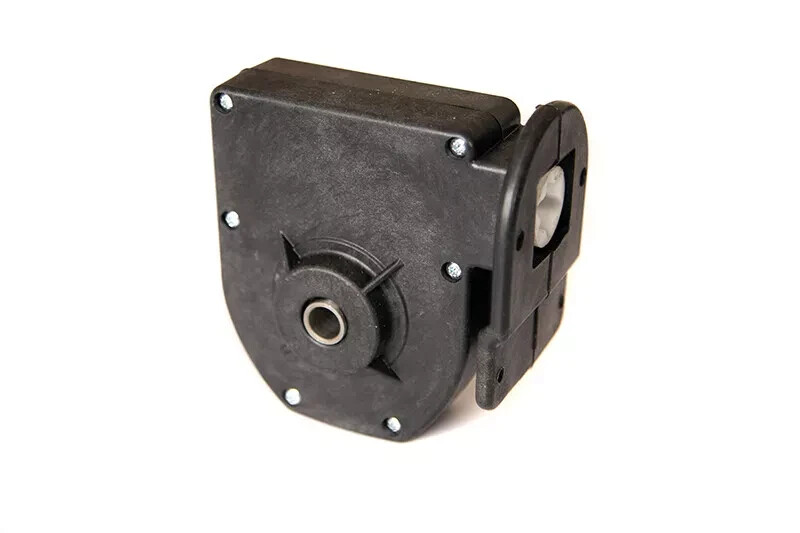
At the mechanical heart of every PowaKaddy electric trolley sits the gearbox and drive system. This relatively small assembly is responsible for converting high-speed, low-torque rotation from the brushed direct current motor into the slow, high-torque rotation required to propel a loaded trolley up fairways and across uneven terrain. When the gearbox or any component within the drive train fails, the trolley either becomes unusable or begins to display symptoms — grinding noises, jerky movement, slippage, or complete loss of drive — that ruin the round and may, if ignored, cause cascading damage to other components.
This article provides a comprehensive examination of PowaKaddy gearbox and drive-system problems, including the most frequent consumer complaints, the root causes from a mechanical standpoint, step-by-step troubleshooting procedures and proven solutions. It also addresses model-specific differences, preventive maintenance practices, and guidance on when a repair should be undertaken at home versus referred to an authorized service technician. The information has been gathered from PowaKaddy official technical documentation, established repair specialists, owner reviews, and active discussions on Golf Monthly Forum, Golfshake and other golfing communities.
Understanding the PowaKaddy Drive System
Before examining specific failures, it is helpful to understand what is inside a typical PowaKaddy gearbox. The trolley uses a brushed direct current motor mounted to one face of the gearbox housing. In older Freeway models, the motor is the EMD-type unit, bolted to the EMD gearbox using two short cap-head bolts and connected through a rubber star or “spider” coupling, with the rubber insert sitting between the two halves of the coupling. In newer FX and CT trolleys, PowaKaddy moved to a higher-voltage 30-volt, 230-watt motor with an integrated coupling, replacing the older 12-volt motor architecture used historically.
Inside the gearbox itself, motor rotation is reduced through a sequence of gears — typically a worm-and-wheel arrangement on EBS (Electronic Braking System) trolleys, and a multi-stage helical or spur-gear reduction on standard trolleys — feeding a final output that drives the trolley axle. The output stage on most modern PowaKaddy trolleys uses an axle passing through the gearbox, supported by acetal axle blocks or bearing blocks, retained against rotation relative to the gearbox by a small steel roll pin (typically 22 mm x 4 mm in the clutch position and a 35 mm roll pin in some EBS axle assemblies). At each end of the axle, a one-way wheel clutch (effectively a sprag-style freewheel) transfers drive to the wheel in the forward direction while allowing the wheel to spin freely backwards, enabling manual maneuvering and free-wheel mode.
EBS-equipped trolleys add a limited-slip differential gearbox that allows controlled braking down hills. PowaKaddy explicitly notes in its FX7 GPS owner’s manual that the drive system uses a limited slip differential to allow braking and provide ease of manoeuvrability. EBS gearboxes have many more moving parts and a different acoustic signature than standard gearboxes — a fact PowaKaddy acknowledges directly in its support documentation, explaining that trolleys with the EBS function have a slightly different pitch to normal trolleys because the gearbox is different and has many more moving parts.
With this architecture in mind, the rest of this article works through each problem category systematically.
Gearbox Noise or Grinding Issues
Symptoms
Owners typically describe gearbox noise problems using one or more of the following terms: a high-pitched whine that worsens under load, a continuous whirring drone, a metallic clicking or “clacking” that appears only when the trolley is climbing inclines, a rough grinding that vibrates through the handle, or a coarse rattle that comes and goes. On the Golf Monthly Forum, one CT6 owner wrote that their brand new CT6 was surprisingly louder than their 15-year-old Freeway Sport. Another reviewer described their FW7s experience as producing loud clacking noises when ascending the slightest inclines, apparently caused by the gears jumping cogs.
Causes
Gearbox noise has several possible causes that need to be distinguished from each other. First, in any new trolley with a fresh gearbox and new motor, a moderately higher pitch is normal during the bedding-in period. PowaKaddy explicitly addresses this in its frequently-asked-questions resource, noting that a new trolley will have a slightly different pitch to a trolley that has been used for a few rounds because the moving parts are all new and take time to bed in. The brand confirmed in correspondence with one owner that the new 30-volt motor in the FX and CT range does take time to bed in and that this period is longer than for the legacy 12-volt motors.
Second, on EBS-equipped trolleys, the additional gearing intrinsically generates more sound than a standard gearbox. Third — and this is a genuine fault — gearbox internal damage produces noise. The most extensively documented problem of this kind appeared on the FW7 EBS, where the main drive gear is plastic and meshes with a steel worm. Multiple owners reported that the plastic teeth strip away progressively under hill load, producing increasing clacking noise and eventual cog-jumping.
Fourth, lack of grease or grease degradation will cause meshing gears to whine and eventually to wear and pit. Fifth, worn axle blocks can allow the axle to float vertically within the gearbox, generating a clattering noise as the gear meshing geometry shifts. The axle should not be able to float up and down; if it does, it will damage the gearbox if the blocks are not replaced.
Troubleshooting Steps
Begin by performing the assessment in conditions similar to actual use. PowaKaddy advises specifically never to assess noise in a quiet room — only on the golf course. Load the trolley with a normal golf bag and run it on grass; many noises that seem alarming on a hard floor disappear under realistic conditions. Next, with the trolley on flat ground and the wheels removed, switch the unit on at low speed and listen carefully. A consistent whine that rises and falls with speed indicates normal gear meshing; a rhythmic click that occurs once per axle revolution indicates a damaged or chipped tooth; a graunching, grinding sound suggests metal-to-metal contact, lack of lubrication or pitted gears.
Inspect the underside of the trolley visually. Check that the gearbox is securely fastened to the chassis with no missing rivets or bolts and no cracking around the mounting points. Confirm the motor is firmly bolted to the gearbox face. Grasp each axle block (the acetal/plastic block on each side that supports the axle as it exits the gearbox) and try to rock the axle vertically; any perceptible movement indicates the blocks are worn or the chassis mountings have elongated. On older Freeway models, check the rubber spider coupling between the motor and gearbox: a perished or torn spider creates a metallic knocking that masquerades as gearbox damage.
If the trolley is still under warranty (2 years from date of purchase for PowaKaddy electric trolleys when registered within 30 days), do not open the gearbox housing because this will void the warranty. Document the noise, identify when it occurs (always, only under load, only on hills) and contact PowaKaddy’s authorized service support network.
Solutions
For new-trolley bedding-in noise, the recommended action is simply to play 5 to 10 rounds and reassess. Many owners report their CT6 or FX5 became dramatically quieter after the first month of use. For an out-of-warranty FW7 EBS or other unit with confirmed cog-jumping, the appropriate solution is replacement of the EBS gearbox assembly. The PowaKaddy FW7 / FW7s / C2 / FX / CT EBS Gearbox is sold under reference 01595, and the non-EBS gearbox suitable for FW3, FW5, FW7, FW7s, FX3, FX5, FX7, FX7 GPS, CT6, CT6 GPS and Touch (2016 onwards) is reference 01510.
For older Freeway machines, the PK918 gearbox is no longer manufactured but high-quality after-market direct replacements remain available from established trolley spares specialists. A worn rubber spider coupling can be replaced for under £10. Worn axle blocks should be changed in pairs.
Trolley Not Moving Despite Motor Running
Symptoms
The owner switches on the trolley, the display lights up, the speed dial responds, and the motor can be heard running — but the wheels do not turn or only one wheel turns. In many cases, the user describes hearing the motor sound but seeing no movement. On the Golf Monthly Forum, one CT6 GPS owner reported that the battery showed fully charged and the display responded normally, but pressing the Go/Stop button produced no movement around the motor or wheels at all.
Causes
This pattern is the classic signature of a coupling failure between the motor’s rotational output and the wheels. There are several specific failure modes. The first and simplest is that the wheels themselves are in free-wheel position rather than locked onto the axle. Modern PowaKaddy EBS trolleys feature two wheel positions: an inner groove that engages the clutch and drive, and an outer groove that disengages drive for free wheeling. The owner’s manual for the FX3 explicitly notes that wheels can be locked into two positions on the axle; the inner groove engages the clutches, while the outer groove can be used when drive is not required. If a wheel is on the wrong groove, the trolley will not drive even though everything else is functioning.
The second cause is a sheared or missing axle roll pin. The roll pin (typically 22 mm x 4 mm, the high-tensile-steel HCK type) passes through a 4 mm hole in the axle approximately 45 mm from the end (or about 70 mm from the end on some older models) and protrudes to engage the inner profile of the wheel clutch. If this pin shears, falls out or migrates along the axle, the axle still rotates but the wheel does not see drive.
Third, the axle itself can develop “wind-up” damage — internal twisting that causes the drive splines or the roll-pin hole to elongate, eventually allowing the pin to slip. Forum users have repeatedly described this on the Freeway II as a problem with axle wind-up caused by insufficient support for the drive train. PowaKaddy responded with an upgrade kit consisting of a new bracket that fits between the motor and gearbox, securing the whole drive assembly to the rear cross tube. Multiple owners reported broken axles, with one user noting two complete axle breakages in 18 months.
Fourth, the coupling between the gearbox output and the axle can fail. According to a detailed electric golf trolley repair guide, if the metal sleeve coming from the gearbox is turning but the axle is not, the roll pins or the ring, bearing and grub screw probably need replacement. On EBS models, the axle repair kit (reference 02790-01-01 for CT EBS RH; 02795-01-01 for FX EBS RH) supplies the long axle, retaining collar, bearing block assembly, axle sleeve, 35 mm roll pin, two 4 mm ball bearings, two 5 mm grub screws and the necessary fasteners.
Fifth, internal gearbox failure (a stripped final-drive gear) means the motor turns but the gearbox output does not turn at all. In this scenario, if none of the components are turning, the motor itself or the entire drive unit will need replacement because the fault originates inside the gearbox.
Troubleshooting Steps
Start with the simplest possibilities. Verify the wheels are correctly fitted and on the proper sides. The right wheel clutch turns clockwise only and is marked with a black or blue insert; the left wheel clutch turns anticlockwise only and is marked with a white or red insert. Swap or reseat the wheels and verify they click home onto the inner drive groove.
Next, prop the trolley up so the wheels are off the ground, switch on at low speed, and observe each wheel. If only one wheel turns, the failure is on the side that is not turning — most commonly the wheel clutch or the roll pin on that side. If neither wheel turns but the axle visibly spins, the roll pins on both sides have failed (rare) or the wheels are reversed. If the axle does not spin but the gearbox output sleeve does, replace the roll pins, bearing and grub screw at the gearbox-to-axle connection. If neither the sleeve nor the axle moves while the motor runs, the gearbox has failed internally and must be replaced.
Confirm the motor is actually delivering torque. With the trolley powered on at low speed, the user should be able to gently restrain a wheel by hand and feel resistance. If there is no resistance whatever, the motor itself or the controller may be at fault rather than the gearbox.
Solutions
Where the wheels were simply on the wrong sides or in free-wheel position, the solution is repositioning. Where the axle roll pins have sheared, the solution is to drift out the broken pin using a 3 mm parallel pin punch and a small ball-pein hammer, and then drive a new 22 mm x 4 mm HCK roll pin into place. As one Golf Monthly user observed candidly after purchasing the right tool for the job, the broken pin came out in under five seconds with a few taps — proper tools really do help.
Where the axle is bent, twisted or broken, replacement is required. PowaKaddy supplies model-specific axles: the 1/2-inch diameter steel axles for the older Freeway, a different axle for the Freeway II and Sport, and dedicated axle kits for FX EBS and CT EBS variants. Where the gearbox has failed internally, replacement is the only practical course; rebuilding small-volume gearboxes is not generally cost-effective at the consumer level.
Slipping or Jerky Drive Problems
Symptoms
The trolley operates, but it does not deliver smooth, predictable drive. Symptoms include: jerky pulses in forward motion, intermittent surges of speed, momentary loss of drive followed by resumption, slipping under load (especially uphill), or a sudden change of speed that the owner did not request. One frequent complaint on the FW7 EBS describes the gearbox slipping cogs under load after only three months.
Causes
The first cause to consider is electrical, not mechanical. Stopping, starting and changing speed by themselves can all be indications of a fault in the speed controller box that is causing it to output various amounts of power intermittently. Identical advice from professional repair guides confirms that intermittent speed and stutter most commonly originate in the speed controller (under the battery tray) or in the speed-dial potentiometer at the handle.
The second cause, especially under load, is internal gearbox cog-jumping where worn or stripped teeth fail to engage cleanly. The third cause is the worn one-way clutch that slips under torque, allowing the wheel to free-wheel momentarily before re-engaging. This often presents as jerky drive on hills and is one of the most common consumable failures on every PowaKaddy generation. The fourth cause is a failing motor: as carbon brushes wear, motor torque becomes uneven, particularly after the brushes pass below approximately 50 percent of original length.
The fifth cause is a damaged main wire harness inside the trolley frame. The wire passes through the folding joints and is subject to repeated flex; over time, individual conductors can break, producing intermittent signal interruption that the controller interprets as variable demand. The sixth cause, in the wider electric-trolley industry, is a poor battery lead connection. As one comprehensive guide to intermittent golf trolley power explains, 90 percent of the time intermittent power is to do with the battery cable connector. When the battery lead heats up under load, resistance rises, the controller sees voltage sag and either reduces output or shuts down momentarily, producing a jerky or stuttering drive symptom that mimics gearbox failure.
Troubleshooting Steps
Test the battery first. Charge the battery fully, then measure voltage at rest; PowaKaddy 30-volt lithium batteries should rest at approximately 31 to 33 volts. Plug the battery into the trolley with the wheels off the ground and run the trolley up through the speed range slowly. A speed dial that produces stepped or jumping numbers (for example, jumping from speed 2 directly to speed 6) indicates a worn potentiometer in the handle and should be replaced. A speed display that responds smoothly but the trolley still surges suggests a controller fault.
Next, swap the battery for a known good one if possible. Then inspect the main wire at the folding joints for kinks, cuts or crush damage. Inspect the battery lead and connector pins for corrosion, looseness or burn marks; clean with WD-40 or contact cleaner.
For mechanical slipping under load, prop the trolley up and run it. Apply gradual hand resistance to each wheel: a healthy clutch transfers torque steadily; a worn clutch slips noticeably or chatters. Remove each wheel and perform the standard PowaKaddy clutch test: the right wheel inner hub must rotate clockwise only; the left wheel inner hub must rotate anticlockwise only. Any clutch that turns in both directions is failed and must be replaced. The official Golf Workshop clutch testing procedure provides the standard reference for this diagnostic check.
Solutions
Replace the speed potentiometer if the speed display jumps. Replace the controller (the black box under the battery tray) if the controller is the diagnosed fault. Replace clutches in pairs — always replace both clutches at the same time to prevent the stress of imbalance from worn sides. PowaKaddy clutches are sold in left and right handing, with white or red inserts identifying the left clutch and black or blue inserts identifying the right clutch. Note that EBS-braked PowaKaddy models use a different clutch arrangement and the standard wheel clutches are not compatible.
For motor brush wear, replace brushes as a pair using the correct brush set for the motor variant. For damaged main wires, replace the wiring loom. For battery lead corrosion or breakage, replace the lead.
Clutch and Gear Engagement Failures
Symptoms
Clutch failures present in distinctive ways: the trolley pulls to one side under load (especially uphill), one wheel runs free while the other drives, a metallic clicking emerges from one wheel hub on push-back, or — in the most extreme case — the trolley refuses to roll forward at all. Trolleys may also coast forward when switched off when a clutch has failed in the locked position. One Golf Monthly user noted ruefully after stripping his trolley that despite YouTube videos suggesting a quick tap would release the retaining pin, reality proved considerably more stubborn.
Causes
PowaKaddy uses a one-way clutch in each rear wheel — a sprag- or roller-type freewheel mechanism that locks in the drive direction and freewheels in the reverse direction. The clutch is mounted to the wheel by two cross-head screws and is keyed onto the axle by the axle drive pin (the 22 mm roll pin discussed earlier). Clutch failures derive from two principal causes. First, mechanical wear: the internal sprags or rollers, springs and ramps that produce one-way locking eventually wear, allowing slip. Wet ground, mud, sand and salt accelerate this wear because the clutch is exposed near the wheel hub. Second, water and dirt ingress around the cross screws can corrode the screw heads (making removal difficult) and intrude into the clutch mechanism, gumming it and eventually corroding the internal surfaces.
Mismatched or incorrectly fitted wheels also produce engagement failure. PowaKaddy clutches are handed; fitting a left clutch on the right wheel or installing the wheel on the wrong side will produce the symptom of the trolley not moving forward despite all components turning correctly.
Failure of the dummy clutches on EBS-braked Freeway and RoboKaddy models is a separate, related issue. The dummy clutch is a steel insert that fits in the wheel where a one-way clutch would normally sit, allowing the EBS-braked drive system (which uses a limited-slip differential rather than wheel-side one-way clutches) to function with quick-release wheels.
Troubleshooting Steps
The clutch test is straightforward and forms the standard procedure for PowaKaddy diagnosis. Remove the wheel from the trolley and lay it on the ground with the inner clutch hub facing up. Attempt to rotate the inner hub by hand in both directions. For a right wheel, the inner hub must rotate clockwise only; for a left wheel, the inner hub must rotate anticlockwise only. If the hub rotates freely in both directions, the clutch is failed. If the hub will not rotate in either direction, the clutch is seized.
Alternatively, leave the wheels on the trolley but prop the trolley up off the ground. Push each wheel forward by hand: both should spin freely. Pull each wheel backward: both should turn slowly with detectable drag, not freely. If either wheel produces the wrong response, the clutch on that side is suspect.
Solutions
To replace a clutch, place the wheel clutch-side up on the ground, soak the cross screws with a penetrating lubricant if they have been exposed to weather, then remove the two cross screws using a well-fitting Phillips screwdriver. Pry the clutch body off the wheel hub gradually and evenly using a flat-bladed screwdriver around the circumference. Fit the new clutch (correctly handed for the side), align with the screw holes, press into place and refit the cross screws. Always replace clutches in pairs.
If the clutch was held to the axle by a roll pin and the pin must be removed (typical of older PowaKaddy clutch arrangements), use a 3 mm parallel pin punch driven from the correct side of the pin. Tapered nail punches will expand the pin and tighten its grip; only a parallel punch will drive the pin cleanly through. Soak the pin overnight in penetrating fluid before attempting removal. If the pin remains stubborn, gentle warming of the surrounding steel with a heat gun (taking great care not to melt nearby plastic) will help. After fitting the new pin, give the end of the axle a light coating of grease before refitting the wheel, as PowaKaddy advises owners to occasionally remove the wheels and apply grease to the axles and moving parts.
Axle, Roll Pin and Gear Coupling Issues
Symptoms
The owner observes that the gearbox output is rotating but no drive reaches the wheels, that the trolley audibly clicks once per revolution, that the axle rocks vertically in its supports, or — most dramatically — that the axle has snapped clean through. Forum posts repeatedly describe complete axle failure on Freeway II trolleys, including instances where multiple trolleys at the same club suffered identical drive shaft snapping problems. Another forum user reported knowing three separate people whose axles snapped on the same Freeway model.
Causes
Axle and roll-pin failures are tightly linked because the roll pins are the weakest mechanical link in the drive chain. There are several distinct failure modes. The first is roll-pin shear at the gearbox output coupling. Where the gearbox output shaft drives the axle through a perpendicular roll pin, repeated cycles of load and unload — particularly stop/start use on hills — fatigue the pin. Once the pin shears, the gearbox sleeve rotates but the axle remains stationary.
The second mode is axle wind-up and breakage. On the Freeway II in particular, the drive system was supported only at the gearbox end, which allowed the axle to twist under load. This eventually fatigued the steel and caused snapping at the gearbox interface. PowaKaddy’s solution was a frame upgrade kit (an additional bracket between the motor and gearbox, securing the drive assembly to the rear cross tube) — first introduced on the Sport model and offered as an upgrade to existing Freeway II owners.
The third mode is axle-block wear. The acetal blocks that support the axle either side of the gearbox elongate over time, allowing the axle to float. A floating axle deflects under load, accelerating gear-tooth wear and roll-pin fatigue.
The fourth mode is drift and migration of the wheel-side roll pin. If the pin was originally hammered in slightly off-center, vibration over many rounds will gradually move it along the axle hole until it disengages from the clutch, removing drive even though both pin and clutch remain present.
Troubleshooting Steps
With the trolley supported off the ground and switched on at low speed, observe the axle, the gearbox sleeve and the wheels in turn. If the gearbox sleeve rotates and the axle does not, the gearbox-to-axle coupling has failed (sheared roll pin, lost grub screw, failed bearing). If the axle rotates but a wheel does not, the wheel-side roll pin or clutch is at fault. Inspect the axle visually for obvious bending or fracture, and grasp it at each end and attempt to flex it; it should be perfectly straight and rigid.
Inspect the axle blocks: with the wheels off, try to lift and depress the axle at each side. There should be no perceptible vertical movement. Inspect the roll-pin holes in the axle for elongation or wear. A pin that fits loosely is no longer reliable and must be replaced together with the axle if the hole has elongated.
Solutions
For sheared wheel-side pins, drive out the remnant with a parallel punch and fit a fresh 22 mm x 4 mm HCK roll pin. For sheared gearbox-side pins on EBS axles, the FX EBS RH Axle Repair Kit (reference 02795-01-01) and the CT EBS RH Axle Repair Kit (reference 02790-01-01) supply the complete bearing block, axle sleeve, 35 mm roll pin, 4 mm ball bearings, 5 mm grub screws and 20 mm pan-head pozi screws as a complete service unit.
For broken axles, install the correct replacement axle for the model. Common service parts include the dedicated PowaKaddy Freeway II axle and the UK-made 1/2-inch diameter steel axle replacement; ensure any new axle is lightly lubricated before being inserted into the gearbox. For Freeway II owners with the older single-support drive design, consider upgrading to the Sport-frame bracket kit if PowaKaddy still offers it through service agents; this addresses the root cause rather than only the symptom.
Replace worn axle blocks in pairs. The Robokaddy/Freeway acetal axle block kit and the equivalent Freeway block pairs are inexpensive and well documented in published replacement guides.
Water or Dirt Damage to Gearbox
Symptoms
A trolley that has run reliably begins to display a constellation of erratic problems after a wet round, intensive cleaning, or storage in a damp shed: stiff or notchy gear engagement, a graunching grind that was not present before, electrical intermittence concurrent with the mechanical symptoms, visible corrosion on motor terminals, water ejected from the gearbox seam when the trolley is tilted, or rust-colored fluid weeping from the axle exit points. In severe cases the gearbox seizes entirely.
Causes
Although the PowaKaddy gearbox housing is sealed against splash and rain, it is not waterproof in the same sense as a marine drivetrain. PowaKaddy is explicit on this point: never jet wash, steam-clean or use a compressed air hose on a trolley because cleaning in these ways can force water into the electronics and the gearbox of the trolley, and this will invalidate the warranty. High-pressure water defeats the gearbox seals, washes grease out of the gear meshing surfaces, and introduces water into the bearing surfaces. Once water is inside, it emulsifies the grease, causes flash rust on internal steel components, and in severe cases reaches the motor brushes and commutator.
A second route of water and dirt ingress is through the rear of the motor housing where the brush caps sit, especially on older trolleys with the rubber motor boot missing or perished. A third route is around the axle exit points; if the seals or O-rings have hardened with age, capillary action draws moisture in.
Troubleshooting Steps
If water ingress is suspected, do not switch the trolley on. Remove the battery, invert the trolley to drain accumulated water, allow it to sit in a warm, dry place for at least 48 hours, and inspect for visible corrosion. Once dry, check the gearbox by spinning the wheels by hand with the trolley powered off; resistance, scraping or notchiness indicates internal damage. Check the motor by listening for the typical smooth electric whir; rough running, smell of burnt insulation, or a deeply seated graunching all indicate motor or gearbox damage that cannot be repaired by drying alone.
Solutions
Light water ingress, caught early and dried thoroughly, sometimes leaves no permanent damage. More commonly, the grease inside the gearbox has been compromised and the gearbox should be opened, cleaned and re-greased. This is invasive work that voids any remaining warranty and is best left to an authorized PowaKaddy service agent or a qualified electric trolley specialist.
Where damage is significant, the only practical solution is gearbox replacement. As stated earlier, the standard non-EBS gearbox is reference 01510 and the EBS gearbox is reference 01595. While the gearbox is removed, inspect the motor for water-related corrosion; replace the motor if the brushes or commutator are damaged. Replace the rubber motor boot if missing.
Maintenance-Related Failures
Symptoms
A trolley exhibits gradual, cumulative deterioration across multiple symptoms: increasing noise, increasing veer to one side, slowly worsening hill performance, slack feel in the wheels, persistent rattles, growing reluctance to start at low speed. None of these on its own is dramatic, but together they indicate that maintenance has been deferred too long.
Causes
Maintenance-related failures fall into a number of distinct categories. First, accumulated dirt and grass cuttings around the motor, gearbox and clutches abrade seals and increase friction. Second, loosened fasteners — common on any vibrating machine — change the geometry of the drive system. PowaKaddy notes that all fasteners are set during manufacture using a torque setting but vibration over a period of time might loosen them, so the best guide is hand tight. Third, ungreased moving parts (axle ends, wheel bearings, joints) increase wear; PowaKaddy’s owner’s manuals advise occasionally removing the wheels and applying grease to the axles and moving parts. Fourth, batteries left in a discharged state damage themselves and indirectly damage the trolley because a failing battery delivers undervolted current to the motor under load.
Fifth, the speed-control potentiometer accumulates grit and develops dead spots. Sixth, the cross screws holding the wheel clutches corrode in place if not regularly cleaned and inspected, making future clutch replacement difficult and prone to screw-head burring. Seventh, the main wire at the folding joint frays from repeated flex.
Troubleshooting Steps
The simplest and most effective troubleshooting for maintenance-related failure is a structured pre-season inspection. PowaKaddy advises owners to check nuts, bolts and screws from time to time to make sure they are all secure, and to visually check wiring and wiring connections, as any sign of damage to cabling or connections could lead to a serious fault with the trolley.
Specifically, with the trolley folded out and supported off the ground: check that all rivets at the gearbox-to-frame interface are intact, that the motor-to-gearbox bolts are tight, that the axle blocks are unworn, that the wheels click home cleanly onto the inner drive groove, that each clutch test passes, that the front wheel is straight (the trolley should not veer more than one yard over ten yards of free-running), that the speed dial increases the display number smoothly from 1 to 9, that the start/stop button responds promptly, and that the battery contacts are clean.
Solutions
Establish a maintenance routine. After each round, wipe the trolley down with a damp cloth, mild detergent and warm water; remove the wheels and rinse them separately. Pay attention to drying the trolley before storage. Once or twice per season, remove the wheels, clean the axle ends, check axle pin position, and apply a thin film of light grease to the axle ends. Note that clutches should not be oiled, greased or sprayed with lubricant; greasing or oiling the clutch will deactivate the one-way action and is one of the most common owner-induced failures.
Clean battery and trolley contacts with WD-40 or equivalent contact cleaner. Inspect cables at the folding joint for kinks. Check and tighten the gearbox mounting bolts to hand-tight; do not over-torque, since this can crush the chassis around the rivet holes. For lithium batteries, store in a partially charged state at moderate temperature; never leave a battery flat for prolonged periods, as this will void the prorated warranty. Where possible, have the trolley serviced by a PowaKaddy authorized service agent every 2 to 3 years, particularly for trolleys used 30 or more rounds per year.
Model and Variant Differences
PowaKaddy’s range has evolved significantly over four decades, and gearbox design has changed more than once in that period. Understanding which gearbox sits in which trolley is critical to ordering the correct replacement parts and to understanding the specific failure modes that affect each variant.
The Classic and Classic Legend, produced from 1983 onwards, used the earliest gearbox design with the older EMD/Parvalux PM70 and PM90 motors. Roll-pin sizes, axle dimensions and clutch arrangements differ from later models; the older Classic clutches use an “R” pin on the inside of the wheel rather than the modern quick-release wheel button, and modern PowaKaddy clutches are not compatible with these earliest trolleys.
The Freeway, Freeway II, Freeway Sport and Freeway Digital trolleys (mid-1990s through 2014) used the PK918 gearbox or its limited-slip variant 918LSD on EBS-equipped models. Common Freeway II failure modes included axle wind-up, axle breakage and frame collapse. PowaKaddy responded with the Sport-frame upgrade kit. The Freeway Digital and Digital+ added an electronic distance function and required different potentiometer assemblies.
The FW3, FW5, FW7 and FW7s, launched in 2014, introduced the modern compact gearbox shared across the FW, C2, C2i, FX and CT lines (non-EBS reference 01510). The FW7 and FW7s offered EBS as a feature, using the separate EBS gearbox (reference 01595). The FW7 EBS attracted considerable owner criticism for the plastic main drive gear which strips against the steel worm under EBS load, with multiple reviews describing repeated gearbox replacements within the warranty period. By contrast, owners of standard (non-EBS) FW3 and FW5 trolleys generally reported no significant gearbox issues.
The FX series (FX1, FX3, FX5, FX7, FX7 GPS) and the CT series (CT6, CT6 GPS, CT8 GPS, CT10 GPS, CT12 GPS), both compact-folding designs introduced from 2018 onwards, share the same standard gearbox 01510 and EBS gearbox 01595 architecture, paired with the new 30-volt, 230-watt motor. The 30-volt motor takes longer to bed in than older 12-volt motors and is reported by some new owners to be louder than expected during the first few rounds. The CT series uses the most compact frame in the PowaKaddy lineup but has been the subject of forum reports of motherboard failures that present as the trolley not engaging the wheels despite the battery showing fully charged.
The RX series, RoboKaddy (the discontinued remote-control model), and Compact series each have their own variants of these core architectures. RoboKaddy uses dummy clutches because it relies on an EBS-style limited-slip differential and dual-motor architecture rather than wheel-side one-way clutches.
For United States customers, all current PowaKaddy retail models — the FX3, FX5, FX7, CT6 and CT8 — use the same gearbox architecture as their United Kingdom counterparts. The FX3 in the U.S. market is available only in gun-metal silver, the FX5 includes a USB charging socket and Automatic Distance Function, and the FX7 adds GPS and optional EBS.
Preventive Maintenance for PowaKaddy Trolleys
Preventive maintenance is the single most cost-effective measure any PowaKaddy owner can take. The following practices, gathered from PowaKaddy official guidance and trusted electric trolley repair specialists, will materially extend trolley life.
After each round, wipe the trolley with a damp cloth, mild detergent and warm water. Remove the wheels, rinse them separately, and dry them before refitting. Never use a jet wash, steam cleaner or compressed air hose; doing so will force water into the gearbox and electronics and will void the warranty. Store the trolley in a dry environment between rounds; avoid damp sheds and unheated outbuildings during winter.
Once or twice per season, remove the wheels and apply a thin coat of light multi-purpose grease to the axle ends and to the visible portions of the moving parts. Do not lubricate the clutches under any circumstances; clutch lubrication will cause the one-way mechanism to slip. Check that the axle blocks are intact and that the axle has no perceptible vertical play. Verify that the gearbox mounting rivets and motor bolts are sound — hand-tight on the bolts is the manufacturer’s recommendation.
Inspect the wiring loom at the folding joint visually each season for cuts, kinks or crush damage. Inspect the battery lead and the battery connector plug for corrosion, burn marks or loose pins; clean with a cotton swab and contact cleaner.
Verify the speed dial responds smoothly through its range without dead spots or sudden jumps. Verify the start/stop button responds promptly. Verify the front-wheel alignment by free-rolling the trolley over ten yards on flat ground; a deviation greater than one yard requires alignment adjustment.
Charge the lithium battery promptly after each round and never leave it stored in a discharged state for more than a few weeks; PowaKaddy explicitly cites leaving a battery in a discharged state for prolonged periods as grounds for warranty invalidation. Avoid stretching an 18-hole battery to 27 or 36 holes; doing so damages the battery’s capacity and may invalidate the warranty.
For owners playing more than approximately 30 rounds per year, periodic professional servicing every 2 to 3 years is sensible. PowaKaddy authorized service agents have access to the official parts catalog, can apply the correct grease specifications, and can identify wear patterns before they become catastrophic failures.
When to Seek Professional Repair
The decision to repair a PowaKaddy gearbox or drive component at home versus referring it to a professional rests on five considerations: warranty status, the specific component involved, the tools required, the owner’s mechanical confidence, and the cost differential.
If the trolley is within its 2-year warranty (or the battery within its 5-year prorated warranty), do not attempt any internal repair. Opening the gearbox housing, removing the motor, or modifying the drive system will invalidate the warranty. PowaKaddy’s warranty terms specifically exclude unauthorized modification to the product and faulty repairs by consumers or unauthorized agents. Take the trolley to an authorized service agent.
If the fault is in a clearly external, consumable, owner-serviceable component — wheel clutch, axle roll pin, axle block, motor brushes, battery lead, main wiring loom, speed potentiometer — the repair is well within the capabilities of a moderately competent home mechanic and the part costs are modest. Fitting instructions are widely available from established trolley repair specialists.
If the fault is internal to the gearbox itself — stripped teeth, failed bearings, internal corrosion — the practical answer for a consumer is to replace the gearbox as a unit rather than to rebuild it. The 6 bolts that hold the gearbox in newer trolleys make this a 30-minute job for a confident DIY mechanic, and the part cost is in the £50 to £85 range plus any shipping to the United States.
Refer the trolley to a professional in the following circumstances: when the fault diagnosis is unclear after basic troubleshooting; when the controller or motherboard is suspected (a controller replacement on a CT6 typically requires diagnostic equipment most owners do not have); when the motor itself is damaged and a replacement must be matched correctly to the gearbox; when water ingress has been substantial; when the trolley is older than 5 years and may benefit from a comprehensive overhaul; or when special tools (parallel pin punches, torque-controlled drivers, the correct grease specification for the gearbox) are not available.
For United States customers, professional repair routes include the official U.S. distributor and selected pro shops with electric trolley experience. International customers should bear in mind that PowaKaddy’s official manufacturer’s warranty support is delivered exclusively through authorized service centers in the United Kingdom and Ireland for trolleys purchased in those territories; trolleys purchased in the United States are covered by the U.S. distributor’s 2-year warranty on parts and labor for the trolley and a 5-year prorated warranty on the lithium battery.
Conclusion
PowaKaddy electric trolleys remain a well-engineered, generally reliable choice for the American and international golfer who walks the course. The drive system that powers them is, however, subject to a predictable and well-documented set of failure modes that any owner should understand. Gearbox noise often resolves itself during the bedding-in period of a new trolley, but persistent noise — particularly the cog-jumping sound described by FW7 EBS owners — points to internal gear damage that requires gearbox replacement. A trolley that fails to move while the motor runs almost always reflects a coupling failure: a misfitted wheel, a sheared axle roll pin, a failed clutch, or a stripped gearbox output. Slipping or jerky drive frequently traces to electrical components — speed potentiometer, controller, main wiring loom or battery lead — rather than to the gearbox itself, and the diagnostic process should rule these out before attributing fault to mechanical components.
The owner-serviceable consumables are the wheel clutches, the axle roll pins, the axle blocks, the motor brushes, and the various wiring components. These can be replaced at home with modest tools — a parallel pin punch, a Phillips screwdriver, a small ball-pein hammer and a tube of light grease — at part costs ranging from a few pounds to perhaps £30 each. The complete non-EBS gearbox can be replaced as a unit for approximately £50 to £85, and the procedure typically requires removing 6 bolts.
The most important defensive measures are preventive: avoid jet washing or steam cleaning, dry the trolley after wet rounds, keep cleaning and lubrication confined to the axle ends and external moving parts, never lubricate the clutches, store the lithium battery charged and in a moderate environment, and have the trolley professionally serviced every 2 to 3 years for high-mileage users. With these practices, PowaKaddy gearboxes routinely deliver 8 to 15 years of reliable service across hundreds of rounds.
When repair is required, the question is rarely whether the problem is fixable but whether to address it at home or through an authorized service center. Owners within warranty should always use the official channels. Owners outside warranty, with mechanical confidence and access to the broad spares ecosystem, can address most failures themselves with the help of dedicated repair specialists and instructional resources. With careful diagnosis, the right parts and a methodical approach, almost any PowaKaddy gearbox or drive-system problem can be returned to full working order without the need to replace the trolley.