
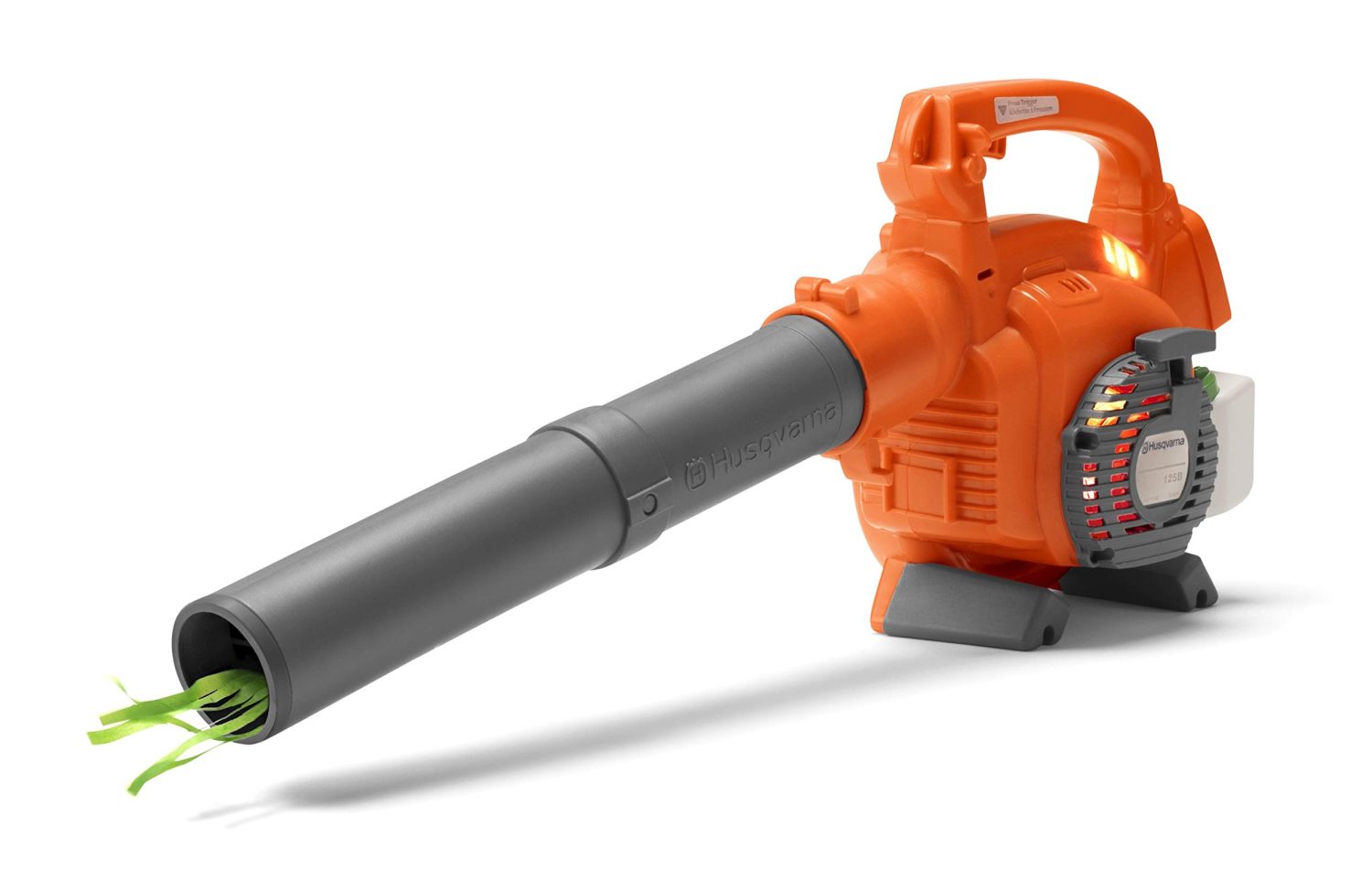
The Husqvarna 125B is one of the most widely owned residential handheld leaf blowers in the United States. First introduced in the mid-2000s and sold through retailers such as Lowe’s, Home Depot, Tractor Supply, and authorized Husqvarna dealers, the 125B established itself as a benchmark for lightweight, affordable, gas-powered blowers. The unit is built around a 28cc, 2-stroke X-Torq engine rated at 1.1 horsepower. According to Husqvarna’s official specifications, the blower delivers a maximum air velocity of 170 mph and an air volume of 425 to 470 CFM, with a blowing force of 12.5 N, all at a working weight of just 9.4 pounds. It features an air purge primer system, an auto-return stop switch, a variable-speed throttle with cruise control (throttle lock), and an adjustable blowing tube.

Despite its simplicity and reputation for reliability, the Husqvarna 125B is a small, two-stroke air-cooled engine, and like all such engines it depends on three things working in concert: clean fuel delivered at the correct air-fuel ratio, a hot and properly timed spark, and adequate compression. When any one of these is degraded, the blower will exhibit symptoms ranging from hard starting and stalling to surging, bogging, and total failure to fire. Many of these Husqvarna 125B problems are traceable to predictable wear items, particularly fuel lines, the primer bulb, the carburetor diaphragm, the spark plug, and after roughly five years of service, the ignition coil.
This article is a comprehensive 125B troubleshooting and repair resource for the blower and its closely related variants. It draws on the official Husqvarna operator’s manual, expert technician threads, owner forum discussions, and verified parts documentation. It is organized by major problem category, and within each category the symptoms, causes, troubleshooting steps, and solutions are addressed in turn. Specific Husqvarna part numbers, tool requirements, and cost estimates are included so that the reader can decide whether to perform a do-it-yourself repair or take the unit to an authorized service center.
Husqvarna 125B Model Variants Covered
The 125B platform exists in several closely related variants. They share the same 28cc engine, the same Zama C1Q-W37 carburetor, the same ignition coil, and the same fuel system architecture, which means most repair procedures and replacement parts cross over directly between them.
- Husqvarna 125B (handheld blower): The base handheld model, weighing 9.4 pounds, with the standard recoil starter and no impeller mulching blade. Production years span roughly 2007 through the present, with documented service-parts breakdowns for 2007-05, 2008-05, 2008-10, and 2010-01 models.
- Husqvarna 125BVx (vacuum/blower combo): Adds a vac-kit attachment that converts the unit into a leaf vacuum/mulcher with shredding blades on the impeller, increasing weight to 9.6 pounds. The 125BVx also includes Smart Start, which reduces starter cord pull resistance by up to 40% to compensate for the heavier impeller. The base 125B does not include Smart Start because it lacks the mulching impeller. Documented production codes include 125BVX (2001-04), (2007-05), (2008-01), (2008-06), (2010-06), and (2011-04).
- Husqvarna 125BX: A handheld blower variant typically supplied with a flare nozzle for higher concentrated air speed. Documented production years include 125BX (2008-06) and (2010-06). The 125BX shares the same Zama C1Q-W37 carburetor and 585836101 ignition coil as the 125B and 125BVx, and replacement carburetors are widely available through retailers such as Tractor Supply.
- Husqvarna 125BT (backpack): A 28cc backpack version that has been formally discontinued by the manufacturer. Its engine architecture is similar but the housing is different.
In addition, the same Zama C1Q-W37 carburetor and most fuel system parts are shared with Jonsered B2126 and BV2126 blowers, RedMax HB280 and HB281 blowers, and Craftsman 358794810 and 358794811 blowers, which is useful when sourcing parts. Real-world failure prevalence is broadly similar across these variants, but the 125BVx tends to suffer more recoil-starter complaints because of the heavier impeller, while the 125BX flare nozzle slightly increases backpressure and can amplify symptoms of low compression or carburetor wear.
For new buyers, it is worth noting that Husqvarna currently positions the 125B as a homeowner-grade tool. Although the 125B itself remains in production at the time of writing, its older sibling 125BT backpack model has been discontinued and is generally replaced in the lineup by the 130BT and 150BT backpack blowers. Owners considering a complete replacement rather than another round of repairs frequently cross-shop the Husqvarna 130BT, 150BT, the battery-powered 320iB, or comparable Stihl BG 50 and BG 56 handheld models.
Husqvarna 125B Blower Not Starting
Failure to start is the single most common complaint reported by 125B owners across small-engine repair forums and expert technician services. It usually has a fuel-related root cause but can also stem from ignition or compression problems.
Symptoms
The owner pulls the recoil rope repeatedly with the choke fully closed and the primer bulb pumped, but the engine fails to fire at all, fires once and dies, or starts only after the carburetor is doused with starting fluid. Fuel may or may not be visible in the primer bulb. The spark plug may come out wet (flooded) or bone dry (no fuel reaching the cylinder). In some cases the engine will run for a few seconds on starting fluid sprayed directly into the carburetor throat, then immediately stall, which is a textbook indication that ignition and compression are functional but fuel delivery is interrupted.
Causes
The most frequently reported causes include:
- Stale or ethanol-contaminated fuel that has gummed up the carburetor passages.
- Cracked or hardened fuel lines that allow air to be drawn instead of fuel.
- A cracked or stiffened primer bulb that will not generate suction.
- A clogged fuel filter inside the tank.
- A fouled, oil-soaked, or improperly gapped spark plug.
- A failed ignition coil, which is increasingly common after roughly five years of service.
- A clogged spark arrestor screen at the muffler.
- Operator error involving the choke or stop switch (the auto-return stop switch on the 125B can occasionally feel as if it is in the on position when it has not fully reset).
Troubleshooting Steps
- Verify that the stop/run switch is in the run position and that the choke and primer have been operated correctly. The official starting sequence in the operator’s manual is: pump the primer bulb until fuel is visible, pull the choke fully out, pull the starter cord until the engine fires (typically 2 to 5 pulls), push the choke to the half position, and continue pulling until the engine runs.
- Drain any fuel that has been in the tank for more than approximately 30 days. Refill with fresh 50:1 mix or pre-mixed ethanol-free fuel.
- Remove the spark plug. If it is wet, the engine is flooded; clear it by holding the throttle wide open and pulling the rope 10 to 15 times with the plug removed and the choke off. If it is dry, the carburetor is not delivering fuel.
- Test for spark by re-installing the plug into its boot, grounding the metal body firmly against the cylinder fins, and pulling the rope. A bright blue spark should appear at the electrode. A weak orange spark or no spark indicates an ignition problem.
- Press the primer bulb 6 to 10 times. Fuel should be visible in the bulb and should circulate. A bulb that does not fill, stays depressed, or fills only partially indicates a fuel line, primer, or carburetor problem.
- Inspect the fuel lines through the tank fill neck using a flashlight. Cracked, brittle, or split fuel lines must be replaced.
Solutions
For the typical no-start scenario on the Husqvarna 125B, the recommended sequence is to replace the entire fuel system as a maintenance unit rather than chasing individual components. Husqvarna’s fuel line repair kit (often supplied with grommet, two lengths of line, and the fuel filter) is widely available, and an aftermarket equivalent costs approximately $10 to $20. The Zama C1Q-W37 carburetor (Husqvarna OEM part 545081811 or its supersession 590460102) costs approximately $15 to $25 for an aftermarket replacement and approximately $35 to $60 for a genuine Husqvarna part. The recommended spark plug is the Champion RCJ6Y, gapped at 0.020 inches (0.5 mm), which costs about $4 to $7. If spark testing fails, the OEM ignition coil (Husqvarna part 585836101, which supersedes 545108101) costs approximately $25 to $50 and is straightforward to install. Verified buyers consistently report that coil replacement resolves no-start conditions even when other ignition components appear functional.
If, after these replacements, the unit still will not start, the next steps are to check compression with a small-engine compression gauge (a healthy 125B should produce at least 90 to 100 psi), and to inspect the crankshaft seals for leaks. At that point, many owners conclude that the cost of further repair has approached the cost of replacement.
Engine Starts Then Dies
This complaint is one of the most documented Husqvarna 125B starting issues. The 125B fires up, runs for anywhere from a few seconds to a minute, and then stalls.
Symptoms
The blower starts, sometimes only with the choke fully on, then dies as soon as the choke is pushed in to the half position or the run position. Some users report that they can keep the engine alive by feathering the throttle or by pumping the primer bulb during operation, which is a clear sign of fuel starvation. Others report the engine runs only when starting fluid is sprayed into the carburetor.
Causes
- A clogged fuel filter or partially obstructed fuel pickup line.
- A primer bulb that no longer maintains a vacuum due to a small crack.
- A clogged carburetor inlet screen, which sits under the metering pump cover and is easily missed during a routine cleaning.
- A hardened metering diaphragm inside the carburetor; this internal diaphragm functions much like a check valve and will fail after several seasons of ethanol exposure.
- A cracked fuel tank vent that prevents the tank from venting properly, creating a vacuum that pulls the fuel column back from the carburetor.
- An air leak around the carburetor mounting gasket or pulse line (impulse line) that connects the crankcase to the carburetor’s fuel pump diaphragm.
Troubleshooting Steps
- Confirm that the engine will start cleanly with starting fluid. If it dies even with starting fluid, the problem is not pure fuel starvation but probably ignition or compression-related.
- While the engine is running on choke, gradually open the choke and observe the failure point. If it dies immediately when the choke is opened, the carburetor is delivering insufficient fuel.
- Loosen the fuel cap and try starting again. If the engine runs noticeably better with a loosened cap, the tank vent is restricted.
- Remove the fuel filter from the tank and inspect for varnish or debris. The filter is press-fit on the suction line and pulls out through the fill neck with a bent piece of wire.
- Inspect the primer bulb under bright light for hairline cracks, particularly around the perimeter where it seats into the housing.
- Remove the carburetor and inspect the inlet screen. A clogged screen will prevent the primer bulb from retracting after being pressed.
Solutions
Replace the fuel filter (Husqvarna 530095646 or compatible aftermarket); cost is approximately $3 to $6. Replace the primer bulb and the entire fuel line set as a complete kit. Many owners replace the carburetor itself rather than rebuilding it, because a complete aftermarket Zama C1Q-W37 carburetor frequently costs less than a genuine Husqvarna rebuild kit. If the engine runs only on full or partial choke, this is a definitive indication of a lean condition caused by either a clogged jet or an air leak.
If the engine starts and dies even after the fuel system has been refreshed, inspect the impulse (pulse) line connecting the carburetor pump to the crankcase. A cracked or detached impulse line cannot generate the pulse pressure needed to drive the carburetor’s fuel pump diaphragm, and the symptom is identical to a failing carburetor. The impulse line is a small black rubber hose; replacement line stock costs less than $5.
Bogging Down Under Load
Bogging is a specifically documented 125B complaint. Owners often describe a blower that bogs under full throttle from nearly the time of purchase, mistakenly attribute it to the fuel mix, and only after replacing the carburetor and inspecting the spark plug arrive at a likely ignition coil failure.
Symptoms
The engine starts and idles normally but cuts out, sputters, or refuses to climb to full RPM when the throttle is squeezed. In severe cases, squeezing the throttle stalls the engine outright. Some owners describe the engine as “four-stroking” at high RPM, which is a wet, popping sound caused by an excessively rich mixture or a misfire under load.
Causes
- A clogged spark arrestor screen at the muffler, which restricts exhaust flow and chokes the engine at high RPM.
- A clogged or partially closed high-speed jet in the carburetor.
- A failing ignition coil that produces adequate spark at low RPM but breaks down under the higher voltages required at full throttle.
- A clogged air filter that creates a rich mixture under load.
- An incorrect fuel mix, particularly mixes that are too oil-rich (e.g., 32:1 instead of 50:1), which can produce excessive smoke and bogging.
- Carbon buildup in the cylinder exhaust port and on the piston crown, which is more likely on units that have run on incorrect fuel for long periods.
Troubleshooting Steps
- Remove and inspect the air filter. If it is dark, oily, or matted with debris, replace it (Husqvarna part 545112101 or compatible aftermarket).
- Remove the spark arrestor screen at the muffler outlet. Hold it up to the light. If it is more than approximately 25% blocked by carbon, clean it with a brass wire brush or replace it.
- Replace the spark plug with a fresh Champion RCJ6Y gapped to 0.020 inches.
- Verify the fuel is fresh, ethanol-free where possible, and mixed at the correct 50:1 ratio per Husqvarna’s official guidance.
- If bogging persists, swap or test the ignition coil. An ignition coil that has lost its high-voltage capacity will often pass a static spark test but fail under load.
Solutions
Most bogging cases are resolved by cleaning the spark arrestor and replacing the air filter and spark plug, all of which can be done in approximately 20 minutes with basic hand tools. If the unit still bogs, the next intervention is the ignition coil (Husqvarna 585836101). Coil replacement reliably resolves bogging that no other repair has addressed.
For the carbon-buildup scenario, a decarbonization service can be performed by removing the muffler and gently cleaning the exhaust port with a soft tool while the piston is at top-dead-center. This is more involved and is often the point at which DIY owners hand the unit to a service center.
Poor Airflow or Power Loss
This category is distinct from bogging because the engine runs through the full RPM range without stumbling, but the air output from the tube is noticeably weaker than normal.
Symptoms
The engine sounds normal but the blower struggles to move leaves it once handled easily. The user may notice that the unit takes much longer to clear a driveway, or that wet leaves can no longer be moved at all. There is no obvious misfire and no smoke beyond the normal trace of two-stroke exhaust.
Causes
- A loose, missing, or improperly installed blowing tube or nozzle.
- An obstruction inside the blower housing, especially on the 125BVx, where pieces of mulched debris can lodge against the impeller.
- A damaged impeller (fan) blade.
- A clogged air intake screen at the rear of the housing, which is frequently obscured by lint and grass clippings.
- Reduced engine output from any of the causes already discussed under bogging, even if no actual stumble occurs.
Troubleshooting Steps
- Stop the engine, disconnect the spark plug wire as a safety measure, and inspect the air intake screen on the rear of the housing. Clean it with compressed air or a soft brush.
- Remove the blowing tube and nozzle. Confirm the tube halves are seated and locked. Look down the throat into the impeller area for visible obstructions.
- Inspect the impeller for chipped or broken blades. On the 125BVx, ensure the mulching blade is secure on the impeller hub.
- Verify that the air filter is clean, the spark arrestor is clear, and the spark plug is in good condition.
Solutions
The vast majority of perceived power-loss complaints on the 125B trace back to clogged screens or a partially blocked spark arrestor, both of which are no-cost fixes. If the impeller is damaged, replacement impellers are available from Husqvarna parts dealers with prices typically in the $20 to $40 range. A damaged impeller almost always indicates that something hard, such as a small stone or screw, was ingested through the intake; the user should review whether the unit is being used on appropriate surfaces and with the intake screen properly installed.
Husqvarna 125B Fuel System Problems
Because so many 125B failures originate in the fuel system, it merits its own dedicated section even though specific fuel-related issues have been touched on in earlier categories.
Symptoms
Symptoms include hard starting, fuel staining around the carburetor, the smell of gasoline at rest, a primer bulb that will not fill or that stays compressed, fuel leaking from the muffler when the rope is pulled, and a noticeable loss of fuel from the tank between uses (which suggests evaporation through a cracked line).
Causes
The Husqvarna 125B operator’s manual and small-engine technicians repeatedly cite the same set of fuel system failure modes:
- Ethanol-blended fuel (E10) attacking and hardening fuel lines, the primer bulb, and the carburetor diaphragm.
- Stale fuel forming varnish in the carburetor jets.
- Fuel lines installed in reverse during a previous repair, a documented cause of post-repair failure on the 125B.
- A cracked fuel tank vent.
- A flooded crankcase from over-priming or repeated unsuccessful starting attempts.
A common technician recommendation is annual replacement of fuel lines and carburetor rebuilds for all 2-stroke equipment, because ethanol fuels can be quite harsh on fuel systems.
Troubleshooting Steps
- Drain all fuel from the tank into an approved container.
- Remove the fuel cap and check the small vent passage. A blocked or cracked vent can be tested by running the engine briefly with the cap loose; improvement indicates a vent problem.
- Use a flashlight to inspect every visible inch of fuel line. A line that has lost its flexibility or shows surface cracks is past its service life.
- Trace the fuel routing carefully. The correct routing on the 125B is: pickup line with filter from the tank to the bottom carburetor fitting, then a line from the top of the carburetor to the short barb on the primer bulb, then a return line from the long barb of the primer bulb back into the tank. Reversed lines are a frequent cause of failure after DIY repairs.
- If the engine has been flooded by repeated unsuccessful starting attempts, remove the spark plug, ground the kill switch, hold the throttle wide open, and pull the rope 10 to 15 times to clear excess fuel from the cylinder before reinstalling the plug.
Solutions
The standard fuel system service for the 125B consists of a complete fuel line kit, primer bulb, fuel filter, grommet, and an inspection of the carburetor. Aftermarket complete kits including a Zama C1Q-W37 carburetor, gaskets, fuel lines, primer bulb, fuel filter, air filter, and spark plug are widely available for approximately $20 to $30. A single complete kit installation typically restores the unit to factory operation. Required tools are limited to a Torx T20 driver, a 5/16-inch nut driver, needle-nose pliers, and a small flat-blade screwdriver.
Long term, the most effective fuel system solution is preventive: switch from pump-station E10 to ethanol-free pre-mixed fuel such as Husqvarna XP+ or TruFuel for any unit that is used less than weekly. The pre-mixed fuel costs more per ounce but eliminates more than 90% of the fuel system failures discussed in this article.
Ignition and Spark Issues
Husqvarna 125B ignition complaints fall into two broad categories: complete loss of spark, and weakened spark that produces hard starting or hot-start failure. The 125B’s ignition system is a flywheel magneto with a two-screw ignition coil mounted next to the flywheel and a kill-switch wire from the coil to the stop switch.
Symptoms
A complete loss of spark is straightforward: the engine never fires regardless of fuel, choke, or priming. Weakened spark is more insidious: the engine starts cold, runs through a tank, then refuses to restart when warm, or begins misfiring under heavy load.
The “no spark” condition is a common 125B failure mode after several seasons of use. The “hot start” condition, in which the blower runs fine when cold but refuses to restart while warm, is widely documented in verified-buyer reviews of the 585836101 ignition coil.
Causes
- A failed ignition coil. Ignition coil failure becomes statistically common on the 125B after roughly 5 years and is often the root cause of hot-start failure even when cold spark is normal.
- A grounded kill-switch wire, which can occur when the wire’s insulation is rubbed through and shorts to the housing.
- An incorrect coil-to-flywheel air gap. The factory specification is small enough that many technicians use a business card (approximately 0.012 to 0.014 inches) as a feeler gauge.
- Damaged or rusted flywheel magnets.
- A cracked or carbon-tracked spark plug, or a damaged spark plug boot.
- A keyway sheared on the flywheel, which is rare but possible after the unit has been dropped or struck.
Troubleshooting Steps
- With the spark plug removed and grounded against the cylinder, confirm or rule out spark by pulling the rope. Repeat with a known-good spark plug.
- Disconnect the kill-switch wire from the coil. If spark returns, the kill-switch circuit is grounding the ignition. Repair the wire or replace the stop switch.
- Remove the recoil starter and the cover (four hex screws on the recoil, plus housing screws). Inspect the coil and flywheel area for debris, rust, and the correct air gap.
- Use a feeler gauge or a folded business card to verify the coil-to-flywheel gap.
- If the coil checks visually and the gap is correct but no spark occurs, replace the coil.
Solutions
Replacement of the ignition coil with the OEM Husqvarna 585836101 (which supersedes the older 545108101) is the definitive fix for both complete spark loss and most hot-start failures on the 125B. The coil installs with two screws and a single push-on wire connector; the full job typically takes 20 to 30 minutes once the housing covers are removed. Owners are strongly advised to use the OEM part rather than the cheapest aftermarket coil, because off-brand coils have a high failure rate including internal shorts straight out of the package. Aftermarket coils run approximately $15 to $20; the genuine Husqvarna unit is $35 to $55. If the kill-switch wire is the culprit, replacement wire and a new switch are inexpensive (under $10) and easily installed.
Maintenance-Related Failures
A separate category of failures, distinct from random component aging, is maintenance-related: damage that results directly from how the unit is used, fueled, and stored.
Symptoms
These include a recoil starter cord that no longer retracts, a recoil spring that has snapped, a throttle linkage that no longer returns to idle, a cruise control lever that will not hold position, fuel staining throughout the housing, and crankcase seal leaks that produce an unfixable lean-running condition.
Causes
- Pulling the recoil cord too aggressively, particularly after a flooded-engine condition, breaks the rewind spring. This is more common on the 125BVx because the mulching impeller increases pull resistance.
- Storing the unit with ethanol fuel in the tank causes long-term hardening of the carburetor diaphragm, primer bulb, and fuel lines, even when the unit is not in use.
- Crankcase seal leaks occur when the crankshaft seals harden, allowing air to be drawn into the crankcase. This produces a chronic lean condition that no carburetor adjustment can correct.
- Spark arrestor neglect leads to severe carbon buildup over multiple seasons.
- Operating with a partially blocked air filter accelerates carbon buildup in the combustion chamber.
Troubleshooting Steps
- For recoil failures, remove the four screws securing the recoil starter assembly and inspect the rope, pulley, and spring. A broken spring is visible as a loose curl of metal inside the pulley housing.
- For throttle linkage problems, remove the air filter cover and observe the throttle plate movement as the trigger is squeezed. The plate should open fully when the trigger is fully squeezed and return fully closed when released.
- For suspected crankcase seal leaks, perform a pressure and vacuum test on the engine. This requires special block-off plates and a pressure tester and is generally beyond DIY scope.
Solutions
A complete recoil starter assembly for the 125B is available aftermarket for approximately $10 to $20 and replaces in approximately 20 minutes. A recoil spring alone is less expensive but more difficult to install, because it must be wound under tension. Throttle linkage parts are model-specific and should be ordered from Husqvarna directly using the parts diagrams available on the official Husqvarna 125B support page. Crankcase seal replacement requires splitting the engine cases, and at the labor rates of an authorized service center, this repair frequently exceeds the cost of a new unit; it is the textbook condition under which a 125B is declared beyond economical repair.
Specific Husqvarna 125B Problem Patterns Reported by Owners
The following patterns recur often enough across owner forums and technician services that they merit explicit treatment.
Hard starting after sitting for months: This is almost always varnished fuel in the carburetor combined with a hardened primer bulb and brittle fuel lines. The fix is a complete fuel system service (lines, filter, primer, and either a carburetor cleaning or replacement) and refilling with fresh fuel.
Engine runs only with choke partially on: This is a lean-running condition. The cause is either a partially clogged carburetor (most likely) or an air leak between the carburetor and the cylinder. Begin with carburetor cleaning or replacement; if that fails, suspect the carburetor base gasket, the impulse line, or eventually the crankshaft seals.
Loss of power at full throttle: This is most often the spark arrestor screen, the air filter, or a worn ignition coil. Address those three components in that order.
Hot start failure (will not restart when warm): As described in the Ignition section, this is the classic 585836101 ignition coil failure pattern after approximately 5 years of service.
Air leaks around the carburetor gasket: After any carburetor removal, the thin paper-and-fiber gasket between the carburetor and the cylinder must be replaced if it is torn or compressed. A failure here produces the same symptoms as a hardened metering diaphragm.
Cracked fuel tank vent: A vent that does not allow air into the tank produces a partial vacuum as fuel is consumed, eventually starving the carburetor. A unit that runs better with a loose fuel cap is the textbook indicator.
Spark arrestor screen clogging: Required by U.S. emissions and forestry regulations, the spark arrestor screen is a small metal mesh inside the muffler outlet that catches embers. It can clog with carbon over a season and is designed to be removable for cleaning.
Pull cord recoil spring failure: Caused by aggressive starting, particularly after flooding. Replacement of the entire recoil module is far easier than rewinding the spring.
Husqvarna 125B Preventive Maintenance and Servicing Schedule
The single largest determinant of 125B longevity is fuel quality and storage discipline. The following maintenance schedule is consistent with Husqvarna’s official 2-stroke fuel and oil recommendations and the consensus advice from small-engine technicians.
Every use: Inspect the air intake screen and clear away accumulated lint, leaves, and grass clippings before starting. After each use, wipe down the housing.
Every 5 hours or every tank: Inspect the air filter. Tap out heavy debris; if the filter is oily or matted, clean it in soapy water, allow to dry completely, and reinstall.
Every 25 hours or annually, whichever comes first: Replace the spark plug with a Champion RCJ6Y gapped to 0.020 inches (0.5 mm). Inspect fuel lines for surface cracks, even if the unit appears to run normally; lines should be replaced preventively every 2 to 3 years regardless of visible condition. Inspect the primer bulb and replace if it has lost its translucent clarity or shows any compression set. Clean the spark arrestor screen.
Every 50 hours or every 2 years: Inspect and clean the carburetor, replace the fuel filter, and replace the air filter. If the unit has spent any time on E10 fuel, replace fuel lines and primer bulb as a complete set.
Off-season storage: The most important single step is to avoid leaving ethanol-blended fuel in the tank for any extended period. Owners have two acceptable options. The first is to drain the tank completely and run the engine until it stops on its own, which removes fuel from the carburetor as well. The second is to fill the unit with ethanol-free pre-mixed fuel such as Husqvarna XP+ or TruFuel, treat it with a marine-grade fuel stabilizer such as Sta-Bil 360 Marine or Star Tron, and run the engine for two minutes to circulate the stabilized mixture through the carburetor.
Husqvarna 125B fuel mix specifications: The 125B requires a 50:1 mix of unleaded gasoline at 89 octane or higher with a JASO FD or ISO-L-EGD rated 2-stroke oil. Husqvarna recommends its own XP+ 2-stroke oil at 2.6 fluid ounces per gallon of gasoline. Mixed fuel should be used within 30 days unless treated with stabilizer; even then it should be discarded after 90 days.
Ethanol avoidance: Ethanol absorbs water and degrades rubber and plastic fuel-system components. The manufacturer strictly warns against using gasoline with more than 10% ethanol and prefers ethanol-free fuel where available. Owners in regions where ethanol-free pump gas is unavailable should default to pre-mixed canned fuel for any equipment that is used less than weekly.
Husqvarna 125B Tools, Parts, and Cost Reference
For owners performing their own repairs, the following tool list will cover essentially all routine 125B work: a Torx T20 driver, Torx T25 driver, 5/16-inch nut driver, small flat-blade and Phillips screwdrivers, needle-nose pliers, a spark plug socket (typically 5/8 inch or 13/16 inch), a feeler gauge or business card for ignition gap, a wire brush for spark arrestor cleaning, and a small can of carburetor cleaner.
Common Husqvarna 125B OEM part numbers are:
- Carburetor (Zama C1Q-W37): 545081811, superseded by 590460102.
- Ignition coil: 585836101, supersedes 545108101.
- Air filter: 545112101.
- Spark plug: Champion RCJ6Y, gap 0.020 inches.
- Fuel line/filter/primer kit: aftermarket complete kits commonly under part number 581798001 reference.
Approximate parts costs as of recent pricing:
- Spark plug: $4 to $7.
- Air filter: $5 to $10.
- Fuel line kit (complete with primer and filter): $10 to $20 aftermarket; $20 to $30 OEM.
- Aftermarket carburetor with kit: $15 to $30.
- OEM Husqvarna carburetor: $35 to $60.
- Aftermarket ignition coil: $15 to $25.
- OEM ignition coil 585836101: $35 to $55.
- Recoil starter assembly: $10 to $25.
A complete preventive overhaul (carburetor, all fuel system rubber, spark plug, and air filter) using aftermarket parts typically costs $40 to $60 and takes a competent DIY owner 1 to 2 hours.
When to DIY and When to Take the 125B to a Service Center
Most Husqvarna 125B repairs are within the reach of a moderately experienced DIY owner, particularly given the volume of repair tutorials available online covering carburetor replacement, ignition coil replacement, and full fuel-system rebuilds on this exact platform.
DIY is appropriate for:
- Fuel line, primer bulb, and fuel filter replacement.
- Carburetor cleaning or replacement.
- Spark plug replacement and gapping.
- Ignition coil replacement.
- Spark arrestor cleaning.
- Air filter cleaning or replacement.
- Recoil starter assembly replacement.
A trip to an authorized Husqvarna service center is justified for:
- Suspected internal engine damage (scoring, low compression below 90 psi).
- Crankshaft seal replacement.
- Cylinder or piston replacement.
- Warranty work, since opening the engine voids the remaining warranty if performed by anyone other than an authorized dealer.
- Cases where the owner has replaced the obvious wear items and the symptoms persist.
When the Husqvarna 125B Is Beyond Economical Repair
A new Husqvarna 125B retails for roughly $150 to $200 in 2026 dollars at major retailers. Authorized service center labor in the United States typically runs $90 to $130 per hour. A diagnostic and minor carburetor service often runs $60 to $100 with parts; major repairs such as crankcase seal replacement, piston work, or cylinder service routinely exceed the new unit price.
Owners should weigh replacement against repair when any of the following are true:
- The unit is more than 7 years old and has multiple failures (carburetor, ignition, recoil) at the same time.
- Compression has fallen below 90 psi.
- Crankshaft seals have failed.
- The flywheel keyway has sheared.
- The total estimated parts and labor for repair approaches or exceeds 60% of the price of a new unit.
For most owners, performing a single fuel-system rebuild and a spark plug replacement on a 5- to 7-year-old 125B is clearly worthwhile; chasing intermittent ignition or compression problems on a 10-year-old unit usually is not.
Conclusion
The Husqvarna 125B remains one of the most popular handheld gas leaf blowers in the United States because the underlying engineering is sound, the parts are inexpensive and widely available, and most failures can be repaired by the owner in an afternoon. The recurring Husqvarna 125B problems documented across owner forums, expert technician threads, and the manufacturer’s own customer support channels are not random; they cluster predictably around fuel system aging, ignition coil failure after 5 years, and the cumulative damage caused by ethanol fuel and improper off-season storage.
The single most effective intervention an owner can make is to commit to fresh, properly mixed 50:1 fuel using a high-quality JASO FD or ISO-L-EGD 2-stroke oil such as Husqvarna XP+, ideally with ethanol-free gasoline or pre-mixed canned fuel for equipment used less than weekly. The second most effective intervention is preventive replacement of the fuel lines, primer bulb, and fuel filter every 2 to 3 years before they crack. The third is annual replacement of the spark plug and cleaning of the spark arrestor screen.
When troubleshooting a malfunctioning unit, the disciplined approach is to verify spark first, then fuel delivery, then compression, and to address the cheapest and most likely failure points before opening the engine. The Champion RCJ6Y spark plug at $5, the complete fuel system kit at $20, the Zama C1Q-W37 carburetor at $25, and the 585836101 ignition coil at $40 will resolve, in some combination, the overwhelming majority of Husqvarna 125B failures encountered in real-world use.
For owners whose 125B has reached the end of its serviceable life, Husqvarna’s current handheld lineup, the 125BVx, the battery-powered 320iB, and the slightly larger 130BT and 150BT backpack models offer direct upgrade paths. For those whose 125B is still serviceable, the parts ecosystem, the documentation, and the community knowledge base around this blower remain robust enough that a well-maintained unit can deliver a decade or more of reliable residential service.