
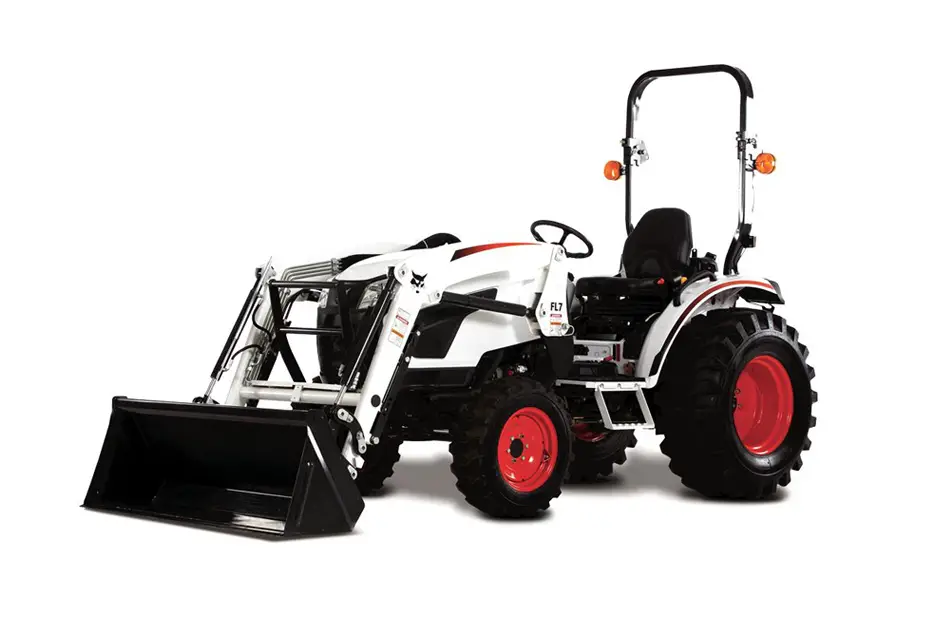
The Bobcat CT2025 is a 24.5-horsepower compact tractor in Bobcat's 2000-platform (CT2000-series) lineup, built in partnership with Daedong/Kioti of South Korea. It is offered in hydrostatic (HST) and manual-shift (MST) transmission variants, ships standard with four-wheel drive, a Category 1 three-point hitch and a rear power take-off (PTO), and is commonly equipped with the Bobcat FL7 front-end loader and the BH66 or BH76 backhoe. This article examines the major problem categories reported by owners and technicians, explains the underlying components, and provides practical, step-by-step troubleshooting and solutions. Where CT2025-specific information is limited, this article draws on the mechanically identical Kioti CK2610 as a cross-reference and states so explicitly.

Sources referenced throughout include the Bobcat official specification and service pages (bobcat.com and Bobcat service schedules), TractorData, dealer specification sheets, and owner communities such as TractorByNet, My Tractor Forum, the Bobcat Tractor Group on Facebook, and Kioti references such as Mowing.Expert.
TL;DR
- The most frequently reported CT2025 problems are fuel-system stalling and hard starting (air in the fuel system, clogged fuel filter, contaminated tank), loader hydraulic weakness (air entrapment, a stuck quick-coupler needle, or a bypassing loader valve), and no-start conditions traced to the battery, safety interlock switches or a drained accessory circuit. The overwhelming majority of these are owner-serviceable and inexpensive.
- The CT2025 uses a naturally aspirated, mechanically injected 3-cylinder Daedong diesel with NO diesel particulate filter (DPF) and no regeneration cycle, which spares owners the DPF headaches common to larger emissions-controlled tractors; the tradeoff is a simple engine that depends heavily on clean fuel and correct cold-start (glow-plug) procedure.
- Disciplined preventive maintenance — the first-service oil and filter change, clean diesel, timely hydraulic/HST fluid and filter changes, battery care, and safety-switch inspection — prevents the large majority of reported failures.
Key Findings
- Fuel is the number-one culprit. Multiple CT2025 owners report stalling, sputtering and no-restart episodes traced to running the tank low, clogged fuel filters and sludge/water in the tank. Because the engine is gravity-fed with mechanical injection and no lift pump, air must be bled from the system after any fuel starvation event.
- Loader "weak curl" is a recurring complaint on the FL7 loader, and it has several distinct root causes: air trapped in the hydraulic circuit, a hyper-extended quick-coupler check needle that blocks flow, a bypassing loader control valve, and simple operator factors (low engine RPM, heavy attachments, load too far forward of the pins).
- No-crank/no-start faults are usually electrical, not mechanical: a weak or drained battery (often from an accessory such as a hard-wired cab heater), corroded terminals, or an open safety interlock switch. The engine itself rarely fails to start when it is receiving fuel, cranking speed and functioning glow plugs.
- HST "hard shifting" between ranges is normal behavior, not a defect. The range lever is a sliding-collar gearbox; the fix is to feather a drive pedal so the gears align.
- The CT2025 is a rebadged Kioti CK2610 on the same drivetrain, so Kioti CK2610 troubleshooting is broadly applicable, with the important exception of the loader (Bobcat uses its own FL-series loader, not Kioti's KL-series) and paint/branding.
- Two widely repeated online specifications are wrong and are corrected here: the rated engine speed is 2600 rpm (not 3400 rpm), and the current engine oil change interval is approximately every 100 hours or annually (not 250 hours, a figure that comes from Bobcat loader/excavator literature, not the CT2025 tractor schedule).
Technical Overview and Model/Variant Differences
The CT2025 is powered by the Daedong (Kioti) 3-cylinder diesel, engine model 3A165LWM(H), of 100 cubic inches (three-cylinder) displacement, rated at 24.5 horsepower at a rated engine speed of 2600 rpm, and certified to EPA Tier 4. These figures are confirmed by Bobcat's CT2025 dealer specification sheet (Best Line Equipment), which lists "Engine Power Horsepower: 24.5 hp | Gross: 24.5 hp · Displacement 100 in³ · Cylinder Liners 3." Critically, this is a naturally aspirated, indirect-injection (swirl-chamber) engine with mechanical fuel injection and no electronic engine control unit, no exhaust gas recirculation, and no diesel particulate filter. One TractorByNet owner summarized the platform accurately: "CT2025 is simple mechanical fuel injection. When you get above 26HP is where it becomes electronic fuel injection with an Engine Control Unit (ECU)."
This is a meaningful reliability advantage — CT2025 owners are not exposed to the regeneration and DPF-clogging problems that plague larger compact tractors — but it also means the engine is entirely dependent on clean fuel, proper glow-plug use and mechanical condition.
The most important variant split is transmission type:
- HST (hydrostatic) models use a 3-range hydrostatic transmission with twin treadle pedals (one forward, one reverse). These are the most popular configuration and the easiest to operate, but they introduce HST-specific concerns: pedal feel, air in the hydrostatic circuit, and the shared hydraulic/HST fluid that must be kept clean.
- MST (manual-shift) models use a 9-forward, 3-reverse gear transmission with a mechanical clutch and a live (clutch-dependent) PTO. These eliminate HST pedal complaints but introduce a learning curve for range shifting and clutch adjustment.
Other configuration differences that affect problem prevalence:
- Loader-equipped tractors (FL7): Nearly all CT2025 units are sold with the FL7 front-end loader (weight 915 pounds, lift height to pin 95 inches). Loader hydraulic complaints (weak curl, bypass noise) are therefore among the most common of all reported issues.
- Backhoe-compatible models (BH66/BH76): Adding a backhoe multiplies the number of hydraulic couplers, hoses and seals. The BH66 weighs 657 pounds with a bucket digging force of 2,240 pound-force; the BH76 weighs 880 pounds with a bucket digging force of 3,075 pound-force. Several owners report leaks at backhoe banjo fittings and difficulty lifting the rear of the tractor on the stabilizers when overall hydraulic pressure is marginal.
- Production updates: Bobcat revised the maintenance schedule after the earliest (2020) units shipped. Early owners received manuals that did not call for an engine oil change until 400 hours; Bobcat later issued updated under-hood service stickers moving to a first-service change plus a roughly 100-hour/annual interval. Owners who bought early should confirm they are following the updated schedule.
The hydraulic system delivers a total flow of 11.4 gallons per minute, with an implement flow of 6.9 gallons per minute, per Bobcat's CT2025 dealer specification. (Sources conflict on the steering-circuit flow: some Bobcat dealer listings and third-party spec pages state 4.5 gallons per minute, which sums correctly with the implement flow to the 11.4-gallon-per-minute total, while at least one Bobcat dealer sheet lists 1.8 gallons per minute; the 4.5-gallon figure is internally consistent with the published total.) The three-point hitch is Category 1 with a lift capacity of 1,630 pounds (740 kilograms) measured 24 inches behind the pin per the technical specification, which Bobcat marketing rounds to 1,631 pounds. Operating weight is 2,645 pounds (1,200 kilograms). Rear PTO power is 22.2 horsepower (16.6 kilowatts) on gear/MST models and 21.8 horsepower (16.3 kilowatts) on HST models, at 540 rpm.
Engine Starting & Performance Problems
Symptoms
- Engine cranks but will not start, especially in cold weather.
- Engine starts, runs for a few seconds, sputters and dies.
- Engine loses power under load (for example, backing up a hill), then stalls.
- Hard cold starting with excessive white smoke on start-up.
- Long cranking after the tractor has run out of fuel.
Causes
The dominant cause on the CT2025 is fuel starvation and air in the fuel system. Because the engine is gravity-fed from the tank with a mechanical injection pump and no electric lift pump, any event that lets the tank run low or introduces air — running out of fuel, a clogged filter, a partially blocked feed line, or a debris-fouled tank — will cause sputtering and stalling, and the system must then be bled before the engine will run again. A TractorByNet owner ("kb27") described the classic sequence: the tractor sputtered and died backing up a hill with the gauge under one-quarter tank; after adding fuel it would start and immediately die.
Fellow members correctly diagnosed air in the system: "Probably did run it out of fuel. You'll need to bleed the air out of the system."
When he investigated, he found the real culprit: "I pulled the fuel line from the tank off the filter housing. A bunch of sludge came out … I ended up taking the filter housing off and using compressed air to blow out the feed line. Once that was flowing nicely, everything went back together fine and the tractor runs nicely now."
Cold-starting problems are typically glow-plug related. The glow plugs warm the combustion pre-chambers so the compression-fired diesel will ignite; weak, failed or under-cycled glow plugs produce hard starts and white unburned-fuel smoke. In severe cold (below roughly zero degrees Fahrenheit), even healthy glow plugs may be insufficient without a block heater. Contaminated or gelled winter fuel is a secondary cold-weather cause.
Loss of power under load, if not fuel-related, can indicate a clogged air filter (starving the engine of air) or, rarely on a low-hour machine, low compression.
Troubleshooting Steps
- Check the fuel level first — do not rely on the gauge reading near one-quarter tank, as pickup geometry and hills can uncover the pickup.
- Inspect and, if in doubt, replace the fuel filter. Examine the filter housing for sludge and water.
- If the tractor ran out of fuel or a filter was changed, bleed the fuel system: open the bleeder at the filter/pump, operate the manual primer, and if necessary crack the injector lines one at a time until fuel flows without air.
- If bleeding fails, disconnect the feed line at the filter housing and confirm free flow from the tank; a common CT2025 finding is sludge blocking the tank outlet, which can be cleared with compressed air.
- For hard cold starts, cycle the glow plugs fully (allow the glow indicator to complete), and test each glow plug for continuity; replace any that read open.
- Inspect the air filter element and replace if dirty.
- Confirm fuel quality; contaminated or biologically fouled diesel requires draining and treatment.
Solutions
- Replace the fuel filter, bleed the system, and clean the tank/feed line of sludge. Several owners recommend adding a diesel biocide, or removing and cleaning the tank if contamination is found, and reviewing the fuel source. One owner asked about fitting a pre-filter (inline filter) ahead of the main fuel filter to protect the housing inlet — a reasonable preventive modification.
- Replace failed glow plugs (Bobcat genuine glow plugs are available; earlier part numbers are superseded by direct replacements). For habitual cold-climate use, install the Bobcat block heater kit; owners in Minnesota and Saskatchewan report the block heater is standard dealer pre-delivery practice in cold regions and "money well spent," and recommend a diesel anti-gel additive.
- Never use starting fluid (ether) as a routine aid on this engine; experienced diesel owners warn it can damage a diesel engine and mask an underlying compression or glow-plug fault.
Hydraulic System Problems
Symptoms
- Front loader will not curl (roll back) a load, or the curl "gives" under weight even though lifting is strong.
- A fluid-bypass sound (relief-valve "groan") when curling or dumping, worse at low RPM.
- Hydraulic oil leaking from banjo fittings, valve bolt-joints, or hoses.
- Backhoe stabilizers cannot lift the rear of the tractor.
- Weak or slow attachment operation generally.
Causes
The most-discussed CT2025 hydraulic issue is loader "weak curl." The FL7 loader shares the tractor's implement hydraulics, and weakness has several root causes documented in a long TractorByNet thread. Air trapped in the circuit is one; a defective quick-coupler is another. One owner ("Houdini") found the smoking gun on his machine: "The curl QD had one of the needles that push together to enable flow 'hyper extended' … and wouldn't depress. I took a drift punch and gave a few gentle taps on it … to reseat the needle to re-enable flow."
Others reported a bypass condition in which "uncurling the loader generally makes the noise associated with fluid bypass," worse at low engine speed. Operator factors are also frequently the real explanation: heavy skid-steer forks (roughly 400 pounds versus 250 for light tractor forks), loads carried far forward of the loader pins, and low engine RPM all sharply reduce effective curl and lift. Bobcat's specification test requires full engine RPM.
Leaks are the second hydraulic category. On related Bobcat compact tractors, owners report a history of tube cracking at the banjo connector and leaks at the loader-valve bolt-joints; a CT2025 backhoe owner reported "a blown seal at banjo fitting on backhoe controls" repaired under warranty and a blown loader-dump hose from over-stressing the system with an oversized rock-screen bucket. High-pressure hydraulic fluid is dangerous: as Stucchi USA warns, it can reach temperatures often exceeding 300 degrees Fahrenheit and can inject through skin. Never search for a leak with your hand; use cardboard, relieve system pressure, and prop raised loaders before working underneath.
Troubleshooting Steps
- Confirm the hydraulic/transmission fluid level and condition first — low fluid is the simplest cause of weak or noisy hydraulics.
- Purge air: with the engine running, push the loader control fully in each direction and hold for 15 to 20 seconds; cycle curl, dump, raise and lower several times.
- Test at full engine RPM (approximately 2000 to 2500 rpm for loader work), not at idle, before concluding the loader is weak.
- Account for attachment weight and load position; re-test with the load close to the pins.
- If curl is weak, isolate the circuit by removing quick-couplers one at a time and inspect the coupler check-needles for a stuck or hyper-extended needle; gently reseat as needed or replace the coupler.
- For a suspected internal bypass or relief-valve setting, install a gauge at the loader ports and measure pressure while operating the relief; compare to specification with data in hand before consulting the dealer.
- Inspect banjo fittings, valve bolt-joints and hoses for leaks; tighten bolt-joints to specification or replace gaskets/O-rings. Use a UV dye and blacklight if the leak source is hidden.
Solutions
- Reseat or replace faulty quick-couplers; this resolved the weak-curl complaint for at least one owner without any dealer visit.
- Bleed air thoroughly after any fluid service; incomplete purging is a frequent cause of spongy or bypassing hydraulics.
- Replace cracked tubes, worn O-rings and blown hoses; a blown loader hose was remade at an auto-parts store for about 60 dollars by one owner.
- Where the dealer insists the system "is in spec" but stabilizers cannot lift the rear and curl is clearly deficient, document measured pressures and escalate; peer owners confirmed their stabilizers lift the rear "without issue," which is the correct benchmark.
- Use a quality tractor hydraulic/transmission fluid meeting the Daedong GL-4 specification (cross-referencing to Mobil 424; many owners successfully use Tractor Supply Traveler-brand universal tractor fluid).
Hydrostatic Transmission & Drive Problems
Symptoms
- On HST models, the range lever is hard to move between ranges (Low/Medium/High); grinding or refusal to slide into a range.
- Jerky or surging takeoff, especially when cold.
- On MST models, gear clash when shifting.
- Tractor will not move in one or both directions.
Causes
The most common HST complaint is hard range shifting, and it is normal design behavior rather than a fault. The range selector is a sliding-collar (straight-cut) gearbox; the gears must be aligned to engage. A CT2025 HST owner asked about this at 15 hours; experienced members explained: "Just press one of the go pedals (forward or backwards) ever so slightly while applying gentle pressure on the gear shift lever till it slides to the desired gear. This will spin the gears inside till the teeth align … The longer you use the tractor … the more it loosens up over time."
A Kubota HST owner confirmed the same behavior across brands: "My kubota with HST and 4500 still needs a tap in the pedal most of the time."
Jerky or surging HST takeoff, particularly when cold, is typically air in the hydrostatic circuit, cold fluid, or a servo/linkage issue — the same failure family documented for other HST tractors, where air purging and full warm-up resolve most complaints.
A complete no-movement condition points to fluid loss, a charge-pump problem, a neutral safety switch fault, disconnected pedal linkage, or (on machines with one) a bypass/tow valve left open. The shared hydraulic/HST fluid means neglected or contaminated fluid can degrade both drive and implement performance simultaneously.
Troubleshooting Steps
- For hard range shifting, stop the tractor, then feather a drive pedal (or, on MST, use the clutch and let the tractor roll a hair) while gently nudging the range lever until the gears align. Do not force the lever.
- For jerky takeoff, allow a full warm-up (roughly 15 minutes in cold weather); cold hydrostatic fluid naturally causes jerkiness.
- Purge air from the hydrostatic circuit: with the engine off, cycle the treadle pedals fully forward and reverse several times, then repeat with the engine running.
- Check the hydraulic/HST fluid level and condition, and confirm the HST filter is not clogged.
- If the tractor will not move at all, check for a bypass/tow valve in the open position, test the neutral safety switch, inspect pedal linkage for disconnected clevis pins, and check for catastrophic fluid loss under the machine.
Solutions
- Educate the operator: hard range shifting is resolved with pedal-feathering technique and improves as the machine breaks in.
- Complete a full hydraulic/HST fluid and filter service and purge air; this cures the majority of jerking and weak-drive complaints.
- Replace a failed neutral safety switch or repair pedal linkage as required; close any open bypass valve.
- For persistent surging after fluid service, inspect the servo valve and charge pump; this is dealer-level work.
PTO & 3-Point Hitch Problems
Symptoms
- Rear PTO will not engage, or disengages unexpectedly.
- Engine bogs or stalls when the PTO is engaged under load.
- Three-point hitch will not lift, will not lower, or will not stay up (leaks down).
Causes
The CT2025 rear PTO is independent (electro-hydraulically engaged) on HST models and live (clutch-dependent) on MST models. As Bobcat of Huntsville explains, the CT2025, CT2035 and CT2040 MST models use a live PTO that "requires you to use the clutch to engage or disengage it."
PTO non-engagement therefore differs by variant: on MST machines it is usually a clutch or linkage issue, while on HST machines it is more often electrical (switch, wiring, fuse, or the safety interlock that prevents engagement unless the operator is seated and controls are in the correct position). Engine bog on engagement usually reflects engaging at too low an RPM or an implement load beyond the tractor's rated PTO power (22.2 horsepower at the rear PTO on gear models, 21.8 horsepower on HST models).
Three-point hitch faults are the most frequently misdiagnosed on this platform, and there is a CT2025-specific "gotcha." A drop-rate (lowering-speed) control knob is located below the seat; when it is turned fully closed, the hitch will not lower at all, though it will still raise. A CT2025 owner reported exactly this — a hitch that would not drop — and the community answer was: "Have you checked the knob below the seat that adjusts the speed the 3 pt hitch lowers? When this knob is fully closed, it won't let the 3 pt hitch lower at all. It will still let it raise at full speed regardless of the knob position."
A hitch that raises but leaks down usually has a worn lift-piston O-ring or a control-valve fault; a hitch that will not raise usually has a hydraulic supply problem (low fluid, clogged filter), a linkage issue, or, after adding rear remotes, a selective control valve left in the wrong position (in detent or not centered), which starves the hitch of flow.
Troubleshooting Steps
- For PTO non-engagement on HST models, confirm the operator is seated, the PTO switch/lever is correct, and the PTO safety interlock is satisfied; check the relevant fuse and wiring. On MST models, check clutch operation and PTO linkage.
- For engine bog, increase engine RPM before engaging and verify the implement is within the tractor's PTO power rating.
- For a hitch that will not lower, check the drop-rate knob below the seat first and open it.
- For a hitch that will not raise, verify hydraulic fluid level and filter condition, confirm the loader works (which proves the pump is good), and check that any added rear remote/selective control valves are centered and not in detent.
- For a hitch that leaks down, raise it fully, close the lockout/drop-rate valve, shut off the engine, and observe: if it still seeps, suspect the lift-piston O-ring; if it holds, suspect the control valve. This is the standard diagnostic recommended by Team Tractor & Equipment.
Solutions
- Open the under-seat drop-rate knob — this single check resolves many "hitch won't drop" complaints at no cost.
- Repair or replace PTO switches, fuses, wiring, or (on MST) clutch/linkage components as indicated.
- Replace worn lift-piston seals/O-rings for a hitch that leaks down; service the control valve if the leak is upstream.
- Re-center or correct selective control valves after installing rear remotes.
Electrical & Safety Switch Problems
Symptoms
- Turn the key and nothing happens — no crank, no click.
- Intermittent starting; the machine cranks only after boosting or trickle-charging.
- Battery goes dead when the tractor sits.
- Accessories work but the engine will not turn over.
Causes
No-crank conditions on the CT2025 are predominantly electrical. The most common are a weak, discharged or failed battery; corroded or loose battery terminals; and open or faulty safety interlock switches (seat, PTO, transmission-neutral, and brake), which are wired into the starting circuit by design to prevent unsafe starts. A CT2025 owner ("klw_pitt") reported a dead-key condition after leaving a hard-wired soft-cab heater running: "we left the heater on and now the tractor won't start. Tried jumping, trickle charging battery, got battery checked … I turn the key and nothin happens." The community guidance captured the correct approach: "If it were me, I'd put a completely different battery in to try before moving on to the more complicated stuff. Also check all of your safety switches and their wires; it's possible it has nothing to do with the heater or battery."
This illustrates two lessons: hard-wired accessories can silently drain the battery, and safety switches must be checked before assuming a starter or wiring fault.
Battery drain while parked is often caused by an accessory (cab heater, backup camera, radio) wired to constant power rather than switched power, or by an alternator diode allowing back-drain. Charging faults (battery not charging while running) usually trace to a slipping/loose alternator belt, corroded connections, a blown high-amperage fuse, or a failed alternator; a healthy charging system reads roughly 13.5 to 14.5 volts at the battery with the engine running.
Troubleshooting Steps
- Test the battery under load and substitute a known-good battery before deeper diagnosis; a "checked good" battery can still be weak.
- Clean and tighten battery terminals and ground connections; disconnect the negative terminal first when working on the battery.
- Check and correct any hard-wired accessory that draws constant power; move it to a switched (ignition) source.
- Check the fuses and the safety interlock switches (seat, PTO, neutral, brake) and their wiring; jumper a suspected switch (safely, for diagnosis only) to confirm.
- Verify charging voltage at the battery with the engine off (about 12.4 to 12.7 volts) and running (about 13.5 to 14.5 volts); if low, inspect the alternator belt, connections and the high-amperage fuse.
- Perform a parasitic-draw test (measure milliamps with everything off) to find a drain.
Solutions
- Replace a weak battery and correct terminal corrosion; this resolves the majority of no-crank complaints.
- Rewire accessories to switched power to eliminate parasitic drains; consider a battery disconnect switch or maintenance charger for machines that sit.
- Replace faulty safety switches and repair damaged wiring/connectors.
- Repair the charging system (belt, connections, fuse, or alternator) where charging voltage is out of range.
Front Loader & Steering Problems
Symptoms
- Loader weak on curl, "springy," or bypassing (covered above under Hydraulic System Problems).
- Steering heavy, unresponsive, or wandering.
- Loader joystick unresponsive or erratic.
Causes
Because the CT2025 uses hydrostatic power steering fed by a dedicated steering circuit, heavy or unresponsive steering usually points to low hydraulic fluid, a steering-circuit issue, or (rarely) a steering pump/orbital fault. Loose or corroded connections in the joystick wiring/valve, or a damaged joystick control board, can cause erratic loader joystick behavior; general-troubleshooting sources such as Farmerask note that loose wiring and fuse connections are the most common causes of an unresponsive loader "operate" function and steering that does not respond, and recommend securing all connections first. Steering that wanders under load can also reflect uneven tire pressure or front-axle/toe-in issues.
Troubleshooting Steps
- Check hydraulic fluid level and condition first.
- For heavy steering, run the engine at working RPM and confirm the symptom persists across the full steering range.
- Inspect and secure joystick and steering wiring/connectors and check the relevant fuses.
- Check front tire pressures and toe-in adjustment for wandering.
- If steering remains heavy with correct fluid and RPM, have the steering pump/orbital valve evaluated by the dealer.
Solutions
- Top up or service the hydraulic fluid and purge air.
- Secure or repair joystick/steering wiring; replace a damaged joystick control board if isolated as the fault.
- Correct tire pressures and toe-in.
- Escalate confirmed steering-pump/orbital faults to the dealer.
Maintenance-Related Failures
Symptoms
- Premature or repeat failures (drive-motor, seal, bearing) after neglected servicing.
- Oil leaks from seals and gaskets.
- Overheating.
- Condensation-related fluid degradation in engine and gearboxes.
Causes
A large share of CT2025 "problems" are actually consequences of deferred or incorrect maintenance. The shared hydraulic/HST fluid, in particular, must be kept clean: contaminated fluid degrades drive performance, implement power and steering at once. Overheating (a symptom the Kioti CK2610 shares as a cross-reference) usually stems from a clogged radiator, low coolant, a bad radiator cap or thermostat, or operating at excessively low idle for extended periods. Oil leaks arise from worn seals, bad gaskets, loose bolts or damaged components. Condensation in engines and gearboxes — a particular concern in cold and humid climates — argues for at least annual engine oil changes regardless of hours.
Troubleshooting Steps
- Confirm all fluids are at correct levels and within their service intervals; sample the hydraulic fluid for contamination.
- For overheating, clean the radiator fins, verify coolant level and correct coolant type, and inspect the cap and thermostat.
- For leaks, clean the area, identify the source (UV dye if needed), and determine whether it is a loose fitting, a gasket, or a failed seal.
- Check torque on fasteners; one owner found several loose bolts on a new machine and recommends verifying torque during early services.
Solutions
- Adhere to the service schedule (below) using genuine or correct-specification parts and fluids.
- Replace worn seals and gaskets promptly to prevent secondary damage.
- Clean the cooling system and correct coolant issues; maintain adequate operating RPM.
- Change engine oil at least annually in cold/humid climates to purge condensation.
Preventive Maintenance and Recommended Service Schedule
The following intervals are based on Bobcat's official compact-tractor service schedule and the updated CT2025 maintenance guidance, corroborated by owner reports on TractorByNet. Owners should always confirm against the under-hood service sticker and their own operator's manual, as Bobcat revised the CT2025 schedule after early production.
- Daily / every 10 hours: Check engine oil level, coolant level, hydraulic fluid level, and air filter restriction; walk-around for leaks; check tire pressures; grease loader and three-point pivot points as specified; clean debris from the radiator screen. Check wheel bolt/nut torque at the initial 10-hour point.
- First service (break-in): Change engine oil and filter, and replace the transmission/HST filters, at the first-service point. Early manuals stated 400 hours for the first oil change, but Bobcat's updated guidance and owner consensus is to perform the first engine oil and filter change at the 50-hour break-in, together with the hydraulic/HST fluid and filters and the front-axle gear oil. Also check clutch/brake pedal free play at the first service.
- Engine oil and filter: Approximately every 100 hours or annually per the updated schedule (do not rely on the discredited 250-hour figure, which comes from Bobcat loader/excavator literature, not the CT2025). Use API CK-4 diesel oil; 10W-30 or 15W-40 depending on ambient temperature (5W-40 full synthetic is permitted).
- Fuel filter: Replace at the scheduled interval (roughly every 400 hours) and sooner if operating in dusty conditions or if contamination is found; consider adding an inline pre-filter for protection.
- Hydraulic/transmission and HST fluid and filters: Replace fluid and filters at the scheduled interval. Use a fluid meeting the Daedong GL-4 specification (cross-references to Mobil 424; many owners use Traveler-brand universal tractor fluid). Purge air after every fluid service.
- Front axle oil and front-axle pivot: Replace the front differential/axle oil (80W-90 gear oil) on schedule and adjust the front-axle pivot as specified.
- Cooling system: Inspect coolant and hoses regularly; replace coolant approximately every 1000 hours or every 24 months, whichever comes first. Verify the correct coolant type (do not mix propylene-glycol and ethylene-glycol coolants).
- Battery and electrical: Check cables, connections and grounds; keep terminals clean; use a maintenance charger or disconnect switch on machines that sit; verify charging voltage periodically.
- Safety switches and wiring: Inspect the seat, PTO, neutral and brake interlock switches and their wiring at each service; confirm proper engagement.
- Engine valves: Adjust engine valve clearance at the scheduled high-hour interval.
- Cold climate: Install a block heater and use diesel anti-gel; check glow plugs before each winter.
Recommendations
For a prospective or current CT2025 owner, the practical, staged path is as follows.
Stage 1 — Immediate, before or at delivery. Confirm the tractor has the updated under-hood service sticker and updated operator's manual, since Bobcat changed the CT2025 schedule after early production. In cold climates, have the dealer install the block heater during pre-delivery. Verify fastener torque and fluid levels on a new machine; at least one owner found loose bolts from the factory.
Stage 2 — First 50 hours (break-in). Perform the full first service: engine oil and filter, hydraulic/HST fluid and filters, and front-axle gear oil, plus wheel torque and pedal free-play checks. Do this even though some early manuals implied a 400-hour first oil change; the cost is minor insurance on a machine of this value, and owner consensus strongly favors it.
Stage 3 — Ongoing operating discipline. Never run the fuel tank below one-quarter; buy diesel from a clean source and use a biocide; keep engine RPM up (2000 to 2500 rpm) for loader and PTO work; cycle the glow plugs fully before cold starts; and rewire any cab heater or accessory to switched power to avoid parasitic battery drain. These habits alone prevent the three most common reported failures (fuel stalling, weak loader performance, and dead-battery no-starts).
Stage 4 — When a problem appears, triage cheap-to-expensive. For no-start, test/substitute the battery and check safety switches before anything else. For weak loader curl, check fluid, purge air, test at full RPM, and inspect the quick-coupler needles before booking a service call. For a hitch that will not drop, check the under-seat drop-rate knob first. For stalling, change the fuel filter, bleed the system, and clean the tank/feed line. Escalate to the dealer only after these steps, and where hydraulics are genuinely deficient (stabilizers cannot lift the rear, curl clearly bypasses), bring measured gauge pressures so a "within spec" brush-off can be challenged with data.
Benchmarks that should change your course of action: charging voltage below roughly 13.5 volts running indicates a charging-system fault; a hydrostatic surge that persists after a full fluid/filter service and air purge indicates servo/charge-pump work; a loader that cannot lift its rated load at full RPM after air purging and coupler inspection warrants a documented warranty claim; and repeat fuel-filter clogging indicates the tank itself needs cleaning rather than another filter.
Overall assessment: the CT2025 is a mechanically simple, DPF-free, generally reliable compact tractor whose reported problems are dominated by fuel cleanliness, hydraulic air/coupler issues, and battery/safety-switch electrical faults — nearly all of which are inexpensive and owner-serviceable with correct technique.
Caveats
- Much of the troubleshooting evidence here comes from owner forums (TractorByNet, My Tractor Forum, Facebook owner groups) and paraphrased owner commentary. These are real-world reports, not controlled engineering data, and individual machines vary. Verify any procedure against your own operator's manual before acting.
- Some third-party "problems" web pages (for example, general specification and content-farm sites) conflate the CT2025 compact tractor with Bobcat skid-steer loaders and repeat generic or AI-generated troubleshooting; treat such sources cautiously. This article flags where a cited detail originates from a skid-steer or from a cross-referenced Kioti model rather than from the CT2025 itself.
- The CT2025 is mechanically equivalent to the Kioti CK2610 drivetrain, so CK2610 guidance is broadly applicable — but the loader (Bobcat FL7 versus Kioti KL-series) and some brackets/specifications differ, so do not assume every Kioti part or figure transfers.
- Two commonly repeated online specifications are incorrect and were corrected here: rated engine speed is 2600 rpm (not 3400 rpm), and the engine oil interval is approximately 100 hours/annual (not 250 hours). Where sources conflicted on loader lift capacity, note that Bobcat and Kioti quote lift at different reference points, which explains much of the apparent discrepancy; at least one owner disputed Bobcat's advertised loader lift figure based on real-world offloading experience. Sources also disagree on the steering-circuit flow rate (1.8 versus 4.5 gallons per minute), with the 4.5-gallon figure being internally consistent with the published 11.4-gallon total.
- Hydraulic systems operate at high pressure and temperature and can cause fluid-injection injuries; always relieve pressure, prop raised loaders, and use cardboard (never a hand) to locate leaks. Diesel fuel-system and electrical work carry burn, fire and injury risks. When in doubt, consult a qualified Bobcat technician.