
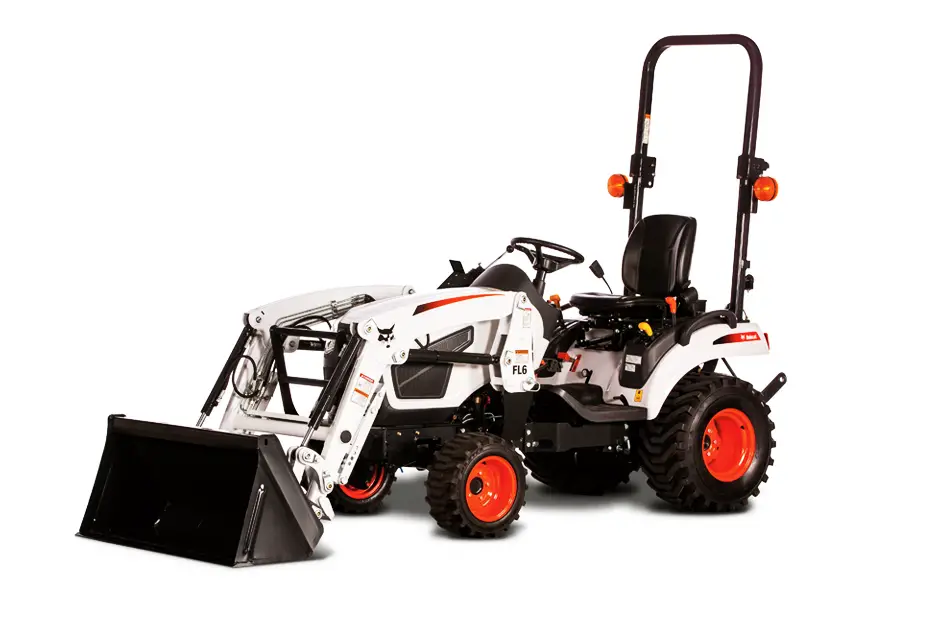
The Bobcat CT1025 is a sub-compact tractor introduced around 2020 as part of Bobcat's 1000 Platform. It is manufactured under a partnership with Daedong/Kioti and is essentially a rebadged member of the Kioti CS20 series (closely related to the Kioti CS2210 and CS2510). Because the two machines share the same engine, hydrostatics, wiring architecture, safety-interlock design, and fuel-shutoff hardware, the well-documented service history of the Kioti CS series is directly relevant to diagnosing CT1025 problems, and this article incorporates that evidence throughout.

This guide is written for owners and operators in the United States who want to understand what tends to go wrong with the CT1025, why it happens, how to diagnose it, and how to fix it. It is organized by problem category. Under each category you will find, where applicable, subheadings in the order Symptoms, Causes, Troubleshooting Steps, and Solutions.
Technical Overview of the Bobcat CT1025
Before addressing specific failures, it is useful to understand the components involved.
The CT1025 uses a Daedong 3C100LFH-U1 engine: a naturally aspirated, approximately 1.0-liter (61 cubic inch) three-cylinder indirect-injection diesel rated at 24.5 horsepower at 3,400 rpm, meeting EPA Tier 4 Final emissions. Because the engine is under 25 horsepower and mechanically injected, it does not use a diesel particulate filter with active regeneration; it relies on a diesel oxidation catalyst to meet emissions. This is an important distinction from the larger Kioti CK, DK, and NX models, which do use a diesel particulate filter and a regeneration cycle. CT1025 owners therefore do not have to contend with regeneration-related faults.
The transmission is a two-range hydrostatic transmission (HST) driving all four wheels. Forward and reverse are controlled by twin foot pedals. The hydraulic system supplies the power steering, the three-point hitch, the front-end loader, and rear auxiliary functions, with total hydraulic flow of 6.4 gallons per minute (4.6 gallons per minute to implements and 1.8 gallons per minute for steering, per Bobcat's official 2025 CT1025 specification). The three-point hitch is a Limited Category 1 hitch with a lift capacity of 700 pounds at 24 inches behind the lift point.
The tractor has a standard rear power take-off (PTO) at 540 rpm and an optional mid-PTO at 2,200 rpm, both independent (electrically engaged).
The starting and safety architecture is where many CT1025 problems originate. The engine is stopped by an electric fuel-shutoff solenoid (Kioti engine stop solenoid, part number E6820-60011, superseded by E6820-60012). This is a dual-coil solenoid: a high-current "pull" coil retracts the plunger and is energized through a relay for approximately one second, and a low-current "hold" coil keeps the plunger retracted and is powered directly through the key switch. The stop-solenoid relay is a common automotive five-pin 30/40-amp relay (Kioti part number T4180-69961). Newer CS-series units also use a Safety Start Controller module mounted on the side of the transmission below the seat pan; it reads all of the safety switches, determines glow-plug timing, and sends the start signal to the starter relay.
Factory attachments include the Bobcat FL6 front-end loader (loader weight 606 pounds; lift to full height at pin of 702 pounds) and the Bobcat BH66 backhoe (657 pounds, with bucket digging force of 2,240 pounds-force). Bobcat offers the CT1025 in loader-equipped and loader-plus-backhoe packages, and dealers frequently promote free-attachment or zero-percent financing offers — for example, Bobcat Compact Construction Equipment's CT1025 listing advertises "As low as 0% for 84 months* or free front-end loader attachment* in lieu of financing offer."
Bobcat's current standard warranty is 24 months or 1,500 hours, whichever occurs first, although some earlier listings quoted two years / 1,000 hours; owners should confirm current terms with their dealer.
Engine Starting Problems
Starting problems are, by a wide margin, the most frequently reported CT1025 issue. Several distinct failure modes produce similar symptoms, so careful diagnosis matters.
Symptoms
- The engine cranks normally but will not fire, especially after the engine has warmed up and been shut off (the classic "hot no-start").
- A single click when the key is turned, with no cranking.
- The tractor starts reliably when cold but refuses to restart once at operating temperature, then starts again after cooling for an hour or two.
- The engine must be started with a manual procedure (removing or pushing in the fuel-shutoff solenoid plunger) before it will run.
- Excessive white smoke and hard starting in cold weather.
Causes
- Fuel-shutoff solenoid failure. A failed "pull" side of the solenoid, or a bad stop-solenoid relay, is one of the most common root causes. The engine cranks but no fuel is delivered because the plunger does not retract or does not stay retracted.
- Stop-solenoid relay failure. Owners across the Kioti CS/CK line repeatedly trace hot no-start and no-fuel conditions to the inexpensive automotive relay rather than the solenoid itself.
- Heat-sensitive neutral/safety switch. A neutral safety switch mounted on the transmission can open when hot and close again when cool, producing a textbook hot no-start.
- Safety Start Controller module failure. On some 2020–2021 units the controller had a grounding problem that could burn it out; it was later updated.
- Starter and starter circuit problems. Bad starters were reported on some early machines. A single click with no crank points to the starter relay, the starter solenoid, corroded battery terminals, or a weak ground.
- Battery, cable, and ground faults. A weak battery or corroded/loose connection can mimic many of the above.
- Glow-plug or glow-plug-relay failure. Poor cold starting with heavy white smoke.
- Injection-pump timing set incorrectly from the factory. At least one owner's rough starting was traced to the injection pump being out of adjustment and re-shimmed by the dealer.
Troubleshooting Steps
- Confirm the battery first. With the engine off, a healthy, fully charged battery should read about 12.6 volts. With the engine running it should read roughly 13.5 to 14.5 volts. Clean both terminals to bare, shiny metal and confirm the ground strap to the frame is tight.
- Listen at the fuel-shutoff solenoid. With the tractor in neutral, parking brake on, and someone in the seat to satisfy the interlocks, turn the key to "on." You should hear the solenoid "clack" as the pull coil retracts the plunger. Turn the key off and you should hear it clack back. A single clack that immediately releases indicates the hold coil is not being powered.
- Perform the relay-swap test. There are typically two identical relays: one for the starter and one for the stop solenoid. Swap them. If the stop-solenoid symptom moves or disappears, the relay is the culprit — a several-dollar automotive part.
- Test the solenoid directly. Remove or unbolt the solenoid. If the engine starts and runs with the solenoid removed (plunger allowed to rest forward against the governor), the solenoid or its circuit is at fault. A resistance reading of the coil when cold, repeated after warming the solenoid, can reveal an intermittent internal open.
- Chase the safety-switch loop. The circuit is a series loop: battery, ignition switch, interlock switches (seat, PTO, neutral/brake), solenoid, and ground. Use a multimeter or test light to verify 12 volts in and out of each switch, both cold and hot. For a heat-related fault, focus on the neutral safety switch on the transmission.
- Bypass switches for diagnosis only. With the machine safely blocked, jumper across a suspect safety switch (for example, unplug the seat-switch quick connector and jumper it) to confirm the diagnosis. Never leave a safety switch bypassed in service.
- Check the glow plugs. Connect a test light between each glow-plug terminal and ground while a helper cycles the key; confirm each plug receives power during preheat. Cycle the glow plugs two or three times in cold weather.
- Verify starter power. If there is a single click and no crank, check for voltage at the starter solenoid signal wire while a helper holds the key in "start."
Solutions
- Replace a failed stop-solenoid relay with a standard automotive five-pin 30/40-amp relay (or higher amperage; never lower).
- Replace a failed engine stop solenoid with Kioti part E6820-60012.
- Replace a heat-sensitive neutral safety switch; owners of the Kioti CS2210 have reported that dealer replacement of this switch resolved the hot no-start entirely.
- Replace the Safety Start Controller if switches and relays test good and the fault persists.
- Replace the starter, glow plugs, or glow-plug relay as indicated by testing.
- Have the dealer re-shim or re-time the injection pump under warranty if rough starting is traced to injection timing.
- As a documented field workaround only, some owners install a manual push/pull cable to the fuel-shutoff rack so the engine can be run and stopped independently of a failed solenoid. This should be regarded as a temporary measure, not a permanent fix.
Fuel System Problems
Symptoms
- Hard starting, rough running, stalling, or loss of power.
- The engine runs on starting fluid but will not run on its own.
- Air bubbles visible in the fuel filter.
- Loss of power once the engine reaches operating temperature.
Causes
- Clogged or contaminated fuel filter. Dirt and debris accumulate over time and restrict flow.
- Air in the fuel system. Frequently introduced after a filter change or after running the tank low.
- Old or contaminated diesel fuel.
- Fuel delivery or air-intake restriction under load. On the related Kioti CS2210, power loss after warm-up has been attributed to fuel-filter clogging, air-filter restriction, or injection-pump/governor issues.
Troubleshooting Steps
- Inspect the fuel in the tank and the clarity of the fuel filter bowl.
- Replace the fuel filter (a 200-hour item; see the maintenance schedule below).
- Bleed the system: with the throttle open, loosen the bleed fitting or plug on the injection pump and let fuel run until free of bubbles, then loosen each injector line at the injector, crank until a steady squirt appears, and retighten each line in turn.
- Inspect the air filter for restriction.
Solutions
- Replace clogged filters, drain and refill with fresh diesel, and add a fuel-system treatment where appropriate.
- Fully bleed the system after any filter service to prevent an air-lock no-start.
- Address governor or injection-pump concerns through the dealer.
Hydraulic System Problems
The hydraulic system powers the steering, three-point hitch, loader, and backhoe. Because flow is limited on a sub-compact machine, hydraulic faults are quickly noticeable.
Symptoms
- Slow, weak, or jerky loader, hitch, or steering movement.
- Steering that periodically goes hard, as though power assist has been lost.
- Visible fluid leaks, often at fittings or hard lines.
- The three-point hitch will not lift, or the engine groans and the linkage tightens without lifting.
- Overheated hydraulic fluid.
Causes
- Low or contaminated hydraulic fluid. The single most common cause of slow or weak hydraulics.
- Leaking fittings, O-rings, or hard lines. On the related Kioti CS series, owners reported recurring leaks at a steering hard-line fitting, sometimes tied to frame flex on higher-hour machines, and a "ten-cent O-ring" in a valve causing intermittent hard steering. Early dealer-prep errors (loose fittings, an unclamped loader line) also caused leaks and blow-outs on new machines.
- Air trapped in the steering rams, downstream of a leak, causing intermittent hard steering.
- Rate-of-drop knob closed or linkage binding preventing the three-point hitch from operating.
- Power-beyond or auxiliary line disconnected, putting the system into constant bypass so the hitch cannot lift.
- Loader line not properly routed in its brackets, allowing chafing and leaks — a documented CT1025 dealer-prep issue.
Troubleshooting Steps
- Check the hydraulic fluid level and condition; top up with the specified fluid.
- Inspect all fittings, hoses, and hard lines for leaks, paying attention to the steering lines under the tractor and the loader lines.
- If the hitch will not lift, verify the rate-of-drop/lowering knob under the seat is not fully closed, and confirm any power-beyond or auxiliary return line is connected.
- Inspect the loader hoses to confirm they are seated in their retaining brackets and not chafing.
- If steering is intermittently hard, look for a leak or air on the ram side and inspect the steering valve O-rings.
Solutions
- Replace worn O-rings and re-torque or replace leaking fittings; on recurring frame-flex-related leaks, inspect the frame and cross members and address under warranty.
- Change hydraulic fluid and the hydraulic/HST filters on schedule.
- Re-route and clamp loader lines correctly.
- Have persistent lift failures diagnosed by the dealer, as internal valve or pump wear may be involved.
Hydrostatic Transmission and Drive Problems
Symptoms
- The tractor moves weakly, slips under load, or slows on inclines while engine rpm stays up.
- Delayed engagement of forward or reverse.
- The range selector slips out of range into neutral, causing an unexpected loss of hydrostatic braking.
- Transmission and filters hot to the touch after extended use.
Causes
- Low or contaminated hydrostatic fluid, or air in the system.
- Worn hydrostatic pump or motor components on high-hour machines.
- Range-selector detent wear or maladjustment. Owners across Bobcat and related models have reported the range selector popping into neutral when the operator lets off the hydrostatic pedal — a potentially dangerous condition on slopes because it removes hydrostatic braking. In one account, a related model slipped into neutral while an operator was backing toward an embankment, resulting in a serious injury.
- Overheating from prolonged heavy work.
Troubleshooting Steps
- Check hydrostatic/transmission fluid level and condition first; it is the most common and least expensive cause.
- Bleed or purge the system per the manual if engagement is delayed.
- Verify linkage and control-valve adjustment, and confirm the range selector fully seats and holds in each range.
- Perform a load test on a gentle slope; if the engine races while the machine slows, the transmission is slipping.
Solutions
- Replace fluid and filters on the correct interval.
- Have the range-selector mechanism inspected and adjusted if it slips out of range; treat this as a safety-critical item and always use the seat belt and wheel brakes on slopes.
- Internal pump/motor wear requires dealer diagnosis with pressure and flow instrumentation; continuing to run a slipping unit circulates metal and turns a repair into a replacement.
PTO and Three-Point Hitch Problems
Symptoms
- The PTO lever does not click into place or will not stay engaged.
- The implement loses PTO rpm while engine rpm stays constant, with the transmission and filters getting hot.
- The three-point hitch will not raise or will not lower.
Causes
- PTO lever/linkage adjustment, so the detent does not seat (reported on the related Kioti CS2210 from new).
- PTO clutch-pack wear or slippage. On the related CS2210, loss of PTO rpm without engine-rpm drop, combined with hot transmission fluid, was attributed by the owner to a failing PTO clutch pack.
- Overloading a PTO implement or an improperly adjusted slip clutch.
- Three-point hitch not lifting due to binding linkage, closed rate-of-drop knob, disconnected power-beyond line, or hydraulic issues (see the hydraulic section).
Troubleshooting Steps
- Verify the PTO lever seats in its slot and the electric engagement switch functions.
- If PTO rpm drops under load, check hydraulic/transmission fluid temperature and level and inspect the implement slip clutch.
- For hitch faults, confirm the rate-of-drop knob position and check linkage for binding and correct lower-arm orientation.
Solutions
- Adjust or repair the PTO linkage/detent.
- Have the PTO clutch pack inspected by the dealer if slippage under load persists.
- Correct implement slip-clutch adjustment and avoid overloading.
- Resolve hitch lift faults per the hydraulic-system solutions above.
Electrical and Safety Switch Problems
Symptoms
- Intermittent no-start, no-crank, or hot no-start (overlapping with the engine-starting section).
- Battery goes dead after sitting.
- Flickering lights or warning lights that stay on.
- The machine will not start unless a small amount of extra charge is applied.
Causes
- Safety interlock switch faults (seat switch, PTO switch, neutral/brake switches). Any open switch in the series loop prevents starting.
- Corroded or loose battery terminals and grounds.
- Failed stop-solenoid or starter relay (see engine-starting section).
- Safety Start Controller faults on some early units.
- Parasitic battery drain, sometimes through the charging circuit if the alternator excite wire is not properly switched.
- Charging-system faults (alternator, belt tension, or a bad diode).
Troubleshooting Steps
- Test battery voltage engine-off and engine-running to confirm charging (about 12.6 volts off, 13.5 to 14.5 volts running).
- For a suspected parasitic drain, place a multimeter in series with the battery cable and look for excessive current draw with the key off; pull fuses one at a time to isolate the circuit.
- Check every safety switch for continuity in its active position, and inspect the seat-switch connector.
- Inspect grounds, especially the ground where the harness bolts to the frame.
- Check fuses at the centralized fuse and relay panel.
Solutions
- Clean and tighten all grounds and terminals; replace corroded hardware.
- Replace faulty safety switches; do not leave interlocks bypassed.
- Replace failed relays with correct-amperage automotive units.
- Address alternator, belt, or diode faults to correct charging or drain problems.
- Replace the Safety Start Controller if it is confirmed faulty.
Engine Running, Smoke, and Overheating Problems
Symptoms
- White, black, or blue smoke from the exhaust.
- Overheating.
- Reduced power.
Causes and Interpretation
- White smoke is generally unburned fuel — commonly from cold starting, weak glow plugs, or, in a warm engine, a fuel/timing or (in worse cases) coolant-intrusion problem. A modest amount of white smoke on a cold start, clearing within seconds, is normal for this small diesel and is reported across the related 3-cylinder engines.
- Black smoke indicates a rich condition — a clogged air filter, dirty fuel filter, or injection issue.
- Blue smoke indicates burning oil (worn rings or valve seals).
- Overheating can result from low coolant, a dirty radiator screen, or, in severe cases on the related CT2025, a failing head gasket producing white smoke and stalling — a warranty-level repair on low-hour machines.
Troubleshooting Steps and Solutions
- For cold-start white smoke, cycle the glow plugs longer and use a block heater in cold climates; confirm glow-plug operation.
- For black smoke, service the air and fuel filters.
- For blue smoke or persistent heavy white smoke in a warm engine, seek dealer diagnosis for injectors, compression, or head gasket.
- For overheating, check coolant level cold, clean the radiator and screens, and inspect hoses; if overheating is accompanied by white smoke, coolant loss, and stalling, stop use and have the head gasket evaluated.
Model-Year and Variant Differences
The CT1025 has been sold since roughly the 2020 model year through the current model year, with the engine consistently listed as the Daedong 3C100LFH-U1. Reported differences and patterns include the following.
- Early production units (2020–2022). The most severe starting complaints — including repeated starter replacement and unresolved crank-no-start conditions — cluster on early machines. In one widely read account, a 2022 CT1025 bought with 27 hours went back to the dealer for a bad starter and then repeatedly for crank-no-start, ultimately being replaced by the dealer with a different brand after months at the shop. Early units also share the Kioti-family Safety Start Controller grounding problem reported on 2020–2021 CS/CX machines.
- Fuel-shutoff-solenoid and relay issues are common across the whole Kioti CS/CK family and are not unique to any single CT1025 year; they should be considered a platform-wide wear/failure item.
- Loader-equipped units (FL6). Machines used heavily for loader work are the ones most likely to exhibit hot no-start after extended operation, and the CT1025 loader line has a documented dealer-prep routing issue that can cause chafing and leaks if not seated in its brackets.
- Backhoe-equipped units (BH66). Adding and removing a backhoe repeatedly has been associated on related Kioti models with intermittent starting faults tied to disturbed wiring/connectors, and backhoe hydraulics tie into the auxiliary/power-beyond circuit, so a bumped connector can disable the hitch or backhoe.
- Kioti CS-series parallels. Because the CT1025 is a rebadged Kioti CS-series machine, issues documented on the CS2210 and CS2510 — heat-sensitive neutral switch, PTO lever/clutch, steering-line leaks and frame flex on high-hour units, and loader cracking on the broader Kioti loader line — are all plausible on a CT1025 and are worth checking.
A recurring theme across model years is that dealer quality and parts availability matter more than the year of manufacture. Multiple owners note that Bobcat guards service and parts information closely and that sub-compact tractors can get low priority at busy construction-equipment dealers; a strong selling dealer materially improves the ownership experience.
Preventive Maintenance and Service Schedule
The CT1025 shares its official service schedule with the CT1021 (Bobcat CT1021/CT1025 Operation & Maintenance Manual). Following it is the single most effective way to avoid the failures above. The intervals below are drawn directly from the Bobcat CT1021/CT1025 service schedule.
- Every 10 hours (before starting): Check engine oil level; check hydraulic fluid level; check front differential fluid level; check coolant level cold and clean the radiator and screens; check tire pressures and condition; check the air-intake hoses and clamps; check PTO shaft splines and guards; check three-point hitch linkages, pins and sway bars; check the parking brake; check the seat belt and retractors; check the horn; confirm the safety interlock system functions; check all indicators and lights; check the loader and mounting hardware.
- First 10 hours: Check wheel bolt/nut torque.
- First 50 hours (break-in service): Replace engine oil and filter; replace transmission/HST fluid and filters; replace front differential oil; adjust brake pedal free play. This break-in service is important; several owners report they change all fluids and filters at 50 hours and also re-torque bolts, having found loose hardware from the factory.
- Every 50 hours: Check wheel bolt/nut torque.
- Every 100 hours: Replace engine oil and filter; check battery cables, connections and hold-down; check the primary air filter (replace yearly); adjust the alternator/fan belt; check and adjust the parking brake and pedal free play; grease all pivot points with multipurpose lithium grease (this includes loader and steering pivots); check fuel-line connections and clamp tension; empty the spark-arrester chamber.
- Every 200 hours: Replace the transmission filter and HST filter; replace the fuel filter; check cooling-system hoses and clamps; check hydraulic and power-steering hoses and lines for leaks; check air-intake hoses; check and adjust toe-in.
- Every 400 hours: Replace transmission fluid and the transmission/HST filters; replace front-axle oil.
- Every 600 hours: Adjust the front-axle pivot; check battery cables, connections, and electrolyte level and add distilled water as needed.
- Every 800 hours: Adjust engine valve clearance.
- Every 1,000 hours or 24 months: Replace the coolant.
Owners cross-referencing filters have identified the Daedong/Kioti part numbers behind the Bobcat stickers, since the CT1025 shares filters with the Kioti CK2610-class machines.
Bobcat also sells a 50-hour maintenance kit for the CT1021/CT1025 containing the hydrostatic, hydraulic, and engine-oil filters.
Fluids. Engine oil is a CK-4 diesel oil; the manual allows 10W-30, 15W-40, or 5W-40 full synthetic depending on temperature. The hydraulic/HST oil is a GL-4-type tractor fluid.
Additional preventive practices that directly target the CT1025's known weak points:
- Keep battery terminals and all grounds clean and tight to prevent the no-start and parasitic-drain problems that dominate owner complaints.
- Exercise and inspect the safety interlock switches and their connectors regularly, since these are frequent hot-no-start culprits.
- After any fuel-filter change, bleed the system fully to prevent an air-lock no-start.
- Use a block heater and cycle the glow plugs in cold weather to reduce cold-start white smoke and hard starting.
- Route and clamp loader hoses correctly and inspect for chafing.
Recommendations
For a prospective buyer: the CT1025 is a capable, maneuverable sub-compact that shares proven Kioti mechanicals, but its ownership record is strongly tied to dealer quality. Buy from a dealer with a good tractor (not just construction-equipment) service reputation, confirm current warranty terms in writing, and budget for the 50-hour break-in service.
For a current owner experiencing a no-start, work the problem in this order, cheapest and most likely first:
- battery voltage and clean, tight terminals and grounds
- listen for the fuel-shutoff solenoid clack and perform the relay-swap test
- check the safety-interlock loop, focusing on the neutral switch for hot no-starts
- test the solenoid directly by removal
- suspect the Safety Start Controller only after switches and relays test good.
Keep a spare automotive five-pin 30/40-amp relay and a spare engine stop solenoid on hand, as these are inexpensive and address the most common failures.
For reliability over time: adhere strictly to the service schedule, change all fluids and filters at 50 hours, keep the radiator screen and air filter clean, grease pivots every 100 hours, and never operate with a bypassed safety switch. Treat any tendency of the range selector to slip into neutral as a safety-critical defect and address it immediately, always wearing the seat belt on slopes.
Escalate to the dealer, ideally under warranty, for: repeated starter failures, a confirmed-faulty Safety Start Controller, injection-pump timing, internal hydrostatic wear, PTO clutch-pack slippage, recurring frame-flex-related steering leaks, and any overheating accompanied by white smoke and coolant loss (possible head gasket).
Benchmarks that should change your course of action:
- If battery voltage reads below about 12.4 volts at rest or fails a load test, replace the battery before chasing other faults.
- If charging voltage does not rise to 13.5 to 14.5 volts with the engine running, address the charging system.
- If parasitic draw exceeds a few tens of milliamps with the key off, isolate it by pulling fuses.
- If a no-start recurs after you have replaced the relay, solenoid, and neutral switch, move on to the Safety Start Controller.
- If hydraulic or PTO slippage persists after a fluid-and-filter change, stop operating and obtain a dealer pressure test before further wear occurs.
Caveats
Much of the model-specific failure evidence for the CT1025 comes from owner forums (TractorByNet, My Tractor Forum, Tractor Forum), Facebook owner groups, and paid question-and-answer sites (JustAnswer), supplemented by closely related Kioti CS/CK experience. These are illustrative and, in the case of the question-and-answer sites, partly AI-generated; they are not a controlled reliability survey, and the plural of anecdote is not data. Some of the most detailed troubleshooting (the dual-coil solenoid wiring, the relay-swap test, the Safety Start Controller) is documented on the mechanically identical Kioti models rather than on the CT1025 badge specifically, and is applied here by well-supported inference. Specific figures such as horsepower, warranty terms, and hydraulic flow vary slightly between dealer listings and model years; always verify against your own machine's Operation & Maintenance Manual and serial number, and consult a qualified technician before performing repairs that affect safety systems.