
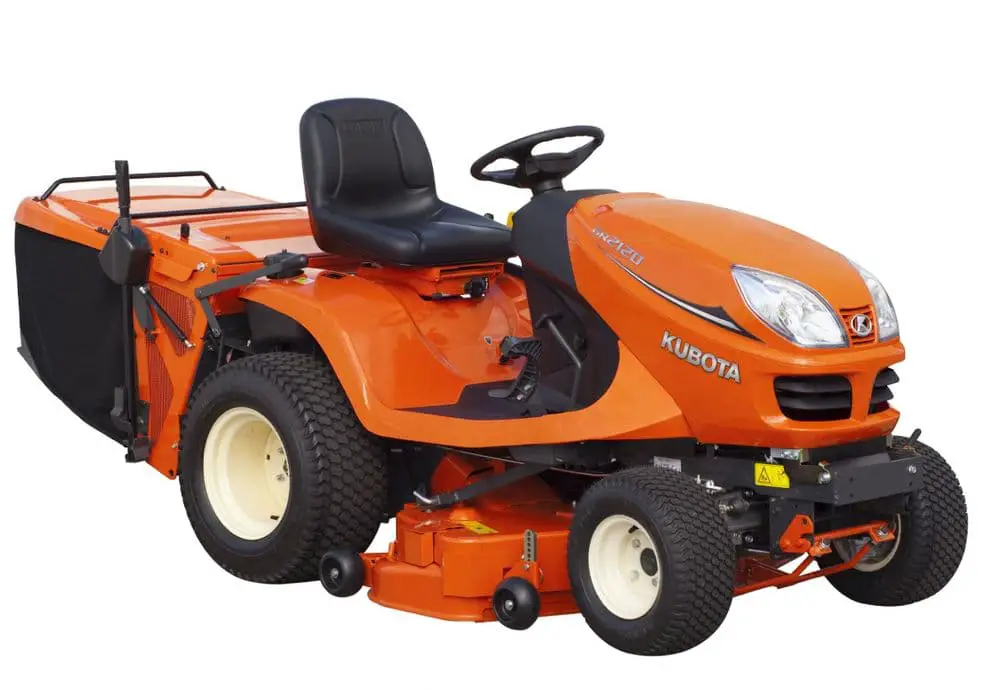
The Kubota GR2120 is one of the most capable diesel-powered ride-on garden tractors ever offered to the U.S. homeowner market, but it is not without its weaknesses. This guide examines every major Kubota GR2120 problem reported by owners and technicians, from transmission failures to hydraulic leaks, and provides practical troubleshooting steps and proven solutions for each. Whether you are diagnosing an existing fault or evaluating a used unit for purchase, the diagnostic framework below will help you identify root causes quickly and apply the correct repair.

Introduction to the Kubota GR2120
The Kubota GR2120 is a premium diesel-powered ride-on lawn and garden tractor that occupies a distinctive position in the North American market. Manufactured beginning in 2010 and continuing in updated revisions through the present production run, the GR2120 was conceived as a flagship homeowner machine that brings genuine compact-tractor engineering to a category dominated by gasoline lawn tractors. It is powered by the well-regarded Kubota D782 three-cylinder, water-cooled diesel engine displacing 47.5 cubic inches (778 cubic centimeters) and rated at approximately 18.1 horsepower at the crankshaft, with a 21-horsepower gross output figure used in some Kubota sales literature. Power is delivered through a hydrostatic transmission (HST) coupled to the engine and to the mid-mount mower deck by an entirely shaft-driven powertrain — a design choice intended to eliminate belt slippage between the engine and transmission.
Other notable features include four-wheel drive, full hydraulic power steering with Kubota’s “Glide Steer” mechanism, a wet multi-disc hydraulic PTO clutch, infinite forward and reverse hydrostatic ratios, a maximum forward speed of 6.2 mph, and a 4.8-gallon fuel tank. The mower decks offered in the United States are the 48-inch RCK48GR and the 54-inch RCK54GR three-blade side-discharge units, both fabricated from 10-gauge steel with a 5-inch deep shell. Complete factory specifications are documented in the official Kubota GR2020/GR2120 brochure and on TractorData’s GR2120 reference page.
The GR2120 is targeted at homeowners with two to five acres of mixed lawn and at landscapers who require a compact, maneuverable, all-wheel-drive mower capable of handling slopes, narrow corners, and seasonal duties such as snow removal with the optional 46-inch front-mount snow blower or 48-inch front blade. Its market position sits above conventional consumer lawn tractors and below Kubota’s BX-series sub-compact utility tractors. Original suggested retail pricing has historically ranged between approximately $9,000 and $10,000 for a base unit, with snow-removal accessories adding several thousand dollars more.
Despite the strong reputation of the Kubota brand, the GR2120 has accumulated a significant body of owner-reported issues over its production life, particularly around its drivetrain, hydraulic system, and integrated cutting deck. Online community feedback from My Tractor Forum, Orange Tractor Talks, Green Tractor Talk, Tractor Forum, TractorByNet, Landscape Juice Network, and Garden Tractor Talk reveals consistent patterns of failure that prospective and current owners should understand. The purpose of this article is not merely to enumerate complaints but to provide a structured diagnostic and repair roadmap: identifying symptoms, isolating root causes, presenting practical troubleshooting steps, and recommending solutions that owners and technicians in the United States can apply.
Transmission and Drive System Problems
The hydrostatic transmission and shaft-drive system represent both the engineering distinction of the GR2120 and the single largest source of owner complaints. The platform shares fundamental architecture with the earlier GR2100 and GR2110, and although the GR2120 was marketed as a refined evolution, transmission-related failures continue to be widely reported across tractor enthusiast forums and owner discussion threads.
Symptoms
Owners describe a wide range of warning signs, including:
- The tractor refusing to move forward, refusing to move in reverse, or losing both directions intermittently.
- Reduced reverse speed compared to forward speed (a common factory-adjustment issue noted on new units).
- Whining noises from the rear transaxle, particularly under load.
- Power loss when ascending hills, especially when the PTO is engaged and the cutting deck is producing additional load.
- Jerky or surging movement that suggests inconsistent hydraulic pressure.
- Transmission oil being expelled from the filter housing or vent under pressure.
- Complete internal failure of the hydrostatic unit requiring full case replacement, as documented in several long-term ownership accounts.
Causes
The mechanical roots of these problems include:
- Hydrostatic pump and motor wear. Earlier GR-series transmissions used bushings rather than bearings in critical locations, leading to accelerated wear. As one verified technician observed, the pumps tend to crack easily — and when this occurs, owners often see no metal shavings in the oil because the failure is structural rather than abrasive. Kubota subsequently released an upgrade kit (part number K1254-95211, replacing the older K1253-14062 and K1254-95210) that retrofits bearings in place of bushings and runs roughly $300 to $350 at retail.
- Driveshaft yoke wear. The long driveshaft that connects the engine to the rear-mounted transaxle uses universal joints whose yokes wear over time. Forum technicians specifically warn that the driveshaft from engine to transmission is long and the yokes wear out.
- Glide Steer clutch wear. Inside the rear axle, a pair of wet multi-disc clutches — the Glide Steer clutches — disengage drive to the inside front wheel during tight turns. These clutches wear with use, and on the original GR2100 platform they were actuated by cables that famously failed; on the GR2120 the cable system was replaced with a rod system that proved more durable, though the underlying clutch packs still degrade.
- Internal seal failure. The case design uses several seals that can rupture, leading to a sudden loss of forward drive followed by loss of reverse, as one owner reported after their dealer ultimately had to replace the entire case under warranty.
- Hydraulic fluid level issues. Both insufficient and excessive fluid levels create problems. Overfilling above the upper mark on the dipstick has been linked to fluid being vented out through the breather.
- Air entrapment. Air drawn into the suction circuit causes whining, reduced performance, and erratic pedal response.
- Improper factory pedal-rod adjustment. New units have arrived from the dealer with the rod connecting the foot pedal to the transaxle set so short that reverse travel is severely limited.
Troubleshooting Steps
- Check the trans-hydraulic fluid level on level ground with the engine off and cool. The dipstick on the GR2120 has two marks; informed owners advise filling only to the lower mark to avoid venting. Confirm that the fluid is Kubota Super UDT-2 or UDT, as substituting incompatible fluids has been linked to performance decline.
- Inspect the fluid for aeration. Pull the dipstick after operation and check for tiny air bubbles, which indicate a suction leak.
- Inspect and clean the suction strainer screen on the inside of the transmission. Owners performing the 200-hour service have noted that the strainer housing is extremely tight; on at least one machine the strainer (item 130 in the parts diagram) had been omitted by a previous owner.
- Replace the hydraulic oil filter cartridge. Look for embedded debris on the old filter element.
- Listen for whining versus grinding. Whining points to cavitation or pump wear; grinding suggests damaged gears or universal joint failure.
- Inspect each universal joint along the driveshaft for play.
- With wheels chocked and the parking brake on, conduct a pressure test downstream of the relief valve. If a loader or other hydraulic implement is not present, technicians can install a temporary tee in the pressure line. Low pressure indicates internal pump leakage.
- For new units that will not move in reverse, contact the selling dealer to perform the factory pedal-rod adjustment under warranty rather than attempting to shorten the linkage at home.
Solutions
- For owners with the early-style hydrostatic unit, install the Kubota transmission rebuild kit K1254-95211, which converts the bushings to bearings. Total parts cost is approximately $300 at most Kubota dealers, plus labor.
- Replace worn universal joint crosses; aftermarket sources are scarce, and Kubota dealer pricing has been reported at approximately $90 each for the U-joint crosses.
- For full HST failure, options include a complete transmission rebuild using exploded views from the workshop manual, sourcing a used transmission, or replacing the assembly. Dealer technicians have quoted approximately $3,800 for the bare transmission in past years, with current pricing in the $5,000 to $6,000 range due to inflation.
- Always operate within the rated load envelope. The GR2120 is a lawn tractor, not a sub-compact utility tractor, and chronic high-load operation accelerates HST wear.
Engine Starting and Power Loss Issues
While the Kubota D782 diesel is generally regarded as one of the most durable small diesel powerplants in the industry, the GR2120 has experienced engine-side problems that owners should be prepared to diagnose.
Symptoms
- The engine cranks slowly, especially in cold weather.
- Glow plugs appear inactive, leading to extended cranking before ignition.
- The tractor runs and mows fine for approximately 10 minutes, then progressively loses power and bogs down with fluctuating RPM.
- Power loss occurs only after extended uphill operation, sometimes accompanied by complete stalling.
- The engine emits black or blue smoke under load.
- In rare but documented cases, catastrophic engine failure has occurred at fewer than 100 hours, with debris entering the combustion chamber and damaging a piston.
- Front main seal weeps engine oil, sometimes recurring after warranty repair.
Causes
- Slow cranking is most often traced to slightly undersized starter and alternator components combined with a battery that is not fully charged. The factory 12-volt starter (1.0 kilowatt) and 150-watt alternator have limited reserve capacity, and any parasitic load — such as residual hydraulic pressure from a loader or attachment — will further slow cranking.
- Glow plug circuit failure is typically caused by a faulty glow plug timer or worn glow plugs after several seasons of cold-weather use.
- Power loss after 10 minutes of mowing has been traced repeatedly to fuel delivery interruption: the electric fuel transfer pump weakens, the fuel filter clogs, or air enters the supply line.
- Power loss only on hills is a classic fuel-pickup geometry problem. As fuel sloshes away from the pickup tube on slopes, the lift pump may not maintain prime. Multiple owners have confirmed that an aging fuel pump fails first under low fuel and uphill conditions; replacement restores normal performance.
- Repeated fuel pump failures during heavy use, especially leaf collection in fall, have been documented. The pump appears to overheat or experience internal valve degradation. One owner replaced four pumps before identifying a contributing low transmission fluid condition.
- Smoke indicates classic diesel maladies: black smoke under load is overfueling or restricted intake; blue smoke is oil consumption past worn rings or valve seals.
- Catastrophic piston failure at fewer than 100 hours appears isolated and was traced to a manufacturing defect (foreign metal in the combustion chamber); Kubota repaired the unit under warranty.
- Front main seal leaks have been reported repeatedly. Replacement requires removing the engine, which is labor-intensive and therefore costly outside warranty coverage.
Troubleshooting Steps
- Verify battery voltage is at least 12.6 volts at rest and that battery cables and ground straps are clean and tight. Slow cranking of an otherwise sound diesel almost always traces to electrical resistance.
- Confirm that no hydraulic load is present at startup. The operator’s manual specifies that the starter should not engage with hydraulic lift pressure, even minimal pressure from empty lift arms.
- With the key in the heat position, listen and feel for glow-plug click and use a multimeter to verify each glow plug is receiving voltage and reading correct resistance (typically less than 1 ohm).
- For the 10-minute power-loss symptom, monitor fuel filter clarity during a power-loss event. If the filter goes from full to partially full as the engine bogs down, the lift pump or its supply line is failing. Inspect the wires entering the fuel pump for vibration-induced fatigue cracks at the housing entry point — a documented failure mode.
- Inspect the air filter. Heavy debris on top of the engine compartment, common on grass-mowing machines, can choke the intake quickly.
- For power loss on slopes, confirm that the tank has at least one-quarter capacity and test by attempting the same slope facing the opposite direction.
- Check engine oil level and condition. Dark, thinned, or fuel-diluted oil suggests injection pump or injector leakage.
Solutions
- Replace the fuel filter and primary fuel-water separator at every 200 hours or whenever symptoms appear. Kubota sells two filters as listed in the GR2120 service guide.
- Replace the electric fuel transfer pump if it is the source of intermittent stalls. Aftermarket replacements are widely available, but verify 12-volt supply at the connector before condemning the pump.
- Replace glow plugs as a set if any single plug fails or shows out-of-spec resistance.
- Maintain the air cleaner cartridge (Kubota part K121182320) every 100 hours or more often in dusty conditions.
- For repeated front main seal leaks, request that the dealer pursue a goodwill repair if the machine is just out of warranty, as this is a documented recurrent issue.
- For severe slow cranking that returns despite battery and cable verification, replacement starters are available; one owner reported approximately $300 for a replacement starter that resolved a long-running cranking issue.
Hydraulic and PTO Problems
The hydraulic and power-take-off systems on the GR2120 are tightly integrated with the transmission. The same trans-hydraulic fluid that lubricates the gears also operates the deck-lift cylinder, the steering circuit, and the wet multi-disc PTO clutch. This integration means that failures in one subsystem often manifest in another.
Symptoms
- Hydraulic fluid leaks from the back of the tractor, sometimes leaving a puddle on the garage floor and trails of oil on the lawn.
- Trans-hydraulic oil is forced out through the breather vent and across the fan housing, creating a widespread mist over the rear of the tractor.
- The mower deck does not stay raised when the operator engages the lift; it slowly drops within several minutes.
- The PTO does not engage, or the engine stalls when the PTO is engaged, particularly at low RPM.
- The PTO engages but mowing performance is weak, especially at the engine RPM normally needed for cutting.
- A grinding or clicking noise comes from the deck gearbox, sometimes accompanied by the deck driveshaft snapping at the splines.
Causes
- Vent line venting trans-hydraulic fluid is a documented design weakness. The breather vent on the upper left rear corner can drop low or become misrouted, allowing the cooling fan below it to disperse fluid widely.
- Axle, pinion, and Glide Steer lever seals all leak with age, and a knowledgeable forum technician summarized that the transmission has multiple seal points that can leak.
- PTO clutch pack wear allows partial slippage that consumes engine torque, generates heat, and contaminates the trans-hydraulic fluid with friction material. Kubota sells a PTO clutch repair kit, and a special spring-compression alignment tool (part number K1253-94022) is required for proper installation; the kit historically cost about $350 and has risen with inflation.
- Deck-lift cylinder internal leakage allows the deck to settle. The lift cylinder is a single-acting unit; an internal seal failure causes the deck to drop slowly even though no external leak is visible.
- Stalling on PTO engagement can be caused by a maladjusted PTO control linkage, a stuck safety switch (seat switch, brake switch, or bagger sensor), a broken wire in the harness, or a failed PTO solenoid valve.
- Mower bevel gearbox failure has been reported on units with as few as moderate hours; one owner of a 2015 GR2120 found the deck bevel gearbox empty of oil with destroyed bearings, and Kubota sold all required parts for approximately $100, but the labor for those who go to a dealer can exceed $1,500.
- Deck driveshaft fracture at the splines has been reported, sometimes with grease still visible on the broken surface, suggesting inadequate spline lubrication or excessive misalignment loads.
Troubleshooting Steps
- With the rear cover removed, inspect the trans-hydraulic vent for proper routing, secure clamping, and clearance from the cooling fan. Confirm that the breather can drain back rather than dispense fluid.
- Park on a clean, dry surface (cardboard or paper towels) overnight and identify the leak point in the morning. Add ultraviolet hydraulic dye if the source is not obvious.
- Inspect each fitting along the visible hydraulic lines and check the hose clamps; one owner traced a chronic leak to a single loose clamp and improperly routed hoses that were chafing.
- With the deck raised, observe whether the lift settles. Compare the rate of settling against an empty lift. If the deck drops within several minutes, the lift cylinder seal kit is the likely repair.
- For PTO engagement issues, methodically test the seat switch, brake-pedal switch, PTO lever switch, and bagger-full sensor with a multimeter. Confirm continuity changes when each switch is actuated. Multiple online cases ultimately traced PTO engagement faults to a broken wire in the harness.
- Inspect the PTO clutch pack for slippage by engaging the deck on dense grass and listening for engine RPM holding versus dropping.
- With the deck on the ground and the engine off, hand-rotate the deck input shaft. Roughness, grinding, or seizure indicates a bevel gearbox failure.
Solutions
- Reroute and properly secure the trans-hydraulic vent. Some experienced technicians have suggested filling the transmission only to the lower dipstick mark to reduce the tendency to vent fluid.
- Replace any leaking external seal — axle seals, Glide Steer lever seals, and the PTO clutch input seal can each be replaced individually without full transmission removal in most cases.
- Replace the deck-lift cylinder seal kit; replacement complete cylinders are available at approximately $300, but seal kits are far less expensive.
- Install the Kubota PTO clutch rebuild kit using the proper alignment tool, and remove and disassemble the transmission to flush out clutch debris that contaminates the shared fluid.
- Inspect and refill the deck bevel gearbox at every 100-hour service. The factory does not include the bevel gearbox in the standard service interval guidance, but it should be a routine inspection point.
Electrical and Wiring Issues
While not as failure-prone as the drivetrain, the GR2120’s electrical system has produced its share of warranty and post-warranty repairs. The system includes the 12-volt charging circuit, glow-plug control, fuel-pump power feed, mower-engagement PTO control, the Kubota Reverse Awareness (KRA) override system, dashboard indicators, and a network of safety interlock switches.
Symptoms
- Battery drains while the tractor is parked.
- Lights and dashboard instruments flicker or fail intermittently.
- The cutting-blades indicator on the dashboard remains illuminated even when the basket is empty or absent, accompanied by an alarm and engine shutdown.
- Headlight cable melted against the muffler — a documented misrouting issue.
- The parking brake fails to lock and the dashboard shows a warning, even on units with very low hours.
- The engine starts and runs but cuts out as soon as forward or reverse gear is engaged.
Causes
- Loose or corroded battery terminals and ground points. A 12.6-volt battery that drops well below 12 volts under load points to terminal corrosion or an aging battery.
- Failed alternator output. The 150-watt charging alternator has limited capacity, and a slow drift of system voltage during operation indicates a regulator or stator problem.
- False bagger-full alarm is the most common cause of “blade engages, alarm sounds, engine shuts off” complaints. The bagger sensor, located near the basket dump area, sticks or becomes contaminated with debris and signals “full” when no basket is even installed. Cleaning or replacing the sensor restores normal operation.
- Misrouted wiring at the factory has caused at least one documented case of headlight cable melting against the muffler; the owner repaired the harness with marine-grade splices.
- Parking brake switch fault. Multiple owners have reported the parking brake failing to lock at as few as 5 to 50 hours. The dealer typically explains that the parking-brake teeth and the travel-pedal teeth do not align unless the travel pedal is exactly at neutral. The repair is typically a switch or linkage adjustment.
- Safety-interlock harness break. A shut-down on gear engagement is almost always a safety circuit problem. The seat switch, brake switch, or PTO switch may be intermittently open. A persistent case was ultimately traced to a broken wire in the harness, fixed at no cost.
Troubleshooting Steps
- Test battery voltage at rest, during cranking, and at idle. Voltage should rise to approximately 13.5 to 14.2 volts at fast idle.
- Inspect all ground straps from battery negative to engine block and frame. Clean to bare metal and apply dielectric grease.
- With the bagger removed, manually actuate the bagger sensor and confirm that the dashboard light extinguishes. Clean the sensor housing and lubricate the actuator mechanism.
- Trace the entire wiring harness, with particular attention to areas near the muffler, exhaust shield, and any pinch points around hood mounts.
- Test each safety switch individually with a multimeter, confirming that continuity changes properly when actuated. Three- and four-wire safety switches are double switches with one normally-open side and one normally-closed side; both sides must change correctly.
- For parking-brake issues, set the brake with the travel pedal exactly centered in neutral, then confirm that the parking-brake teeth fully engage. Adjust the linkage if necessary.
Solutions
- Replace any switch found out of specification, replace harness sections with broken conductors, and reroute any cable that contacts hot or moving parts.
- For chronic battery drains, install a battery cutoff switch for off-season storage.
- For false bagger-full alarms, dealers can replace the sensor under warranty if the unit is within the warranty period; out of warranty, the part is inexpensive and replaceable by the owner.
- Avoid bypassing safety switches as a diagnostic shortcut; bypassing creates a safety hazard, and the GR2120’s run circuit and start circuit are independent, so a bypass at one switch may not even help.
Cutting Deck and Belt Problems
The GR2120’s mower deck is shaft-driven from the rear transmission to a bevel gearbox on top of the deck, which in turn drives the three blades through an internal V-belt (Kubota part K5221-71410 for the 54-inch deck and K5201-71410 for the 48-inch deck). This shaft-and-belt-internal arrangement is unusual: the engine-to-deck connection is shaft-drive (rugged and reliable), but the deck blades themselves are belt-driven inside the deck housing.
Symptoms
- Smoke rising from the cutting deck during normal mowing.
- Grass packing severely under the deck shell, requiring frequent leveling and scraping.
- Deck belt jumping off pulleys.
- Deck cutting unevenly or failing to deliver a clean cut even on dry grass.
- Bevel gearbox grinding, lock-up, or oil starvation.
- Drive shaft to the mower deck snapping at the forward splines.
Causes
- Grass and chaff buildup inside the upper deck housing. This is the cause of the smoke event documented by a landscape professional whose pulleys and belts were jam-packed with grass — dried grass had begun to ignite from belt friction inside the closed-top deck. The closed-top deck design introduced for safety compliance trapped clippings that earlier open-top decks would have shed. Removing the deck and three sections of metal housing is the only way to access the pulleys and belts.
- Packed grass on the underside, especially in the upper-left forward corner, has been described by long-term owners as a chronic GR2120 deck issue requiring re-leveling roughly every month.
- Belt slipping or jumping off pulleys results from belt wear, improper tension at the idler, or pulley misalignment. A debris-jammed idler pulley can also cause the belt to skip.
- Bevel gearbox failure on the deck is most often traced to oil starvation. The 2015-build owner who rebuilt his bevel gearbox found it empty of oil; the manual’s lubrication callout for that gearbox is easy to miss.
- Deck driveshaft spline failure has been documented, sometimes with grease still on the broken surfaces — pointing to spline wear from misalignment over time rather than to a sudden lubrication loss.
Troubleshooting Steps
- After every mowing session, especially in damp conditions, open the deck cleanout port and rinse with the integrated water-hose connection on the deck cleaning pipe.
- At each 25- to 50-hour interval, remove the deck and lift the upper housing covers to inspect for grass accumulation around the pulleys and belt, as the manual specifies.
- Inspect the deck belt for cracks, glazing, edge wear, or stretching, and confirm that the idler pulley spring is delivering proper tension.
- With the deck removed, hand-rotate the input shaft to feel for bevel gearbox roughness and inspect the gearbox oil level by removing the fill plug.
- Inspect the splines on the deck driveshaft for wear, scoring, or step formation.
- Verify deck level using the operator’s manual procedure on a flat surface. Check both side-to-side and front-to-back rake settings.
Solutions
- Establish a routine cleaning schedule that opens the upper deck housing for inspection. Use a leaf blower or compressed air to clear packed grass.
- Replace the deck belt at the first sign of slip, glazing, or wear; aftermarket belts from reputable suppliers are available at significantly lower cost than dealer pricing.
- Refill the bevel gearbox with the correct grade of gear oil at every 100-hour service.
- Replace worn driveshaft U-joints and inspect splines for wear; apply the correct molybdenum-disulfide grease per the operator’s manual.
- Reset the deck level monthly during heavy mowing season, or whenever cut quality deteriorates.
Structural and Component Failures
Beyond the major drivetrain and deck systems, the GR2120 has accumulated reports of smaller structural and component failures that owners should not overlook.
Symptoms
- Hood plastic mounting points break, requiring the operator to secure the hood with a bungee cord.
- Plastic side panels warp and discolor in hot climates.
- Hydraulic hose chafes against frame members or other lines.
- Steer cylinder support cracks or breaks.
- Front blade dips at one corner when angled, gouging gravel driveways.
- Snowblower chute deflector freezes due to water intrusion in the electric actuator.
Causes
- Hood and plastic panel construction has been described by long-term owners as flimsy. The plastic mounts can crack from vibration, and ultraviolet exposure causes warping in hot regions.
- Hose chafing results from the same factory routing issues that cause leaks; proper retention with new tie wraps and rerouting solves the problem.
- Steer cylinder support failure has been reported on a 10-year-old unit with 393 hours, suggesting that fatigue-related cracking may emerge over time.
- Front blade dip on angle is a design limitation rather than a failure: the blade does not maintain consistent ground contact when angled steeply on uneven surfaces such as gravel.
- Snowblower chute actuator ingests water and freezes; a documented design weakness on Kubota’s electric chute deflector for the GR2707 snow blower.
Troubleshooting Steps
- Inspect hood mounting points monthly and reinforce any cracking with metal-backed plastic epoxy or replacement bushings.
- Walk the hydraulic hose path with the engine off, checking for shiny wear marks or rubber abrasion.
- Check the steer cylinder bracket and welds during every major service interval, especially on machines exceeding 300 hours.
- For the snowblower chute actuator, periodically disassemble, dry, lubricate the actuator shaft with waterproof grease, and reinstall with sealant on housing seams.
Solutions
- Source replacement plastic panels through the dealer or salvage units, accepting that resilience is a known weakness.
- Reroute hoses with additional clamps and abrasion sleeves where chafing is detected.
- Repair or have a fabrication shop reinforce the steer cylinder support before complete failure.
- Avoid using the front blade on heavy gravel driveways. Several owners returned the blade to the dealer for refund after discovering this limitation; the snow blower attachment is a far better choice in mixed-surface conditions.
Maintenance-Related Failures
A pattern visible across forum threads is that many “GR2120 failures” are actually consequences of deferred or improper maintenance. The shared trans-hydraulic fluid, the dual-purpose PTO clutch, and the integrated deck driveline all amplify the effect of neglect.
Symptoms
- Premature transmission whining and overheating.
- Engine bogging from clogged fuel and air filters.
- Rapid PTO clutch wear from contaminated fluid.
- Battery failures from corroded terminals and uncharged storage.
- Bevel gearbox seizure from oil starvation.
Causes
- Skipping the 50-hour break-in service. Kubota requires the first transmission fluid change and engine oil change at 50 hours; missing this allows break-in debris to remain in the system.
- Using non-Kubota trans-hydraulic fluid. Kubota Super UDT-2 (preferred) or UDT (acceptable) is required; substituting generic hydraulic fluid creates seal compatibility issues and additive package mismatches.
- Stretched filter intervals. Owners who exceed 200 hours between fuel filter changes or 400 hours between transmission fluid changes risk both engine and HST damage.
- Failure to clean the engine shroud and radiator screen. Mower debris quickly clogs cooling passages, leading to elevated coolant and oil temperatures.
- Storage neglect. Off-season storage without battery maintenance or fuel stabilization creates a long list of springtime starting and running problems.
Troubleshooting Steps
- Pull the operator’s manual for the GR2120 and reconcile actual service history against the recommended intervals.
- Pull and inspect the trans-hydraulic strainer screen and filter; the appearance of metal flakes, friction material, or sludge tells a story about the prior service history.
- Check engine oil for unusual color, viscosity, or fuel dilution.
- Check the radiator core, oil cooler, and engine shroud for grass accumulation.
- Verify that the proper fluids are in use across all systems.
Solutions
- Establish and document a service log. A maintenance log not only protects warranty claims but also reveals patterns of accelerated wear before they become catastrophic.
- Adhere strictly to Kubota’s published intervals (detailed in the next section).
- Use only Kubota Super UDT-2 in the transmission and Kubota original engine oil filter (W21ESO1500) and air filter (K121182320) cartridges, or verified equivalents.
- Maintain a clean machine. Blowing the engine compartment, deck, and radiator clear after each session pays returns over the life of the machine.
Component Background and How Failures Manifest
This section provides additional technical context for the component groups discussed above.
The hydrostatic transmission and shaft-drive system uses a swashplate-style axial piston pump driven by the engine through a one-piece drive shaft. The pump charges a closed loop that drives a piston motor inside the same case; output is then geared to the rear axle. Front-wheel drive is delivered through a second shaft running forward to a front differential. When the pump or motor wears, internal leakage past the pistons reduces volumetric efficiency, producing the symptoms of weak drive, slow uphill performance, and whining noise. Bushings (rather than bearings) supporting these rotating components on early units accelerate the failure rate.
The Glide Steer mechanism is Kubota’s name for a power-steered front axle combined with internal clutches that disengage drive to the inside front wheel during sharp turns, eliminating the turf scrubbing that conventional 4WD garden tractors produce. On the GR2100 the actuating cables broke repeatedly; on the GR2120 a rod-actuated system replaced the cables and largely solved that specific failure. The internal clutch packs themselves remain wear items.
PTO clutch packs are wet multi-disc assemblies engaged by hydraulic pressure from the trans-hydraulic system. Worn discs slip during heavy mowing, glazing the friction material and contaminating the shared fluid with material that can damage the pump and motor downstream — a failure cascade that explains why Kubota recommends a full transmission flush after PTO clutch service.
Hydraulic lines include the suction line from the strainer to the pump, the high-pressure line to the lift cylinder, and the return path. Any pinhole leak on the suction side draws air into the pump, producing whining and erratic deck lift response.
The fuel delivery system comprises the 4.8-gallon fuel tank, an inline filter, an electric lift pump, a secondary filter, and the mechanical injection pump that feeds three fuel injectors. Failure of any component upstream of the injection pump produces hard starting, stalling, or load-related power loss.
The electrical wiring harness routes from the battery through the firewall to the dashboard, then out to engine sensors, glow plugs, and chassis switches. Heat from the muffler, vibration at chassis pinch points, and sun exposure to exposed loops all reduce harness life over time.
Deck pulleys and belts are housed under the upper steel deck shell. Three blade spindles drive the cutting blades; a single V-belt loops around the spindle pulleys and an idler. Debris ingestion past the seal between the upper and lower deck halves accumulates around the pulleys and belt, and at extreme buildup can reach combustion temperatures from belt friction.
Model-Year and Variant Differences
The GR2120 platform has gone through several internal revisions during its production life. Although Kubota’s external model designation remained the same for many years, dealers and the operator’s manual eventually used “GR2120-2” and “GR2120-3” suffixes to indicate revisions.
Key generational differences and their relevance to problem prevalence include:
- The GR2120 (original launch, approximately 2010 model year) addressed several issues from the GR2100, but reports of transmission failures, parking-brake malfunctions, and deck buildup were widespread on early production units. Owners of 2012 to 2014 model years describe a higher-than-acceptable rate of warranty intervention.
- The GR2120-2 introduced an updated transmission internal design, the rod-actuated Glide Steer linkage replacing the original cables, and refinements to the parking-brake mechanism and PTO clutch tooling. Owners have confirmed that the cable Glide Steer issues were resolved but cautioned that the GRs are still known for transmission issues and that the underlying problem has not been fully solved.
- The GR2120-3 further updated wiring harness routing and incorporated Kubota’s revised PTO assembly. Forum discussion of the GR2120-2 transition specifically mentions improved reliability on the newer units according to technicians who service the line.
- TractorData lists the GR2120 production span as 2015 to 2025, while other sources reference the broader GR2120 family from 2010 onward — this discrepancy reflects when each retail market received specific revisions.
Compared with the GR2010 (an entry-level variant), the GR2100 (the original problematic predecessor), and the GR2110 (an interim revision), the GR2120 is regarded as the most refined member of the family. However, the underlying transmission architecture is shared across the platform, so the platform-wide HST concerns affect all members. The Kubota transmission rebuild kit K1254-95211 is cataloged as fitting the GR2000, GR2010, GR2020, GR2100, GR2110, and GR2120 — confirming the common architecture.
There are no widely reported United States safety recalls specific to the GR2120 on file with the National Highway Traffic Safety Administration as of this writing, but Kubota dealer service bulletins have been issued internally for the PTO clutch upgrade, the transmission bushing-to-bearing upgrade, and the parking-brake adjustment procedure. Owners encountering these specific issues should request that their dealer search for the relevant service bulletin numbers.
Cost Estimates for Major Kubota GR2120 Repairs
Repair cost ranges that owners can expect, drawn from forum discussion and dealer pricing in the United States, include:
- Trans-hydraulic fluid and filter change: $50 to $120 in parts, plus labor.
- Transmission rebuild kit (K1254-95211, bushing-to-bearing upgrade): approximately $300 to $400 for the kit, plus 6 to 10 hours of skilled labor.
- PTO clutch rebuild kit and special tool: approximately $350 to $500 in parts, plus the K1253-94022 alignment tool at over $600 if the technician does not already possess one.
- Complete hydrostatic transmission replacement: approximately $3,800 to $6,000 for the bare unit, plus 8 to 12 hours of installation labor.
- Bevel gearbox rebuild (deck): approximately $100 in parts when self-performed; dealer rebuild estimates have reached $1,400 to $1,500.
- Front main engine seal replacement: parts are inexpensive, but the engine must be removed; dealer labor often exceeds $1,000.
- Glide Steer steering cable replacement (on early units only): approximately $200 to $400 per side, including labor.
- Deck belt replacement (Kubota OEM K5221-71410): approximately $35 to $60 in parts, plus 1 to 2 hours of labor.
Preventive Maintenance Advice
The single most effective measure against the failure modes documented in this article is disciplined preventive maintenance. The recommendations below are drawn from the Kubota GR2120 operator’s manual, the Kubota groundcare service guide, and the consensus of experienced forum technicians.
Regular Transmission Oil Checks
Check the trans-hydraulic fluid level before every operation while the machine sits on level ground with the engine off and the fluid cool. Inspect for the proper level between the two dipstick marks and inspect for clarity and the absence of bubbles. Use only Kubota Super UDT-2 (preferred) or UDT. Change the trans-hydraulic fluid for the first time at 50 hours, and every 400 hours thereafter. Replace the transmission oil filter cartridge at the same intervals. Several experienced owners suggest filling only to the lower dipstick mark to reduce the venting tendency that has caused chronic fluid loss on some units.
Cleaning Deck Buildup
After every mowing session, especially in damp grass, connect a garden hose to the deck cleaning pipe and run the deck briefly with the water flowing to flush clippings. At every 25- to 50-hour interval, remove the deck and lift the upper housing panels to inspect for grass accumulation around the pulleys and belt. A neglected closed-top deck can ignite from belt friction, as documented in landscape professional case reports. Re-level the deck monthly during the heavy mowing season.
Inspecting Hydraulic Lines for Leaks
At each 50-hour service, walk the hydraulic line path and inspect for chafing, loose clamps, and weeping fittings. Pay particular attention to the trans-hydraulic vent location on the upper left rear corner, which has been the source of many “mystery fluid loss” reports. Reroute and clamp any hose showing wear marks.
Maintaining a Clean Fuel System
Replace both fuel filter elements every 400 hours per Kubota’s service interval, sooner in dusty or biodiesel-fed environments. Drain water from the fuel-water separator monthly. Use only diesel fuel meeting ASTM D975 or EN 590 standards, with a cetane number above 50 for cold-weather and high-altitude operation. Add a diesel fuel stabilizer for off-season storage.
Checking Wiring Routing
Once per season, with the machine cool, lift the hood and visually trace the harness for chafing against the muffler heat shield, hood-mount pinch points, and vibrating components. Use a flashlight to inspect under the dashboard for any wires that may have shifted into contact with rotating or hot components.
Periodic Lubrication
Grease all chassis fittings, including the front-axle pivot pins and the steering linkage, at the intervals shown on the GR2120’s lubrication chart. Check and refill the deck bevel gearbox at every 100-hour service, even though Kubota’s published interval is longer — this single inspection prevents one of the most expensive deck-side failures.
Recommended Servicing Schedule and Intervals
Based on Kubota’s published service interval chart for the GR2120 platform, in line with Kubota’s official maintenance schedule guidance:
- Daily / Before each use: Check engine oil, trans-hydraulic fluid, coolant, fuel level, tire pressure, safety switches, parking brake, and deck condition.
- Every 50 hours: Clean the radiator screen, grease all fittings, inspect the air filter, inspect the deck belt and pulleys, and inspect for fluid leaks.
- Every 100 hours: Change engine oil and engine oil filter (W21ESO1500). Clean or replace the air filter element (K121182320).
- Every 200 hours: Replace fuel filters; inspect glow plugs and battery condition.
- Every 400 hours: Change trans-hydraulic fluid (capacity approximately 4.5 liters / 1.2 gallons of Super UDT-2). Replace the transmission oil filter cartridge (W21TSHK200). Change the radiator coolant if approaching the two-year service mark.
- Annually: Inspect the fan belt, cooling system hoses, and electrical harness regardless of hours.
- Every 2 years: Replace radiator coolant.
The first 50-hour service is non-negotiable. Skipping it permanently shortens the life of both the engine and the hydrostatic transmission.
Conclusion
The Kubota GR2120 is a uniquely capable machine: a 4WD diesel ride-on mower with shaft drive, full power steering, and a level of refinement that no domestic competitor can fully match at its price point. For owners who maintain it diligently, do not exceed its lawn-tractor design envelope, and address minor issues before they cascade, the GR2120 has delivered many years of satisfactory service. However, the platform carries documented and recurring weaknesses in its hydrostatic transmission, its shared trans-hydraulic fluid system, its closed-top mower deck, and several smaller components that owners must understand to avoid disappointment.
The diagnostic and repair guidance presented here is intended to give United States owners and technicians an actionable framework: recognize the symptoms early, isolate the cause through methodical testing rather than parts replacement, and apply the proper Kubota-recommended repair — whether that is a $50 fluid change or a $300 transmission bearing upgrade kit. Combined with strict preventive maintenance, these practices will materially extend the life of any GR2120 and substantially reduce the lifetime cost of ownership.