
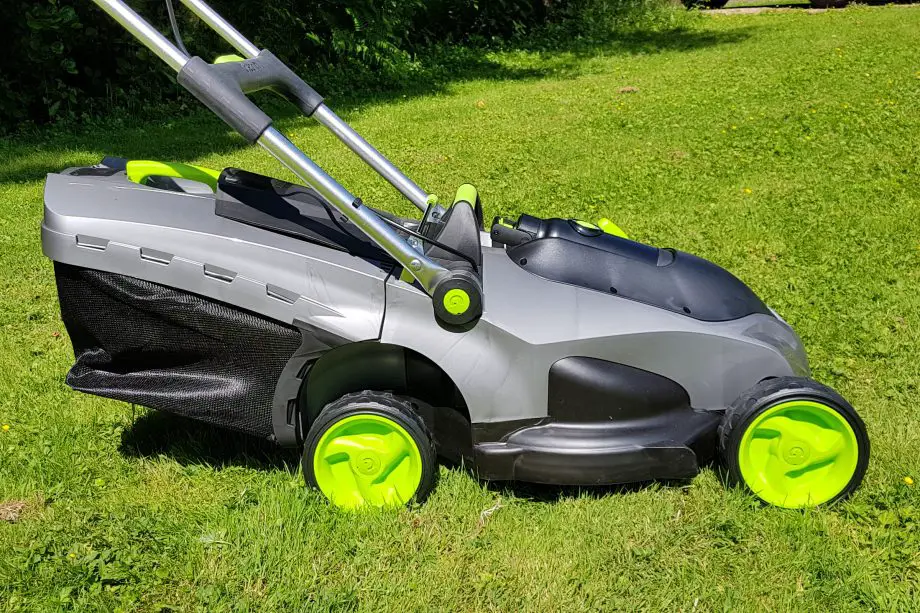
Most Gtech lawnmower faults reported by owners are not catastrophic mechanical failures but predictable, resolvable issues that cluster around three components: the removable 48V lithium-ion battery, the two-stage safety start system, and the single-blade cutting deck— and the great majority can be diagnosed and fixed at home in under an hour using the steps in this guide.

TL;DR
- The single largest category of Gtech complaints concerns the battery and charger (flashing red lights, short runtime, and packs that will not hold charge after three to five years), followed by "will not start" faults that are usually caused by the safety key, the handle not being fully extended, or the two-stage start lever rather than a dead motor.
- Cutting, collection, and cut-out problems are overwhelmingly caused by attempting to mow long or wet grass, a cutting height set too low, a blunt or jammed blade, or a clogged grass chute; the mower's automatic thermal and overload cut-out is a protective feature, not a defect.
- Gtech's own two-year warranty and its customer service (Gtech holds a 4.8 TrustScore across 161,395 reviews on its Trustpilot profile, whose reviewers "consistently highlight the exceptional customer service… commended for its friendly, helpful, and efficient staff" and note that "replacement parts are sent, often arriving the next day") resolve most in-warranty faults for free, but out-of-warranty battery replacement is the single biggest ownership cost and the most common reason owners abandon the platform.
Background: The Gtech Range and Why It Matters for U.S. Owners
Gtech (legally Grey Technology Ltd, of Worcestershire, England) is a British brand founded by inventor Nick Grey in 2001, best known for cordless vacuum cleaners and, since 2016, a line of cordless garden tools; per Gtech USA, the company "has sold over 22 million products in 19 countries," each carrying "a 2-year warranty backed by a dedicated customer service team." For a United States audience it is important to understand three things at the outset. First, Gtech is a cordless-only, battery-powered brand: there are no gasoline engines, spark plugs, carburetors, oil, or air filters to service, so the entire troubleshooting model differs from that of a traditional American gas mower. Second, the brand is sold in the United States through gtechhome.com, where the flagship CLM50 mower is offered at a sale price of 299.99 dollars (reduced from a 599.99 dollar list price) with a two-year warranty, and support is handled by a UK-based customer service team reachable by email at support@gtechhome.com. Third, and critically for anyone buying spare parts, the U.S. store currently stocks only the complete mower and a small number of garden tools; individual replacement batteries, blades, safety keys, and chargers are listed only on the UK website, gtech.co.uk. This has real consequences for American owners, which are addressed throughout this article.
The models a reader is most likely to encounter are:
- CLM001 (also branded as the "Cordless Lawnmower" and, in its earliest incarnation, the Falcon / CLM01): the first-generation full-size rotary mower, 2016 vintage, using a 36V 4Ah lithium-ion battery with a slow five-hour charge time and a 43cm cut. The official CLM001 operating manual documents this platform.
- CLM021 / CLM2.0 (the "Cordless Lawnmower 2.0"): the mid-generation refresh that moved to a 48V battery and a rapid one-hour charger, with a 50-litre grass box. The CLM2.0 manual covers this model.
- CLM50: the current flagship, a 48V 2.0Ah machine with a 42cm cut, six cutting heights from 30mm to 80mm, a variable-speed "Omniblade" that spins from 2800rpm up to 3500rpm when it senses load, and a 50-litre bin. This is the model sold in the United States.
- SLM50: a very small (3.5kg) mulching-only "mini mower" with a 25cm cut, two fixed heights (40mm and 50mm), an 18V battery shared with Gtech's GT50 grass trimmer and HT50 hedge trimmer, and no grass box. See the SLM50 product page.
- CM01: an early cordless cylinder (reel) mower, mechanically distinct from the rotary models.
- RCLM001: a robot mower, outside the scope of this troubleshooting guide.
A crucial compatibility point that generates repeated support queries: the CLM001 battery is not interchangeable with the CLM2.0/CLM50 battery, and the SLM50's 18V pack is a different platform again. Gtech states plainly on its replacement battery page that the CLM2.0/CLM50 pack "is not compatible with our Cordless Lawnmower CLM001."
Battery and Charging Problems
Battery and charging complaints are the most frequently reported Gtech lawnmower problem in every consumer channel examined—JustAnswer, Trustpilot, community boards, MoneySavingExpert, Mumsnet, and Amazon reviews alike.
Symptoms
- The charger or battery shows a flashing red light, or four solid red LEDs, and will not charge.
- On the older CLM001/CLM2.0, a single green light pulses slowly on the charging cradle and the pack never reaches full charge.
- The battery appears to charge (green lights show) but then lasts only a few minutes —owners report as little as 15 minutes on a supposedly full charge, sometimes dropping to one green light within ten minutes of mowing.
- The mower cuts out abruptly mid-cut, "causing lumps to be taken out of the lawn," as one Trustpilot reviewer put it.
- The battery "drops power then increases again even when fully charged."
- No lights illuminate at all when the green button on the pack is pressed.
Causes
The dominant cause is simply battery age and cell degradation. Gtech's own guidance, echoed by its support agents, is that these lithium-ion packs deliver roughly three years of full-capacity service before runtime noticeably falls, with total useful life commonly cited at three to five years. A five-year-old pack that "has been working fine till now" and suddenly flashes red has almost always reached end of life, even though the state-of-charge indicator may still misleadingly show a charge. A JustAnswer technician summarized the core mechanism well: "The battery indicator is misleading if/when the battery is at the end of its lifespan."
Secondary causes include:
- Deep discharge from winter storage. A pack left flat over winter can drop below the voltage the charger will recognize, after which the charger refuses to engage. This is the single most common "first cut of the season" failure.
- Extreme storage temperatures. Gtech's troubleshooting explicitly attributes four solid red LEDs to a battery "stored in extremely hot/cold temperatures," recommending the pack be returned to room temperature for 24 hours before recharging.
- Water ingress. Multiple owners who left a battery or the mower out in the rain reported permanent, unrechargeable cell damage. One CLM001 owner described leaving the pack out in the rain, after which one battery ran the mower for about a minute before dying and the other showed four red lights.
- Dirty or corroded charging contacts, which prevent the pack seating electrically even when it seats mechanically.
- A faulty charger rather than a faulty battery—a distinction owners frequently fail to test.
- A loose fit in the charging cradle, causing intermittent contact.
Troubleshooting Steps
Work through these in order, per the official Gtech support flow:
- Confirm the actual state of charge. Press the green button in the center of the battery. A single green light means the pack needs charging. On the CLM50, all four LEDs should turn solid green when full (a one-hour charge); on the older CLM001/CLM2.0, charging takes five hours.
- Interpret the lights precisely. Four solid red LEDs indicate a temperature fault— move the battery to a room-temperature location for 24 hours, then recharge. A flashing red charger light (slow) means the battery is too hot; allow it to cool. A flashing red charger light (rapid) indicates a genuine battery fault requiring replacement or a warranty claim.
- Clean the contacts. Remove the battery (always remove the battery before any maintenance) and wipe the terminals on both the pack and the housing with a dry, soft cloth. The terminals sit on the base of the battery and at the back and bottom of the cradle.
- Isolate the charger from the battery. Plug the charger into a different mains socket. Check whether it grows warm during charging and inspect the cable for fraying and the pins for damage. If you own the Gtech leaf blower, note that its charger is cross-compatible with the CLM001 mower and can be used as a test unit—an easy way to determine whether the charger or the pack is at fault.
- Check cradle fit. If the battery wobbles in the cradle, the contact may be intermittent; this is a warrantable fault.
- Test voltage with a multimeter if you are comfortable doing so, to confirm whether the pack holds voltage.
Solutions
- If the mower is within its two-year warranty, do not attempt battery repairs—contact Gtech. The consistent pattern across reviews is that Gtech ships a free replacement battery, often next-day. One Amazon reviewer whose battery died a month after purchase reported: "Having registered the mower for warranty, I phoned Gtech and received a new battery the next day free of any charge."
- If the pack is out of warranty and degraded, replacement is the only reliable fix. This is where U.S. owners face a structural disadvantage: the replacement CLM2.0/CLM50 battery is not sold on the U.S. site (gtechhome.com), only on gtech.co.uk. American owners must contact U.S. support at support@gtechhome.com to source one. In the United Kingdom the pack is a well-known pain point: a Gtech Trustpilot reviewer states "the replacement battery is over £120… It's over priced," while an eBay CLM50 buyer notes the packs "are £150 each," confirming a roughly £120–£150 range—prices UK owners have described as "madness, I can have a new mower for that." A Mumsnet user reported the battery lasting only a year, with Gtech characterizing that as "normal battery life."
- If a deeply discharged pack will not charge, contact Gtech for advice or replacement. Do not bridge lithium-ion battery packs or bypass the charger protection.
- Third-party ("knock-off") batteries are available at roughly half price and some owners use them without issue, but others (and Gtech) warn about fire risk and quality; there is a genuine safety tradeoff here.
- Prevent recurrence by storing the pack correctly over winter (see the Preventive Maintenance section).
Model note: The CLM001's 36V/5-hour system is both slower to charge and older, so degradation complaints are concentrated there simply because those machines are now the oldest in the field. The CLM50's 48V/1-hour system is a genuine improvement, but the underlying lithium-ion aging curve is the same, and the runtime-versus-price complaints on the CLM50 are, if anything, sharper because of its premium price.
Lawnmower Not Starting
"Will not start" is the second-largest complaint category, and it is also the most over-diagnosed: owners routinely conclude the motor or control board has failed when the true cause is one of the machine's several safety interlocks.
Symptoms
- The mower shows "no sign of life" with a fully charged battery.
- The blade will not turn even though the battery shows full and has been swapped for a second known-good pack.
- The green start button on the handle "is against a stop" and cannot be depressed.
- The mower ran briefly, then cut out and would not restart.
- The motor makes no sound at all, or a faint high-pitched noise but no rotation.
Causes
Gtech's own troubleshooting table for the CLM001 lists the causes of a non-running motor in priority order, and real-world reports match it closely:
- Flat or degraded battery (covered above).
- Safety (activation/isolator) key not fitted or turned off. The mower will not start unless the key is present and in the "on" position. On the CLM50 the key must be rotated 90 degrees; on the SLM50 it must be switched on.
- Handle not fully extended. This is a mechanical interlock: "The machine will not work if the handle is not fully extended." It catches many owners after folding the mower for storage.
- The two-stage start sequence performed incorrectly. The correct sequence is to press and hold the green safety button (holding it for about five seconds on the CLM50), then lift and continuously hold the green start lever up to the handle. Releasing the lever stops the mower by design.
- A broken or detached start lever. This is a recurring hardware failure. Owners repeatedly report the green start lever cracking, snapping off both ends, or pulling out of its casing. One blog commenter noted that "a year after buying the mower, the green handle you have to hold to keep the mower going came out of its casing."
- Displaced or dirty battery contacts.
- A faulty switch or the protective cut-out having tripped.
- A jammed blade, which causes the machine to cut out and refuse to restart.
Troubleshooting Steps
- Confirm the battery is genuinely charged and correctly clicked into its cradle.
- Check the safety key: squeeze the "two green rabbit ears," seat it fully until it clicks, and confirm it is in the "on" position. The key sits between the battery housing and the cutting-height adjuster.
- Fully extend the handle until it clicks into the operating position.
- Perform the two-stage start deliberately: hold the safety button first, then draw the lever to the handle.
- Remove the battery, lay the mower on its side, and clear any debris jamming the blade with a blunt implement.
- Reset the machine by removing and reinserting both the battery and the safety key.
- Inspect the start lever and its housing for cracks or detachment.
- Clean the battery and housing contacts.
Solutions
- If a specific interlock is at fault (key, handle, lever), the fix is immediate and free.
- A broken start lever or safety key is a spare part. In the United Kingdom these are ordered from the Gtech spares page; in the United States, because these individual parts are not stocked on gtechhome.com, owners must email U.S. support to obtain them. Within warranty, Gtech's documented practice is to ship the part free, often next-day.
- If the machine still shows no life after all interlocks are confirmed and the battery is known good, the fault lies deeper (switch, wiring, or control electronics), and the mower should go to Gtech support or an authorized repairer. On very old CLM001 machines a JustAnswer engineer noted that motor brushes can wear, but replacements are not readily available to consumers, making full replacement the practical route.
Blade and Cutting Performance Problems
Symptoms
- The blade turns but "does not cut," leaving grass standing or shredded.
- The mower "grabs the grass, pulling it out leaving bare patches."
- Uneven or "lazy" cutting, a "distinct laziness in performance."
- The mower deposits "little mounds of grass" that then need a second pass.
- Excessive vibration during cutting.
- The mower struggles or stalls in denser grass even at higher cut settings.
Causes
- A blunt, worn, or damaged blade. Gtech's own blog on "grassology" explains that a dull blade "bruises" and "shreds" the grass rather than slicing it, producing ragged brown tips that owners often misattribute to poor grass health.
- A blade fitted incorrectly. The CLM50/SLM50 use the single, asymmetric "Omniblade," which is weighted on one end and keyed so it fits the motor hub only one way; Gtech designed the keyed mount specifically to prevent the common error of installing a blade upside down.
- Cutting height set too low for the lawn, which the blade cannot clear.
- Grass too long, too thick, or wet. Cordless motors are tuned to favor runtime over torque, so they slow dramatically in heavy going.
- A loose blade, which causes uneven cutting and vibration.
- A clogged deck—one CLM50 owner noted "the plastic housing above the blade is not flat and grass gets stuck in it," making the deck harder to clear.
Troubleshooting Steps
- Remove the battery and safety key, lay the mower on its side, and inspect the blade for bluntness, nicks, bending, and debris wound around the hub.
- Confirm the blade is the correct part, seated on its keyed hub, and that the retaining nut is tight (the SLM50 troubleshooting explicitly says to check the blade is fitted and the nut tightened).
- Raise the cutting height and re-test on a lighter patch of grass.
- For long or overgrown grass, cut in stages from a high setting downward; Gtech recommends trimming very tall growth with a grass trimmer first.
- Never mow wet grass—Gtech's manuals state this directly.
Solutions
- Sharpen or replace the blade. A key advantage of the single-blade design is that there is only one edge to maintain. The Omniblade is sharpened on its one primary cutting edge. Because it is a precision, keyed component, many owners simply replace it: the CLM50 carbon-steel blade is an off-the-shelf spare on gtech.co.uk (U.S. owners must source it via gtechhome.com support). The older CLM001 blade is likewise a stocked spare.
- Tighten a loose blade to eliminate vibration and uneven cut.
- Match cut height to conditions—30mm to 40mm for fine, level lawns; 60mm to 80mm for longer, uneven, or damp grass.
A note on conflicting descriptions: some reviews describe the CLM50 blade as "plastic," while Gtech and the majority of hands-on reviewers describe a carbon-steel Omniblade; the current CLM50 spare is explicitly a "carbon steel blade." The earliest Falcon-era machines and some accessory blades used plastic cutting blades, which likely explains the confusion.
Grass Collection Problems
Symptoms
- The grass box collects poorly, leaving clippings on the lawn.
- The bin-full indicator flap "doesn't work" or "flaps up and down," making it hard to tell when the box is full.
- The box is fiddly to seat, and owners "struggle to hear the click" that confirms it is fitted.
- Clippings escape from the deck rather than entering the box.
Causes
- A full or blocked grass box, which backs up and blocks the chute.
- A clogged chute between blade and box.
- Dirty bin fabric, which reduces airflow (the CLM50/CLM2.0 box has plastic top and base with cloth sides).
- Wet or overly long grass, which will not convey cleanly into the box.
- The box not correctly hooked onto the mounting tabs.
- The SLM50 has no grass box at all—it is mulch-only, so "collection failure" on that model is a misunderstanding of its design, not a fault.
Troubleshooting Steps
- Empty the box and clear the chute after every use.
- Remove the battery, then clear any build-up around the blade and in the chute with a blunt implement.
- Confirm the box is hooked onto the tabs and the flap lies on top of the box.
- Clean the bin fabric so air can pass through it.
- Avoid mowing wet grass, and reduce forward speed in heavier grass.
Solutions
- Consistent after-use cleaning resolves the large majority of collection complaints. Gtech's newer CLM50 and SLM50 marketing highlights an "enhanced airflow system" precisely because collection was a known weak spot on earlier machines.
- If the indicator flap is genuinely broken, it is a warrantable part.
- Owners who want striping or a manicured finish should note the Gtech rotary mowers have no rear roller; this is a design limitation, not a defect.
Motor Overheating and Cut-Out Problems
Symptoms
- The mower "cuts out every few seconds" in longer grass.
- It starts, runs briefly, then dies and will not immediately restart.
- Four solid red LEDs appear when the mower stops mid-cut.
- Progressive worsening over a session as the machine heats up.
Causes
This is one of the most misunderstood categories. In most cases the mower is working as designed: it has an automatic overload/thermal cut-out that protects the motor and electronics when the blade jams or the motor is overloaded. The SLM50 manual states that when the mower stops with four solid red LEDs, "the mower has jammed/overloaded"—the remedy is to wait for the automatic cut-out to reset, clear the blade, and use a lighter cutting action.
Underlying triggers:
- Cutting height set too low, the single most common cause of overload cut-outs on lower-powered motors.
- Long, thick, or wet grass overloading the motor.
- A jammed blade (debris, or grass wound around the hub).
- A blunt or bent blade increasing cutting resistance and heat.
- Blocked cooling vents clogged with clippings.
- Genuine battery-thermal shutdown after extended use.
Troubleshooting Steps
- Stop and allow the mower to cool if it has been running hard.
- Remove the battery and clear the blade and vents of debris.
- Raise the cutting height (never remove more than about one-third of the grass height in a pass).
- Slow your walking pace and cut in overlapping stages.
- Check the blade for bluntness or bending.
- If four red LEDs appear, wait for the automatic reset before restarting.
Solutions
- The definitive fix for most cut-out complaints is technique plus a sharp blade: higher cut, slower pace, staged cutting of tall grass, and a clean deck. One owner who complained of persistent stalling had Gtech replace both battery and entire machine, yet the stalling continued—strongly indicating the lawn conditions and cutting approach, not a defective unit, were the root cause.
- Persistent cut-outs on short, dry grass at a high setting with a known-good battery point to a real fault—an aging battery whose voltage sags under load, or a motor/electronics problem—and warrant a support contact.
Model note: The CLM50's variable-speed Omniblade (2800rpm rising to 3500rpm under load) and "intelligent power control" were introduced specifically to reduce these stalls, and hands-on reviewers confirm the automatic power boost helps in longer grass. The lower-powered Falcon and CLM001 are more prone to slowing in heavy going.
Drive, Wheel and Height-Adjustment Problems
Gtech rotary mowers are push (not self-propelled) machines, so there is no drive belt or transmission to fail—a point that simplifies this category considerably relative to American gas mowers.
Symptoms
- The height-adjustment lever will not move into the notches, or is stuck.
- Uneven cut height across the lawn.
- The mower is hard to push, or a wheel does not roll freely.
- On the SLM50, difficulty adjusting between the two fixed heights.
Causes
- Debris, grass build-up, or corrosion in the height-adjuster mechanism—the most common cause of a stuck lever.
- A worn, cracked, or broken adjuster lever or pin. Over time an adjuster pin can round off and slip out of its quadrant, or the lever can crack.
- Wheels clogged with clippings or, less commonly, damaged.
- Cut height set too low for a bumpy lawn, so the blade catches on high spots—one CLM50 owner on a "bumpy" lawn found "on the short setting the blade can get caught on the ground."
Troubleshooting Steps
- Remove the battery and safety key before adjusting height.
- Adjust on a flat surface; removing the grass box makes the adjuster easier to reach.
- Clean clippings and grit from around the adjuster and wheels; cleaning with a dry brush, followed by a light lubricant on suitable pivot points, frees most stuck mechanisms. Follow the model manual and keep water away from electrical parts.
- Confirm the lever moves cleanly into each of the six notches (CLM50) or between the two settings (SLM50).
Solutions
- Cleaning and light lubrication resolve most sticking. Gtech's guidance is explicit: if the lever "does not move into the notches for the required cutting height, get in touch with us as we may need to send you a replacement part."
- A cracked or broken adjuster is a spare part (UK spares page; U.S. via support).
- For uneven cut on bumpy ground, raise the cut height—this is often a lawn-surface issue rather than a mower fault.
Electrical and Safety-Switch Problems
The Gtech safety architecture is deliberately layered, and each layer is a potential point of failure or false alarm.
Symptoms
- The mower will not start despite a charged battery (safety interlock not satisfied).
- The green safety button jams "against a stop" and cannot be pressed.
- The start lever is cracked or detached.
- On the SLM50, the "auto-off" lock engaging unexpectedly.
Causes
- The safety key missing, misfitted, or turned off. The mower will not start without it correctly seated.
- The handle interlock not satisfied because the handle is not fully extended.
- The two-stage start switch (safety button plus start lever) failing mechanically— cracked lever, broken return, or a button that will not depress.
- The SLM50's auto-off safety lock, which deliberately cuts power when the handle is raised above 66 degrees—useful for storage but occasionally surprising in use.
- A faulty switch or internal wiring fault.
Troubleshooting Steps
- Verify the safety key is seated and "on."
- Fully extend and lock the handle.
- Test the two-stage start deliberately, listening for the button's click ("it will click if operating correctly," per the SLM50 manual).
- On the SLM50, lower the handle below the auto-off angle.
- Inspect the lever and button for physical damage.
Solutions
- Interlock issues are free to fix once identified.
- A faulty switch, lever, or key is a spare part; within warranty Gtech replaces these free, and its support team is widely praised for diagnosing switch faults over the phone and shipping parts next-day. One Trustpilot reviewer described the pivot on a Gtech handle breaking, with Gtech diagnosing it immediately and delivering a free part the next day.
- A genuine internal wiring fault should be handled by Gtech or an authorized repairer; owners should not open sealed electronics themselves.
Maintenance-Related Failures
Many faults in every category above are, at root, maintenance failures—problems that accumulate because the machine was not cleaned, stored, or serviced correctly.
Symptoms
- Progressive loss of cutting quality and runtime over a season.
- Recurrent jamming and cut-outs.
- Corroded contacts and stuck mechanisms after winter.
- A battery that "died over winter."
Causes
- Grass build-up on the deck, blade, chute, and vents.
- A blade never sharpened or replaced.
- Contacts left dirty so the pack does not connect.
- The battery stored flat, fully charged, or in a cold shed over winter—the leading cause of "first cut of the season" failures.
- Water exposure damaging cells or corroding terminals.
Troubleshooting Steps and Solutions
The remedy is a disciplined maintenance routine, detailed in the next section. The key diagnostic insight is that a machine which "worked last week" and then failed at the first spring cut has almost always suffered a storage or maintenance failure—usually a deep-discharged or cold-damaged battery—rather than a sudden mechanical breakdown.
Preventive Maintenance and Recommended Servicing Schedule
Because Gtech mowers have no engine to service, preventive maintenance is simple, cheap, and disproportionately effective. The following schedule synthesizes Gtech's manuals with widely accepted lithium-ion battery guidance.
After every use
- Remove the battery and safety key before touching the deck.
- Empty the grass box and clear the chute to prevent build-up that degrades collection and causes jams.
- Lay the mower on its side and clear clippings from around the blade and cooling vents with a blunt implement (not your fingers, and not while the battery is fitted).
- Wipe the battery and housing contacts with a dry, soft cloth.
- Recharge the battery in time for the next mow, but avoid leaving it on charge indefinitely.
Monthly during the mowing season
- Inspect the blade for bluntness, nicks, and bending; sharpen the single Omniblade on its primary edge or replace it. A sharp blade is the single most effective cut-quality and anti-stall measure.
- Check that the blade retaining nut is tight.
- Free and lightly lubricate the height-adjuster mechanism; brush debris from the underside without wetting electrical parts.
- Inspect the safety key, start lever, and button for cracks or stress marks—early detection lets you order a part before the mower is out of action.
- Check wheels roll freely.
Battery care (year-round)
- Store the battery indoors at a moderate temperature. Consumer Reports states that "most batteries do best when stored between 40° F and 80° F" and advises bringing them inside rather than leaving them in an unheated shed or garage.
- For long-term/winter storage, most battery authorities recommend a partial charge rather than storing the pack either full or flat, because a full charge stresses lithium-ion cells and a flat charge risks deep-discharge damage. Consumer Reports recommends charging or discharging the pack "to roughly 40 percent of its capacity" for storage of 30 days or more, and Toro's Wes Bollingmo advises to "discharge them to 40-50%, and store them in a dry, well-ventilated location with moderate temperatures (41°F to 104°F)." Note that this general best practice differs from Gtech's own manual guidance for its older packs, which recommends fully charging the battery before winter storage to help maintain it; owners should follow their specific model's manual, and where the manual is silent, a partial charge with a mid-winter top-up is the safer default for lithium-ion chemistry.
- Do not store the pack on a bare concrete floor; use a shelf.
- Never leave the battery or mower out in the rain—water ingress is a common cause of unrecoverable cell failure.
- Recharge only with the correct Gtech charger.
Seasonal (spring and autumn)
- Before the first cut of spring, charge the battery fully and test it before you need it; a pack that will not wake up is the classic spring failure.
- Give the mower a full clean, check the blade, and free the height adjuster after winter.
- At season's end, clean thoroughly, fold and store the mower in a dry place out of reach of children, and store the battery indoors as above.
Spare Parts, Warranty and Customer Service
Warranty
Every current Gtech lawnmower carries a two-year warranty (from date of purchase) plus a 30-day money-back guarantee when bought direct. This applies in both the United Kingdom and the United States; Gtech USA states plainly that "Gtech USA products come with a 2-year warranty." Buyers who purchase from an authorized retailer rather than direct should register the warranty within three months and keep proof of purchase.
Customer service
This is, consistently, Gtech's strongest asset—and the pattern holds even among owners who dislike the product. Gtech carries a 4.8 TrustScore across 161,395 reviews on its Trustpilot profile, where reviewers "consistently highlight the exceptional customer service." Across Trustpilot and Amazon, the recurring story is fast phone/email diagnosis followed by free next-day replacement parts or whole machines. Representative examples:
- An 83-year-old owner's mower that died after 30 seconds was diagnosed over the phone and replaced next day.
- A CLM50 buyer missing the safety key had it couriered overnight, and the warranty honored even on a "used–like new" purchase.
- Even owners who concluded the CLM50 was "not fit for purpose" and threw it away added that "customer services cannot be faulted."
United States buyers should note that support is a UK-based team reachable by email at support@gtechhome.com (the site does not publish a U.S. phone number), aiming to respond within 24 hours. UK owners use 01905 345891 or 0800 numbers.
Spare parts
Genuine spares—batteries, blades, safety keys, chargers, and height-adjuster parts—are available in the United Kingdom directly from Gtech (Grey Technology Ltd) and from third-party spares retailers such as BuySpares, Partmaster, and eSpares, and used/refurbished units and packs appear on eBay. The critical limitation for U.S. owners is that gtechhome.com currently sells only complete tools, not individual mower spares; American owners needing a battery, blade, key, or charger must contact U.S. support to source one, which is slower and less transparent than the UK spares page.
The dominant cost-of-ownership issue is the replacement battery. In the United Kingdom it is repeatedly cited in the roughly £120–£150 range—enough that many owners conclude a new mower is barely more expensive, and some abandon the platform rather than re-buy. This is the single most important number for a prospective buyer to weigh, because it recurs roughly every three to five years.
Model-by-Model Problem Prevalence: A Comparative View
- Falcon / CLM01 (earliest): Slow five-hour charge, "woefully slow charger," flexy handle, poor switch-lever design, and a finger-pinching bag flap were the recurring niggles; runtime and coverage were praised for the price. Lower motor torque makes it more prone to slowing in thick grass.
- CLM001: As the oldest full-size machines still in service, these dominate battery-degradation and "won't start after winter" reports simply by age. The 36V pack and the broken-activation-lever complaint are characteristic.
- CLM2.0 / CLM021: The move to 48V and a one-hour charger fixed the Falcon's worst weakness. Complaints center on battery cost at end of warranty and the fiddly grass-box "click."
- CLM50 (current, U.S. model): The best-performing on paper—variable-speed Omniblade, intelligent power control, 50-litre bin—but it draws the sharpest criticism on value, because runtime and durability complaints sting more at its premium price. A minority of owners report short runtime, mid-cut stalling, and a spongy handle "already burst" on early use; a larger share praise the light weight, quiet operation, and cut quality—the model is "rated 4.6 out of 5 by 2506" owners per Gtech's own product data (as reproduced by U.K. retailer Robert Dyas). Its 29.8 lb weight and one-handed maneuverability make it especially popular with older owners.
- SLM50 (mini/mulch-only): Genuinely different use case. It performs well on small lawns (up to roughly 40 to 100 square metres) mown regularly, but "problems" almost always stem from expecting it to collect grass (it cannot) or to tackle long, overgrown grass (it is not designed to). Its 18V battery is shared with the GT50 and HT50, which is a real ownership advantage.
Recommendations
If your mower will not start (start here, in order): Confirm the battery is charged and clicked in; confirm the safety key is seated and on; fully extend the handle; perform the two-stage start deliberately (hold the button, then draw the lever); clear any blade jam with the battery removed; reset by removing and reinserting battery and key. This sequence resolves the large majority of no-start faults at no cost.
If runtime is short or the mower cuts out: First rule out technique and conditions—raise the cut height, slow down, cut tall grass in stages, and never mow wet grass. Then sharpen or replace the blade and clear the deck and vents. Only if the machine still stalls on short, dry grass with a known-good battery should you suspect a failing pack or motor. If the battery flashes red or will not hold charge: Determine the pack's age. Within the two-year warranty, contact Gtech for a free replacement—this is their documented practice. Over three to five years, treat it as end-of-life and budget for a replacement, recognizing that in the U.S. you must source it through gtechhome.com support.
Before buying (or re-committing to) a Gtech mower: Weigh the replacement-battery cost against the mower price. If you keep tools a long time, factor in a battery replacement roughly every three to five years. Choose the SLM50 only for small lawns mown frequently and only if you are content to mulch; choose the CLM50 for medium lawns where its light weight and quiet operation justify the premium.
Benchmarks that should change your approach:
- Battery within its two-year warranty and failing → contact Gtech about a warranty claim before buying a replacement.
- Battery 3–5+ years and failing → replacement is expected; compare its cost to a new mower.
- Stalling persists on short, dry grass at high cut with a new battery → escalate to Gtech support; the fault is not technique.
- Repeated part breakages within warranty → insist on replacement and, if the pattern continues, invoke the money-back or consumer-rights remedy.
Caveats
Several limits on this analysis should be kept in mind. First, Gtech is a UK brand and the overwhelming majority of consumer feedback, spare-part pricing, and support documentation originates in the United Kingdom; U.S. availability, pricing, and support logistics differ, and the U.S. spare-parts situation in particular is more restrictive. Second, much of the granular fault detail here is drawn from consumer forums and paid Q&A sites (notably JustAnswer), where posts are user-generated, unverified, and sometimes accompanied by AI-generated answers; individual anecdotes illustrate patterns but are not statistically representative. Third, review platforms skew toward the extremes—very satisfied and very dissatisfied owners are over-represented—so the true incidence of any given fault is lower than raw complaint volume suggests. Fourth, specifications and prices change: the CLM50's U.S. sale price (299.99 dollars), battery pricing, and even a small weight discrepancy (a spec-table figure of 29.8 lb versus marketing copy citing 31.2 lb) were all observed to vary by source, so confirm current figures with Gtech before purchase. Finally, this article is a troubleshooting guide, not a substitute for the model-specific operating manual or professional repair; any procedure involving the blade, battery, or internal electronics should be performed only with the battery and safety key removed, and sealed electrical components should be left to Gtech or an authorized repairer.