
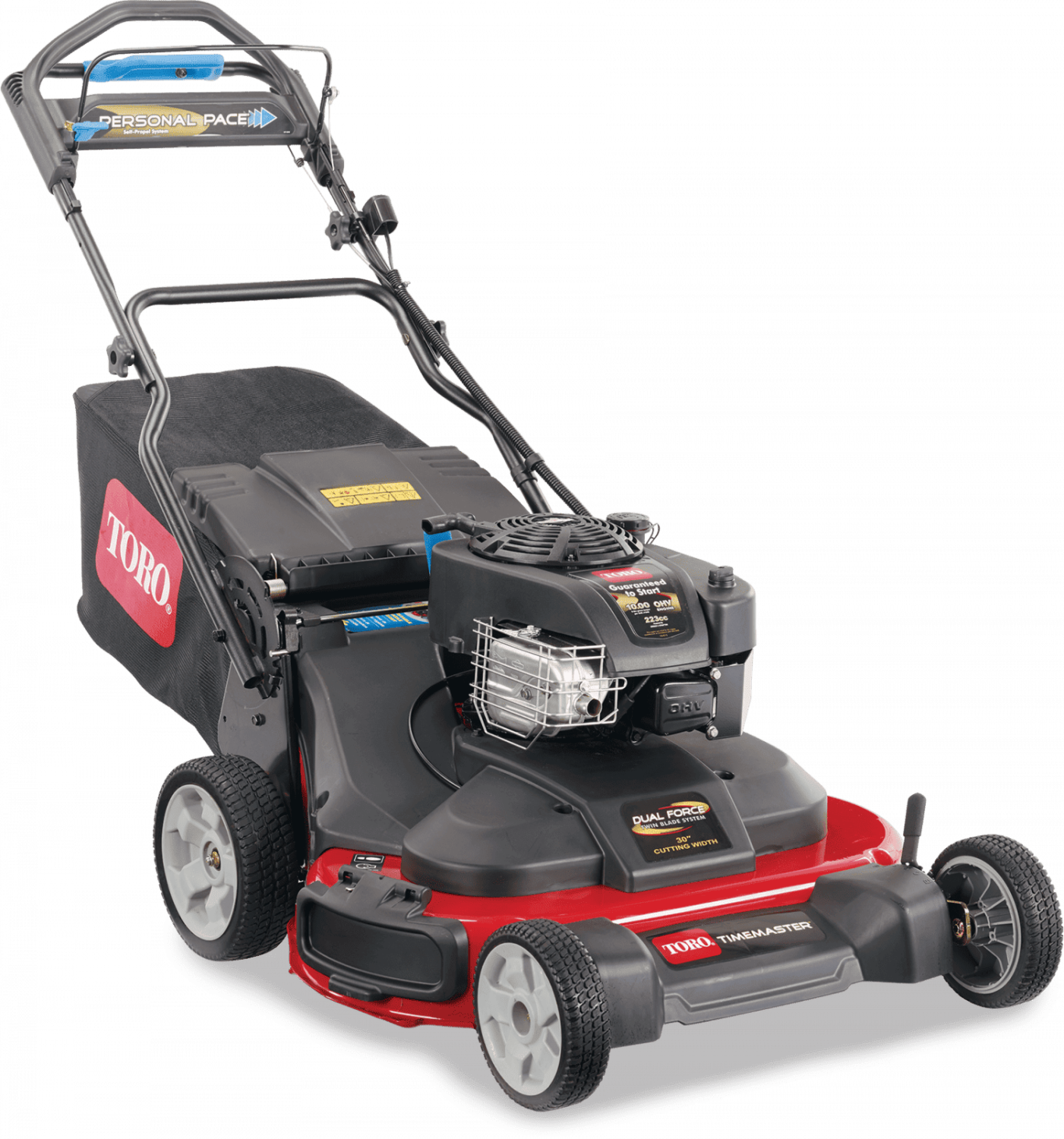
The Toro TimeMaster is one of the most recognizable wide-deck walk-behind lawn mowers in the United States residential market. With a 30-inch cutting deck, Personal Pace self-propel system, and a chassis that bridges the gap between consumer push mowers and small commercial machines, the TimeMaster has earned a loyal following among homeowners with larger lawns and small lawn care operators who want to reduce mowing time without stepping up to a riding mower or zero-turn machine. Toro markets the TimeMaster as a tool that can reduce mowing time by approximately 40 percent compared to a 21-inch walk mower, an appealing claim for anyone managing properties between half an acre and two acres.

Notwithstanding the strengths of the platform, the most frequently discussed and persistent weakness across consumer forums, dealer technician posts, and repair videos is, without question, the transmission. The Personal Pace gearbox that powers the rear wheels has been revised multiple times since the TimeMaster was introduced in 2011, and yet reports of weak self-propel, slipping drive, screeching noises, and outright transmission failure continue to surface in lawn care repair threads year after year. This article provides a detailed examination of the major transmission problem categories on the TimeMaster, explains the underlying causes, walks through diagnostic steps, and offers practical solutions that a homeowner or small-engine technician can apply.
This guide is intended as a reference document for owners of the 20199, 20200, 21199, 21199HD, 21200, and the international 20975, 20976, 20977, 20978, 21810, and 21811 variants. While engine displacement and minor chassis details have evolved across model years, the rear-wheel-drive transmission family has remained largely consistent in architecture, and most diagnostic procedures apply to all variants.
Technical Overview of the Personal Pace Transmission System
Understanding the components of the TimeMaster drive system is the first step toward effective diagnosis. The TimeMaster does not use a hydrostatic transmission in the traditional automotive sense. Instead, it uses a mechanical Personal Pace gearbox driven by a single V-belt routed from the engine crankshaft pulley to the transmission input pulley. The Personal Pace concept relies on a variable engagement system rather than a traditional clutch lever or speed selector.
The principal components of the drive system are as follows.
Engine Crankshaft Pulley. This is the upper pulley directly attached to the vertical crankshaft of the Briggs and Stratton engine. It transmits rotational power to the traction V-belt.
Traction V-Belt. Toro part number 120-9470 (commonly referenced as the traction V-belt for 2012 and newer 30-inch TimeMaster models) is the wrapped V-belt that connects the engine pulley to the transmission input pulley. This is distinct from the synchronous blade-drive belt (part number 121-5765) that drives the dual blades through the blade-brake-clutch system. Confusion between these two belts is a frequent source of misdiagnosis.
Transmission Assembly. Toro part number 131-9665 is the current service replacement for the entire transmission gearbox, superseding earlier part numbers 120-5211, 127-0656, 130-2388, and 130-6670. Inside the housing are an input pinion gear, a worm gear or worm-driven gear set, a differential mechanism, and a pair of friction clutch cones (sometimes referenced by forum users as “slip plates”) that allow each side of the axle to engage independently and provide the variable torque output that defines the Personal Pace feel. A complete exploded parts diagram of the transmission, rear wheel, and height-of-cut assembly is available for the 2016 production 20199, and the same architecture carries through to current models.
Output Pinions and Wheel Drive Gears. The two outboard pinion gears at the ends of the transmission axle engage with internal teeth in the rear wheel hubs. When the wheels rotate, the internal hub teeth ride on the pinion gears.
Traction Cable (Personal Pace Cable). Toro part number 120-6244 (and the related cable 127-6867) connects the operator handlebar to the transmission. As the operator pushes the upper handle bar downward by leaning into the mower, the cable rotates a lever on the transmission housing. This rotation is what engages the friction clutches inside the gearbox and varies the speed.
Traction Lever / Cable Bracket. The plastic traction-control lever (part number 99-1589) is a small but critical pivot piece that translates cable pull into clutch engagement. This part wears and is widely cited as a frequent failure point.
Tension Spring. A heavy coil spring runs between the transmission housing and the chassis, holding the gearbox in a position that maintains constant tension on the V-belt. Unlike many self-propelled designs in which the cable pulls a tensioner against the belt, the TimeMaster maintains constant belt tension and uses the cable to engage internal clutches.
Traction-Assist Handle. A secondary lever on the upper handle that allows the operator to fully engage the drive without leaning forward, useful on slopes or when towing accessories.
It is important to note that the TimeMaster does not use a true hydrostatic transmission. Some owners have searched for hydrostatic-related parts because of the smooth variable-speed feel, but the system is mechanical. References to “hydrostatic” components in discussions are usually a misnomer for the friction-cone variable engagement.
The lubrication of the gearbox has been a topic of ongoing debate in technician forums. Toro’s official replacement transmissions are sealed and described as non-serviceable. However, the Toro company sells an 80W-90 high-performance gear lubricant (part number 38906) that meets API GL-5 and MT-1 specifications and is recommended for several Toro gearboxes. Forum users who have opened the housing for service report finding either grease or a heavy gear oil inside, and the consensus best practice when refilling after disassembly is to use SAE 80W-90 gear oil or, alternatively, NLGI #2 lithium grease or a 75W-90 differential fluid, depending on the specific transmission revision.
Toro TimeMaster Model-Year and Variant Differences
The TimeMaster has gone through several meaningful changes since its introduction. Identifying which version a given mower belongs to is essential because the recommended fixes, parts numbers, and known failure modes differ by year.
Model 20199 (2011 to approximately 2017). This was the original TimeMaster equipped with a 190cc Briggs and Stratton OHV engine producing 8.75 ft-lb of gross torque. It is the most heavily represented model in transmission failure threads, in part because of its long production run and large installed base. Owners of this model frequently complain that the drive feels weak under load and that the cable adjustment is “maxed out” within a few seasons. Toro issued a 2012 to 2013 service kit (part number 130-6739) that relocated the wheel-drive cable to reduce slack and improve engagement on these earlier units. Installation of that kit required drilling a 5/8-inch hole in the engine base.
Model 20200. This is the international and certain regional variant of the 20199 produced in similar serial number ranges. It shares the transmission and most chassis components with the 20199.
Model 21199 (approximately 2017 onward). The 21199 introduced the larger 223cc Briggs and Stratton OHV engine, producing 10.00 ft-lb of gross torque. According to forum technicians, units with serial numbers beginning with 4 represent the most refined production. The increased engine power addressed long-standing complaints that the older 190cc engine bogged down in tall or wet grass, but it also placed greater stress on the same transmission family. The transmission part number for these mowers remained in the 127-0656 / 131-9665 lineage. Owners can review the current Toro 21199 operator’s manual directly from Toro for the official maintenance schedule and adjustment procedures.
Model 21200. A close variant of the 21199, sharing the 223cc engine and the same transmission.
Model 21199HD. This designation refers to TimeMaster units placed into the Home Depot rental fleet. Because rental mowers see far heavier and more abusive use, transmission failure rates are anecdotally higher on these machines. The same 131-9665 transmission is the service replacement.
International 209xx and 218xx Models. Models 20975, 20976, 20977, 20978, 21810, and 21811 are 76 centimeter (30-inch) versions sold outside the United States. The transmission is the same 131-9665 family.
According to parts-catalog history, Toro made approximately four parts-number revisions to the TimeMaster transmission kit since introduction, with 131-9665 being the most current and consolidating all earlier numbers. Each revision was generally aimed at improving reliability, although forum users have offered mixed verdicts on whether the latest version is significantly more durable than its predecessors. One frequent observation is that the failure mode tends to migrate rather than disappear: earlier units suffered from clutch-cone wear and cable-stretch issues, while later units more often exhibit pinion gear or wheel-gear wear.
Toro TimeMaster Recall Information
Owners frequently search for a TimeMaster transmission recall. Based on records from the United States Consumer Product Safety Commission, Toro media documents, and small-engine expert responses, there has not been an official recall of the TimeMaster transmission. The 2014 recall associated with the TimeMaster involved blade breakage, not transmission failure. The official CPSC recall notice 14-046 covered model 20199 with serial numbers 313000101 to 313020271, model 20200 with serial numbers 313000101 to 313007366, and model 22200 with serial numbers 313000101 to 313007146, all manufactured in 2013. Approximately 34,500 units in the United States and 1,600 units in Canada were affected. The hazard was that the mower blade could break during use. Owners receiving repair under that recall had the blades replaced, not the transmission.
Service bulletins exist for the blade-brake-clutch (BBC) cable kit and a separate service bulletin for the wheel-drive cable relocation on 2012 to 2013 units, but neither constitutes a transmission recall. Owners experiencing transmission problems should not expect free repair on a recall basis but should still contact a Toro authorized service dealer if the unit is under the standard 3-year residential warranty, because Toro has historically been responsive to reasonable warranty claims related to transmission complaints.
Transmission Not Engaging
Symptoms
The mower starts and runs normally, the operator squeezes the blade-control bar and engages the blades, but when the upper Personal Pace bar is pushed down toward the lower handle, the rear wheels do not turn. In some cases the wheels turn very weakly and stop entirely as soon as any load is placed on the deck. On a jack stand the rear wheels may rotate freely when the operator turns the transmission pulley by hand, indicating the wheels themselves are not seized but the drive path from cable to clutch is not completing.
Causes
The most common causes of total non-engagement are cable stretch or breakage, a snapped or unhooked traction cable, a worn traction-control lever (part 99-1589) that no longer rotates the clutch arm, an internal stripped pinion or gearset inside the transmission, and a disconnected tension spring that allows the transmission housing to rotate freely.
A specific failure mode that small-engine technicians have flagged is a stripped internal gearset. As one expert summarized in a 20199 troubleshooting thread, “If turning the pulley with the lever in the drive position does not rotate the wheels, it indicates that the gears in the transmission are stripped, and a new transmission is required.”
Troubleshooting Steps
- Place the mower on a level surface with the spark plug wire disconnected for safety, and lift the rear wheels onto a jack stand or sturdy block so the wheels rotate freely.
- Inspect the traction cable from the upper handle down to the transmission. Look for fraying at the cable termination, a broken inner cable strand, or a disconnected end.
- With the mower tipped on its side (air filter up to prevent oil migration into the carburetor), confirm that the heavy tension spring is hooked between the transmission housing and the chassis. Reattach if disconnected.
- Have an assistant push the Personal Pace bar down while you observe the cable lever on top of the transmission. The lever should rotate visibly as the bar is pushed down. If it does not move, the cable, the traction-control plastic lever, or the cable-attachment bracket is at fault.
- With the engine off, manually rotate the transmission input pulley while the cable is held in the engaged position. If the rear wheels rotate, the gearset is intact and the problem is upstream (cable, lever, or spring). If the wheels do not rotate while the pulley turns, the internal gears or clutches have failed.
- Inspect the rear wheels themselves. Pull each wheel off and examine the internal hub teeth and the transmission-side pinion gear. Stripped or rounded teeth are a common finding on heavily used machines.
Solutions
If the cable is broken or stretched beyond adjustment range, replace it with Toro part 120-6244 or the updated 127-6867. To remove the existing cable, depress the two retention prongs at the cable end with a pair of needle-nose pliers, rock the cable out of its bracket, and snap the new cable in. Then perform the cable-tension adjustment described below in the Cable and Control Lever Problems section.
If the plastic traction-control lever (part 99-1589) is cracked or has play, replace it with a new lever. Some technicians have replaced it with the metal version available from third-party suppliers for additional durability. As one expert advised, “The traction lever will wear and develop too much play. It pulls the cable to the transmission. I replaced it with the metal one.”
If the tension spring is broken or stretched, install a new spring. A worn spring will fail to keep the transmission in proper position and the V-belt will slip.
If the internal gears are stripped, the most cost-effective repair is to replace the entire transmission assembly with Toro part 131-9665. Aftermarket equivalents are available at lower cost, although forum reviewers consistently note that genuine Toro parts deliver better long-term reliability. A complete TimeMaster transmission assembly replacement guide on iFixit walks through the procedure step by step, estimating two and a half hours for a first-time DIY repair and as little as 30 to 60 minutes for someone who has done it before.
Weak or Slipping Drive
Symptoms
The mower self-propels but does so weakly. On level pavement, fully engaging the Personal Pace bar produces only a slow build of speed and minimal pulling force. The operator can hold the mower stationary with light hand pressure even with the bar fully down. On hills or in thick grass the mower bogs down or refuses to climb. As one TimeMaster owner described the symptom, “When I fully push down on the self-propel the mower is slow to build speed. On pavement, fully engaged the tires will not spin, it will not pull away hard. Basically a 3-year-old could withstand the pulling power of the mower on concrete.” Another contributor described it succinctly: “I feel like my Personal Pace still pulls about as fast as it always did when it is on level grass, but it has lost significant torque power and I have to fight now to get it up hills it used to climb with ease.”
Causes
Weak drive is most often caused by a stretched traction cable that no longer fully engages the internal clutches, a glazed or stretched V-belt that slips on the engine pulley under load, worn friction clutch cones inside the transmission, a weak or stretched transmission tension spring that fails to keep the belt taut, or a worn traction-control plastic lever that develops rotational play and absorbs travel that should be delivered to the clutch arm.
Troubleshooting Steps
- Visually inspect the V-belt by tipping the mower on its side. The belt should appear smooth and uniform with no glazing, missing chunks, or fraying. Verify that the belt is tensioned by the spring-loaded transmission housing and that pinching it firmly with your fingers shows clear resistance.
- Check the tension spring for correct length and elasticity. A spring that is stretched permanently or has lost its hook-end coils must be replaced.
- Examine cable adjustment. If the cable adjustment knob at the upper handle is at or near its maximum tension setting, the cable has stretched.
- Examine the traction-control plastic lever for cracking or play. With the engine off and the cable disconnected, rotate the lever manually to feel for slop.
- Check whether the transmission output pulley turns freely while the engine pulley turns. Slippage between the two while they are running, observed by an assistant, indicates a glazed or undersized belt.
- Test on pavement with full engagement and time the buildup to walking speed. A healthy TimeMaster should accelerate to roughly 4 miles per hour within a step or two.
Solutions
If the cable is stretched, first attempt the standard cable adjustment by loosening the cable support nut at the transmission, pulling the cable jacket downward toward the mower until all slack is removed, and re-tightening the nut. If this restores firm engagement, no further action is needed. If the cable adjustment is already maxed out, replace the cable with the current shorter Toro cable, which has less lost travel, or install service kit 130-6739 on 2012 to 2013 units to relocate the cable mounting and recover travel.
If the V-belt is glazed or worn, replace it with a genuine Toro 120-9470 traction V-belt. Aftermarket belts have a poor reputation in this application and are widely reported to slip more readily and stretch faster than the OEM part.
If the spring is weak, replace it. Forum technicians have noted that an inexpensive spring replacement sometimes restores full performance to a mower that the owner had assumed needed a new transmission.
If the friction clutch cones inside the transmission are worn (a common finding on machines used for several seasons), the only practical fix is full transmission replacement with part 131-9665. As one TimeMaster owner who disassembled the gearbox observed, “Probably one of the cones is more worn out. Too bad these are not serviceable but for $100 it is not too bad to replace every so often.”
If the traction-control plastic lever has play, replace it with a new OEM piece or a metal aftermarket equivalent.
Transmission Noise (Grinding and Screeching)
Symptoms
A high-pitched screeching, squealing, or metallic grinding sound emanates from the area of the transmission or rear wheels when the Personal Pace is engaged and the wheels are loaded with the mower’s full weight. In some cases, the noise appears only after 30 to 40 minutes of operation, when the gearbox has heated up. In other cases, the noise is present from the moment the drive engages and is accompanied by the mower pulling to one side.
Causes
Grinding and screeching noises in the TimeMaster drive system arise from several distinct sources, and the location of the noise is the key to differentiating them. Possible causes include low or degraded lubricant in the gearbox, worn friction clutch cones (frequently the cause of one-sided pull), worn pinion gears or wheel hub teeth, debris or grass packed around the transmission housing, glazed V-belt slipping on the engine pulley, and worn wheel bearings or axle bushings causing the wheel pinion to mesh at the wrong angle.
A persistent root cause documented by repair technicians is geometric. When the wheel-height adjustment lever is engaged, it places horizontal pressure on the rear pivot arm, causing the front of the arm to toe-in slightly. When the mower is new, this is tolerated, but as the bushings and bearings wear, the axle is forced forward and the pinion no longer meshes correctly with the wheel-hub gear, producing a grinding sound and accelerating wear.
Troubleshooting Steps
- Run the mower on a stand with the wheels free and the engine running, and listen for the noise. If the noise disappears when the wheels are unloaded, the source is at the wheel-pinion or clutch interface.
- Tilt the mower and inspect the transmission for grass and debris packed against the housing or wedged against the V-belt and pulleys.
- Remove the rear wheels and examine the internal hub teeth, the wheel pinion gears, and the axle bushings for wear, rounding, or burrs.
- Check the V-belt by squeezing it; if it has hardened or smells of overheated rubber, it is glazed and slipping under load.
- If the gearbox has a fill plug (the early generations did not, but some service-replaced units do), check the lubricant level. If low, the screeching is consistent with dry friction surfaces inside the case.
- Run the mower on pavement; observe whether it pulls left or right, which indicates one clutch cone is engaging more than the other.
Solutions
Clean all debris from around the transmission housing, pulleys, and belt. Compressed air and a stiff brush work well for this. This simple step resolves a meaningful percentage of noise complaints.
If the V-belt is glazed, replace it with the OEM part 120-9470.
If the lubricant in a serviceable gearbox is low, refill with Toro 80W-90 gear oil or an equivalent API GL-5 80W-90 gear lubricant. The screeching noise in the Personal Pace transmission usually indicates low or degraded lubricant; remove the transmission fill plug, drain the old oil, and refill with fresh 80W-90 gear oil to the recommended level.
If the wheel pinions or hub gears are worn, they must be replaced. The transmission kit 131-9665 includes the new pinion gears and the snap rings and clips needed to reinstall them.
If the wheel bearings or axle bushings are worn and toe-in is misaligning the pinion, a documented “stop-spacer” workaround installs a thread-matched nut behind the wheel-mounting bolt to prevent the axle from drifting forward. The proper long-term fix is to replace the worn bushings, although on older mowers replacement of the entire transmission assembly often makes more economic sense.
If the noise is one-sided and traced to a worn clutch cone inside the gearbox, full transmission replacement is the only practical resolution.
Loss of Self-Propel Function
Symptoms
The mower had been self-propelling acceptably and then suddenly stopped. The wheels do not turn at all under engine power, the cable feels normal at the handle, and the V-belt looks intact at first glance. Pushing the mower with the engine off feels heavier than a typical push mower because of the friction in the drive train.
Causes
Sudden loss of self-propel typically points to a discrete failure rather than gradual wear. The most common discrete failures are a snapped traction cable, a broken or completely unhooked tension spring, a V-belt that has thrown off the pulley, a sheared or cracked traction-control plastic lever, a stripped internal gear, or in rare cases an axle that has fractured. One TimeMaster owner reported the catastrophic version of this failure: “I have Toro Model 21199. The transmission axle cut itself in half near the left rear wheel.”
Troubleshooting Steps
- Tip the mower on its side with the air filter up. Verify the V-belt is on both pulleys.
- Inspect the cable for breakage, particularly at the lower end where it attaches to the transmission lever.
- Inspect the tension spring; if it has snapped or unhooked, the transmission housing will rotate freely.
- Inspect the plastic traction-control lever for cracks; this part is a known stress point.
- With the wheels lifted, manually rotate the transmission output and observe whether both axles turn together. A snapped axle will be apparent immediately.
- Engage the cable lever manually with one hand while turning the transmission input pulley with the other. If the wheels do not turn under engaged conditions but do turn when the pulley is rotated and the lever is at rest, this is a clutch-engagement problem internal to the gearbox.
Solutions
The corresponding repairs follow directly from the diagnosis. Replace a snapped cable, rehook or replace the tension spring, reseat or replace a thrown V-belt with OEM 120-9470, replace the cracked plastic lever with part 99-1589, and replace the entire transmission with 131-9665 if the internal gears have stripped or if the axle has fractured. A full transmission swap is a moderately difficult job, but owners with basic mechanical skills and a reference video can typically complete the swap in approximately one to two hours.
Belt and Pulley-Related Transmission Issues
Symptoms
The drive engages but the mower behaves erratically: speed surges and drops, there is a burning rubber smell after extended use, the V-belt visibly walks off the pulley flanges, or the belt is found shredded after a mowing session. In some cases the belt simply slips off the engine pulley with no obvious cause.
Causes
Belt and pulley issues stem from worn belt guides near the transmission, a damaged or misaligned engine pulley, a transmission housing that has rotated out of position because the tension spring is weak, debris between the belt and pulley grooves, an aftermarket belt of incorrect length or profile, or wear in the transmission input pulley that causes the belt to ride unevenly. The TimeMaster requires two specific belt guides near the transmission, and small-engine technicians frequently flag these as the single most common cause of belt-related drive failures: the belt needs to sit fully in the pulley groove, and the belt guides — sometimes shaped like a U and sometimes consisting of two finger-like projections — must be present and correctly positioned.
The TimeMaster also has a separate synchronous belt that drives the dual blades through the blade-brake-clutch system. While that belt is not part of the traction transmission, owners often confuse the two during diagnosis and replacement.
Troubleshooting Steps
- Tip the mower on its side and visually trace the V-belt path from the engine pulley to the transmission input pulley.
- Confirm both belt guides are present, intact, and correctly positioned approximately 0.060 to 0.125 inch from the belt surface, close enough to keep the belt in the pulley groove but not so close as to rub the belt.
- Inspect the engine pulley for nicks, paint buildup, or debris in the groove.
- Check the transmission pulley for cracks. The early TimeMaster used a metal pulley, while some later units used a plastic pulley; both can crack over time, and a cracked pulley will eat belts.
- Confirm the tension spring is intact and the housing is held in position.
- Check for the correct belt length and profile; an aftermarket belt only slightly off specification will mistrack and fail rapidly.
Solutions
Clean debris from both pulleys with a stiff brush. Reposition or replace bent belt guides. Replace a cracked transmission pulley. Replace the V-belt with OEM Toro 120-9470 rather than an aftermarket equivalent. If the belt has been thrown repeatedly, also replace the tension spring, because a weak spring is a common upstream cause of belt walk-off. After belt installation, verify routing by twisting the transmission housing counterclockwise and stretching the new belt into position, as documented in the iFixit transmission replacement walkthrough.
Cable and Control Lever Problems
Symptoms
The cable adjustment knob on the upper handle is at maximum tension and the drive still feels weak. The cable feels gritty or notchy when the Personal Pace bar is pushed down. The cable has visibly broken strands or is fraying at one end. The plastic traction-control lever has cracked or developed visible play. The drive engages partway and then snaps suddenly to full engagement instead of smoothly varying with handle pressure.
Causes
Cable problems are essentially universal on TimeMaster units that have seen more than a season or two of use. Cable stretch is the leading cause of progressive drive weakening. Cable corrosion or grit infiltration is the leading cause of binding or rough engagement. The plastic traction-control lever (part 99-1589) wears at its pivot bore and at its cable attachment boss, producing rotational play. On 2012 to 2013 units, the original cable routing produced excessive lost travel that Toro addressed with service kit 130-6739.
Troubleshooting Steps
- Examine the cable adjustment range at the upper handle. If the knob has been turned far past its initial position, cable stretch is confirmed.
- Squeeze the Personal Pace bar slowly and watch the cable lever at the transmission to verify smooth, proportional motion.
- Disconnect the cable at the transmission end and operate the handle manually; the cable should slide smoothly through its sheath with minimal resistance.
- Inspect the plastic traction-control lever for cracks at the cable boss and play at the pivot.
- Check that the cable jacket is properly seated in its support bracket.
Solutions
For a stretched cable, perform the official adjustment from the Toro TimeMaster operator’s manual. Loosen the cable support nut at the transmission, pull the cable jacket downward toward the mower until all slack is removed, and tighten the nut. The 21199 manual describes the procedure with the alternative knob-based adjustment: turn the knob counterclockwise to loosen, pull the cable away from the engine to decrease traction, push the cable toward the engine to increase traction, and tighten the knob clockwise.
If the cable is at its adjustment limit, replace it with the current OEM cable, which is shorter than the original on early production units and recovers lost travel. To remove the old cable, depress the two retention prongs with needle-nose pliers and rock the cable end out of the bracket. On 2012 and 2013 model 20199 and 20200 units that exhibit chronic adjustment problems, install service kit 130-6739, which relocates the wheel-drive cable through a new 5/8 inch hole in the engine base for shorter, more direct cable routing.
If the plastic traction-control lever has cracked or has developed play, replace it with part 99-1589. Some forum users have reported success replacing the plastic part with an aftermarket metal version, although forum opinion is split on whether the additional rigidity is worth the change.
Complete Transmission Failure
Symptoms
The transmission produces no drive in any cable position, manual rotation of the transmission output reveals stripped or grinding internals, internal lubricant leaks from the housing, or a structural component such as the axle or housing has fractured. In severe cases, the transmission housing itself cracks, or, as one user reported, the axle “cut itself in half near the left rear wheel.”
Causes
Complete failure is the cumulative result of long-term wear on the friction clutch cones, the worm gear, the pinion gears, or the wheel-side gears, often accelerated by lack of lubrication, by overloading in tall and wet grass, or by commercial use beyond the residential design intent. Forum technicians widely characterize the TimeMaster transmission as a “weak spot” of the platform. As one experienced repair technician put it, “The transmission on Toro self propelled mowers is their weak spot. The only Personal Pace transmissions I’ve seen fail are on the larger TimeMaster 30 inch mowers.”
The 21199HD Home Depot rental units fail at higher rates than residential units, primarily because of commercial-grade duty cycles applied to a residential transmission. Striping kits and other accessories that increase rolling resistance also accelerate wear, as one forum user observed: “It does make me second guess using a heavy striper kit. That is extra wear and tear on the clutches every time I turn and accelerate at the end of a pass.”
Troubleshooting Steps
- Confirm by elimination that the V-belt, cable, spring, and traction lever are all functional.
- With the engine off, manually rotate the transmission input pulley while holding the cable lever in the engaged position; if no wheel rotation results, the gearset is stripped.
- Listen for catastrophic internal noises (clattering, ratcheting) that indicate broken internal components.
- Inspect for housing cracks, oil leaks at the housing seam, or visible axle damage.
- Pull the rear wheels and check for ground-off pinion and hub teeth.
Solutions
The standard remedy for complete failure is full transmission replacement with Toro part 131-9665. Genuine OEM kits are available through authorized Toro dealers as well as several reputable parts retailers. Aftermarket kits are available at lower price points but receive more variable reviews.
Replacement is well-documented in the iFixit guide for TimeMaster transmission assembly replacement, which estimates two and a half hours for a first-time job. The basic procedure is as follows.
- Remove the spark plug wire and spark plug.
- Lift the rear wheels onto a jack stand and chock the front wheels.
- Set the tire-height adjustment lever to the most forward position.
- Remove the rear wheel center nuts with a 9/16 inch socket and pull the wheels.
- Remove the snap rings from the axles and slide the wheel-side gears off.
- Remove the drive belt from the transmission and engine pulleys.
- Disconnect the transmission stabilizing spring and the drive cable.
- Remove the plastic axle covers and the support-tab bolts with a 3/8 inch socket.
- Drop the transmission out of the underside.
- Transfer the cable, spring, and brackets to the new transmission, reverse the disassembly steps to install, and re-tension the cable.
Reviewers consistently confirm that the swap restores like-new drive performance: “My Toro TimeMaster turned into the heaviest push mower. I used this part and swapped it out watching YouTube and had it up under an hour. New transmission and cable adjusted at the handle and it goes strong again.” Owners who additionally want a more durable platform have explored swapping the standard transmission for the heavier MV702 unit found in the commercial Turfmaster, although this requires a new chassis and revised handle mounts because the MV702 uses larger bearings, raising the total cost beyond what most residential owners will accept.
Preventive Maintenance and Recommended Service Intervals
The TimeMaster transmission is more sensitive to maintenance neglect than it is to inherent design weakness. A consistent maintenance regimen significantly extends the life of the drive system and prevents many of the failure modes documented above.
Belt Tension and Wear Inspection. Inspect the traction V-belt every 25 hours of operation, or at minimum twice per mowing season. Look for glazing, fraying, missing chunks, and uneven wear on either side of the V-profile. The belt is held under constant tension by the spring-loaded transmission housing, so adjustments are not normally required, but the spring itself should be inspected at the same interval. A weak or stretched spring should be replaced before the belt begins to slip.
Cable Adjustment. Whenever the drive begins to feel weak or the operator notices increased lean-effort to maintain full speed, perform the cable adjustment per the official Toro operator’s manual. Loosen the cable support nut at the transmission, pull the cable jacket downward to remove slack, and re-tighten. If the adjustment range is exhausted, replace the cable rather than overstressing the lever and clutch by forcing more travel. Inspect the plastic traction-control lever annually for cracks or play.
Lubrication of the Gearbox. Toro service-replacement transmissions are sealed and not designed for periodic fluid service; however, owners who service the older or aftermarket gearboxes themselves, or who refill after disassembly, should use SAE 80W-90 gear oil meeting API GL-5, such as Toro 80W-90 HP gear lube. A typical refill volume is a few ounces, just enough to coat the internal gears and clutch surfaces. Some technicians prefer NLGI #2 lithium grease in older grease-packed units. Do not overfill, because excess lubricant can be expelled past the seals onto the V-belt and cause slipping.
Engine Oil. Although not strictly part of the transmission, the engine oil that lubricates the crankshaft above the drive belt should be checked before each use and changed annually or every 50 hours. Use SAE 30 detergent oil rated SF, SG, SH, SJ, SL, or higher, with a maximum fill of 18 fluid ounces (0.53 liter) per the operator manual.
Cleaning Around the Transmission Housing. After every two or three mowings, especially when cutting wet or thick grass, tip the mower on its side (air filter up) and remove grass clippings, leaves, and dirt packed against the transmission housing, the pulleys, and the rear wheel pinion areas. Built-up debris insulates the gearbox and accelerates lubricant degradation, contaminates the V-belt, and can become entangled in the pinion gears. A leaf blower or compressed air is effective; avoid pressurized water around the transmission seals.
Avoid Overloading. The TimeMaster’s residential transmission is rated for residential mowing conditions. Avoid mowing grass that is more than approximately 6 inches tall in a single pass; instead, raise the deck and double-cut. Avoid mowing wet grass when possible. Avoid using heavy striping kits or pulling rolling accessories that the transmission was not designed to drive. On steep slopes, use the traction-assist handle rather than forcing full engagement of the Personal Pace, which reduces clutch slip and heat.
Recommended TimeMaster Service Intervals
- Before each use: check engine oil, inspect belt for visible damage, confirm cable engages smoothly.
- Every 25 hours: lubricate cable ends with light oil, clean debris from drive area, inspect spring and tension.
- Every 50 hours: service blade-drive cable, inspect blade-drive belt and tensioner, inspect plastic traction lever, check rear wheel hubs and pinions for wear.
- Annually or every 100 hours: inspect transmission for leaks or unusual noise, inspect rear wheels and pinion gears, and replace the V-belt if any wear is visible.
- Every 200 to 300 hours of residential use: budget for likely replacement of the V-belt, cable, and possibly the tension spring; expect that around this hour count the friction clutches inside the transmission may begin to wear and produce the symptoms of weak drive that warrant gearbox replacement.
Storage Practices. Before extended off-season storage, run the engine until the fuel tank is dry or treat the fuel with a stabilizer such as Toro Premium Fuel Treatment, clean all debris from the underside of the deck and transmission area, and store the mower indoors or under cover. Moisture infiltration over winter is a known accelerant of cable corrosion and belt deterioration.
Conclusion
The Toro TimeMaster is a capable wide-deck residential mower whose biggest reliability concern, by a wide margin, is its Personal Pace transmission and the cable, belt, and lever components that drive it. Across the 20199, 20200, 21199, 21199HD, 21200, and the international 209xx and 218xx variants, owners and technicians report a consistent set of symptoms: weakening drive over time, screeching or grinding noises after heavy use, sudden loss of self-propel, and eventual complete transmission failure typically within a few hundred hours of residential use. The 2017 and later 21199 units with the 223cc Briggs and Stratton engine improved engine power but did not fundamentally solve transmission reliability, although the consolidated 131-9665 transmission part has incorporated multiple revisions intended to improve durability.
The good news for owners is that the great majority of TimeMaster transmission complaints are diagnosable and repairable. Cable stretch, plastic lever wear, weak tension springs, and worn V-belts account for a large percentage of weak-drive reports, and all of these are inexpensive part replacements. When the gearbox itself is genuinely worn or stripped, the 131-9665 transmission assembly is widely available at reasonable cost, and a homeowner with basic mechanical skills can complete the swap in one to two hours.
There is no transmission recall on any TimeMaster model. The 2014 CPSC recall (14-046) addressed blade breakage on 2013-production 20199, 20200, and 22200 units, not transmission defects. Service bulletins exist for the blade-brake-clutch cable kit and for the wheel-drive cable relocation kit (130-6739) on 2012 to 2013 units, and Toro has historically been responsive to in-warranty transmission complaints when presented properly through an authorized service dealer.
For owners who follow a disciplined preventive maintenance program — checking belt and cable condition every 25 hours, keeping the transmission area free of grass packing, replacing the cable and belt before they fail, and avoiding the heavy commercial duty cycles for which the residential gearbox was not designed — the TimeMaster transmission will deliver reliable service for many seasons. For owners whose machines have already begun to slip, screech, or refuse to engage, the diagnostic and repair workflows in this guide will, in most cases, return the mower to like-new performance for a parts cost of well under $200.