
Table of Contents

Introduction and Overview
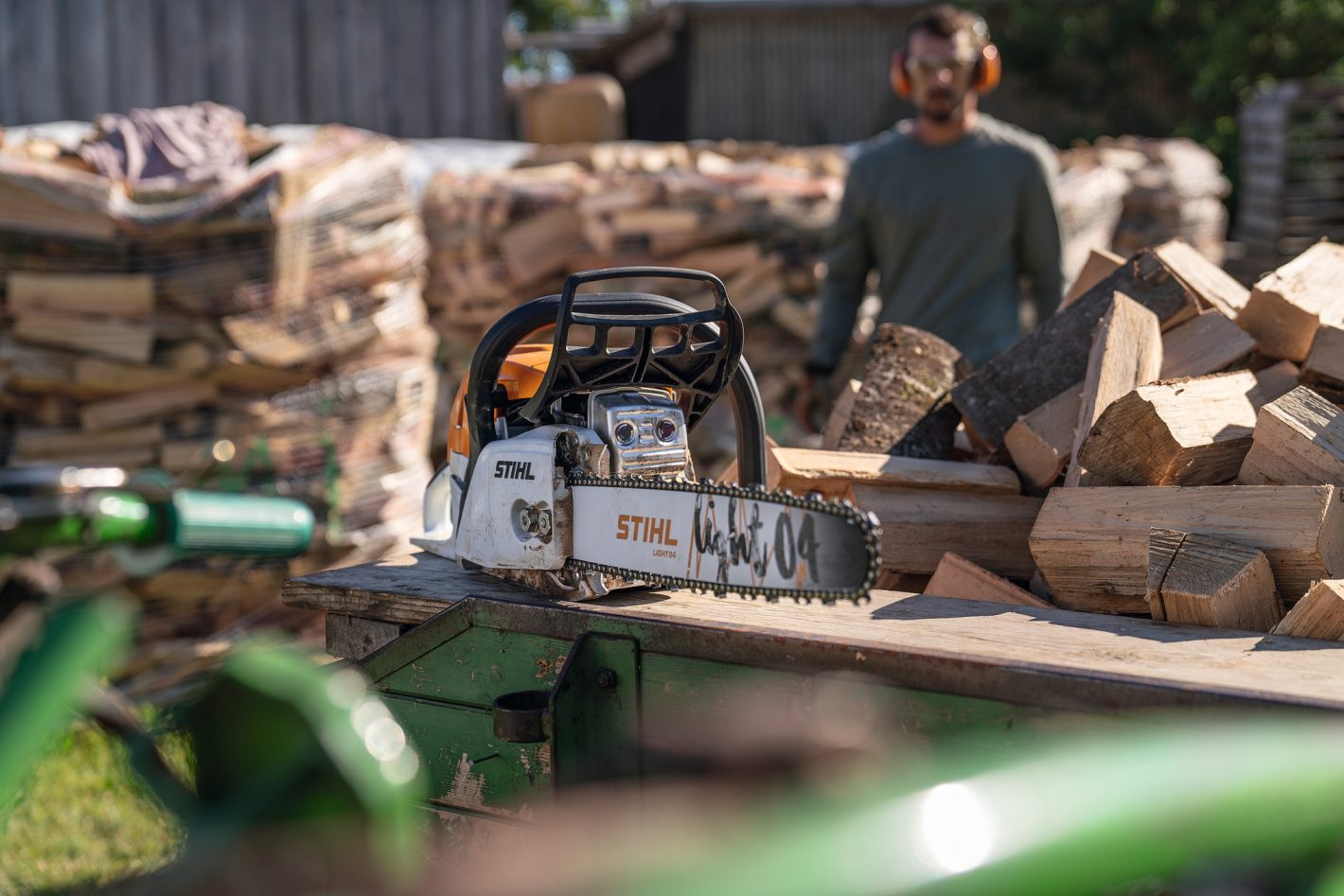
The Stihl MS 271 Farm Boss is a 50.2 cc mid-range gasoline chainsaw positioned by Stihl for farm, ranch, firewood, and storm-cleanup work. It was introduced to the United States market around 2011 to 2012 as the successor to the MS 270, and it shares its 1141 series platform with the closely related MS 291.
Stihl USA states the relationship directly: "The MS 271 FARM BOSS® replaces the mighty MS 270 with a saw that's loaded with features and technology… delivers 20% longer run times between refuelings — while cutting exhaust emissions in half compared to the MS 270." According to the official Stihl MS 271/291 instruction and service manual, the saw produces 3.5 hp (2.6 kW) at 9,500 rpm, idles at 2,800 rpm, and has a maximum permissible speed with cutting attachment of 13,000 rpm. It weighs 12.3 pounds (5.6 kg) as a powerhead, carries 16.9 fluid ounces (0.50 liter) of fuel and 8.1 fluid ounces (0.24 liter) of chain oil, and drives its chain through a centrifugal clutch that, per the service manual, engages at 3,600 rpm.
This article examines the full range of reported problems on the MS 271, organized by system. Under each category the reader will find symptoms, causes, troubleshooting steps, and solutions. The guidance draws on the official Stihl documentation, dealer and technician commentary, and extensive owner discussion on forums such as ArboristSite, the Chainsaw Forum, the Outdoor Power Equipment Forum, and the Forestry Forum, as well as retailer reviews and repair channels. Where a design revision or variant difference affects the prevalence of a problem, that difference is noted.
A recurring theme across every category is that the MS 271 is fundamentally a durable saw whose most serious failures — piston scoring, crankshaft seal leaks, and air-leak-induced lean seizures — are almost always downstream of a small number of root causes: over-tightened chains, dirty or loose air filters, stale or incorrect fuel, and a specific early-production intake and transfer-cover design that was prone to leaking air. Understanding those root causes is the key to both diagnosis and prevention.
Model Years and Variant Differences
The MS 271 was produced in three principal variants. The standard MS 271 uses a side-access chain tensioner adjusted with the bar wrench. The MS 271-Z is a variant designation. The MS 271 C-BE combines the Easy2Start reduced-effort recoil system with a tool-free quick chain tensioner. The Stihl service manual parts list enumerates these variants explicitly as the MS 271, MS 271-Z, and MS 271 C-BE. The most important production change for troubleshooting purposes concerns the intake boot and cylinder transfer-port covers. Early MS 271 and MS 291 saws used a clamp-on intake boot together with glued-on aluminum transfer-port covers. Forum mechanics report that these glued covers were prone to working loose in service, producing a secondary air leak that leaned out the fuel-air mixture and, in severe cases, scored the piston. Stihl later revised the design to a screw-down intake boot in the style of the MS 362, with no separate transfer covers, specifically to eliminate the air-leak problem. As one experienced technician on the Outdoor Power Equipment Forum put it, "I do believe the clamp on intake/glued transfer covers was the old style and they updated to the 362 style screw on boot with no covers to end the issue of them leaking air." A consequence of this revision is that the cylinder and intake components are not interchangeable between the older and newer versions of the saw, a fact that matters when ordering a top-end rebuild kit.
Regarding the Easy2Start variant, prospective buyers should be aware that the availability of the C-BE configuration has been limited and intermittent in the United States market. A Stihl master technician responding on JustAnswer noted that the assisted-start feature could not be retrofitted to a standard MS 271, because "the key part needed to build one from parts is no longer available," and recommended the smaller MS 251 C-BE as the closest currently available equivalent. Owners should confirm the exact configuration of any used saw against its parts list rather than assuming a given feature set.
Starting Problems
Symptoms
Owners report several distinct starting complaints: the saw will not start at all when cold; the saw floods and refuses to fire after repeated pulls; the recoil rope pulls only a short distance and stops; and, most commonly on a used or seasonally stored saw, the engine turns over normally, shows spark and fuel, but will not fire.
Causes
Cold-start failures on the MS 271 arise from a small set of causes. The first is procedural: the Master Control Lever must be moved through the correct choke and start-throttle sequence, and skipping steps either fails to draw fuel or floods the engine. The second is a fouled, worn, or incorrectly gapped spark plug. The third is stale fuel, which is extremely common on a saw that has sat over a winter. A fourth, more serious cause is loss of compression from a scored piston or worn rings, which presents as an engine that has spark and fuel but will not fire. On the JustAnswer platform, a technician reviewing an MS 271 that ran fine the prior season but would not start after refueling observed that "a wet spark plug indicates fuel is reaching the cylinder but ignition is failing, often due to scored piston or cylinder walls causing compression loss." A fifth cause, specific to the recoil that pulls only a short distance, is that the engine is hydraulically or mechanically locked; on the Chainsaw Forum, one owner of a used MS 271 damaged in shipment found the rope would pull only "about 10 inches then stop" with the plug installed but pulled smoothly with the plug removed.
Troubleshooting Steps
- Confirm the fuel is fresh and correctly mixed at 50:1. Drain and replace fuel more than a few weeks old.
- Remove and inspect the spark plug. A wet plug indicates flooding or ignition failure; a dry plug indicates no fuel delivery.
- Test for spark by grounding the plug against the cylinder while pulling the recoil. A weak or absent spark points to the ignition module or plug.
- If the plug is wet, clear the flood: set the control lever to the run position, hold the throttle wide open, and pull several times to clear the combustion chamber, then reinstall a dry plug.
- If spark and fuel are both present but the engine will not fire, perform a compression test. Then remove the muffler and inspect the exposed piston face for vertical scoring.
- If the recoil will not pull through with the plug installed, remove the plug and try again to distinguish a flooded cylinder from a mechanical seizure.
Solutions
Replace stale fuel with fresh 50:1 mix. Install the correct spark plug, an NGK BPMR7A or the Bosch WSR6F equivalent, gapped to 0.5 mm (0.02 inch). If the ignition module produces no spark, replace it. If compression is low and the piston shows scoring, the saw requires a top-end rebuild — a new piston, rings, and, if the plating is damaged, a new cylinder. A critical caution appears repeatedly in forum discussion: a healthy MS 271 should never require starting fluid to cold-start. On the Chainsaw Forum a veteran responder warned that "no saw in running condition should require starter fluid to cold start; if it does, then something is wrong."
Repeated use of ether is itself a documented cause of piston scoring and should be avoided.
Engine Stalling and Idle Problems
Symptoms
Reported idle and stalling faults include an engine that will not hold idle and dies whenever the throttle is released; an idle speed that is too high so the chain creeps or runs at idle; surging or "hunting" at idle; and an engine that stalls or bogs when the throttle is opened after warming up.
Causes
The idle-speed adjustment screw, designated LA, sets the throttle plate opening at idle. If it is set too low the saw dies; if set too high the chain turns, which is dangerous. Beyond simple maladjustment, the most common causes of an MS 271 that dies at idle are a dirty air filter, a partially blocked idle jet or port in the carburetor, an incorrect low-speed (L) mixture, and — critically — a secondary air leak. The air leak is the cause that most often defeats owners, because it persists after the carburetor has been replaced. On the Outdoor Power Equipment Forum, an owner reported that his MS 271 "won't idle and dies at idle" despite a new carburetor, a new fuel filter, a cleaned muffler, and non-ethanol fuel; the diagnosis offered by the forum was "possibly an air leak between the carb and cylinder or either of the oil seals," pointing directly to the intake boot and crankshaft seals discussed elsewhere in this article.
Troubleshooting Steps
- Clean or replace the air filter first, since a restricted filter alters the mixture and idle.
- Locate the LA idle screw on the right side of the air-filter housing and set idle to the specified 2,800 rpm; the chain must not turn at idle.
- If the idle will not stabilize, inspect the intake boot, carburetor base, and crankshaft-seal areas and have a technician perform a crankcase pressure and vacuum test to locate an air leak.
- Inspect the low-speed (L) mixture setting and reset it to the standard position.
- If cleaning and adjustment do not resolve surging, clean the carburetor idle circuit or rebuild the carburetor with a new pump and metering diaphragm.
Solutions
Set the LA screw so that the engine idles smoothly at 2,800 rpm without the chain moving. Reset the low-speed screw to the standard setting, then fine-tune. If pressure and vacuum testing confirms an air leak, replace the intake boot, impulse line, or crankshaft seals as appropriate, and pressure-and vacuum-test the crankcase to verify the repair. Where the idle jet is blocked, clean the carburetor thoroughly or install a rebuild kit. A blocked or fatigued pump diaphragm, per the Stihl service manual, is corrected by fitting a new pump diaphragm.
Fuel System and Carburetor Problems
Symptoms
Fuel-system complaints include the saw losing power under load; running rough or four-stroking; a fuel leak or gasoline smell; the saw quitting mid-cut and refusing to restart; and hard hot-starting, in which the saw runs well cold but will not restart after being shut off hot.
Causes
The MS 271 uses an all-position diaphragm carburetor with an integral fuel pump. Its most common fuel-system faults are a clogged fuel filter or pickup body, a kinked or cracked fuel line, a carburetor whose jets are gummed by stale ethanol-blended fuel, and a fatigued metering or pump diaphragm. Sudden power loss under load points to fuel starvation from a restricted filter or line. The Stihl service manual attributes rough running to blocked main jet bores, a fatigued pump diaphragm, worn piston rings, a carbonized muffler or spark-arrestor screen, and a kinked or torn fuel hose. Hard hot-starting is frequently a vapor-lock phenomenon: when the saw is shut off hot, residual heat vaporizes fuel in the lines and carburetor, and the resulting vapor prevents liquid fuel delivery until the saw cools. On the closely related MS 261, a forum owner described the identical pattern — "the saw starts and runs great cold… If I let it sit for about 5-10 minutes and try to start it again, it will not start in any position" — which is the classic vapor-lock signature. Stihl equips the MS 271 with a winter and summer intake baffle shutter partly to manage carburetor temperature and prevent icing in cold weather, a reminder that carburetor temperature is a design consideration on this saw.
Troubleshooting Steps
- Inspect and replace the in-tank fuel filter, which is a routine wear item.
- Pull the fuel line and inspect for cracks, kinks, or hardening; replace if degraded.
- Verify the fuel is fresh, mixed at 50:1, and contains no more than 10 percent ethanol.
- For hard hot-starting, shut the engine off and allow it to cool before opening the fuel cap according to the manual. Have the tank vent checked if the problem recurs; a hiss alone does not confirm the cause.
- If the saw runs rough at all speeds, remove and clean the carburetor, paying attention to the idle and main jet circuits, and inspect the diaphragms.
- Check the spark-arrestor screen in the muffler for carbon blockage.
Solutions
Replace the fuel filter and any degraded fuel line. For a gummed carburetor, clean it completely or install a genuine Stihl rebuild kit; avoid the cheapest aftermarket replacement carburetors, which forum technicians consistently report as unreliable. For confirmed vapor lock, ensure the tank vent is clear, allow the saw to idle for a short period before shutdown rather than switching it off immediately under load, and avoid leaving the saw in direct sun. If the carburetor has tamper-resistant limiter caps that must be removed for adjustment, note that Stihl specifies a dedicated puller and a 2 mm hex driver for the high-speed screw.
If the carburetor itself is suspected of leaking, the Stihl service manual specifies a carburetor leakage test at a gauge pressure of 0.8 bar. Always restore the mixture to the standard setting rather than running lean, because a lean high-speed setting is a documented cause of piston scoring on this engine.
Carburetor Adjustment Procedure
The MS 271 carburetor has three adjustment points: the high-speed screw (H), the low-speed screw (L), and the idle-speed screw (LA). The carburetor leaves the factory at a standard setting. To reset it to that standard, first check and clean or replace the air filter, then turn the high-speed screw (H) counterclockwise as far as it will go, to a maximum of three-quarters of a turn, and set the low-speed screw (L) to its standard clockwise reference. Warm the engine, then adjust the idle-speed screw (LA) so the engine idles at 2,800 rpm with the chain stationary. If the chain turns at idle, back the LA screw counterclockwise until the chain stops. If the engine will not accelerate cleanly or stumbles when the throttle is opened, the low-speed circuit is set too lean; if it four-strokes and smokes at idle, it is too rich, in which case the low-speed screw should be turned clockwise until engine speed just drops and then backed off about a quarter turn. High-altitude operation may require the H screw to be turned slightly clockwise (leaner), but the Stihl manual warns that an over-lean setting increases the risk of engine damage from inadequate lubrication and overheating, and that the standard setting must be restored after descending.
Chain Oiling Problems
Symptoms
Chain-oiling complaints are among the most frequently reported MS 271 issues. Owners report the bar and chain running dry despite a full oil tank; the oiler pumping oil that does not reach the bar; oil leaking from the underside of the saw or being thrown around inside the clutch cover; and the bar overheating or the chain binding during long cuts.
Causes
The MS 271 uses a fully automatic, speed-controlled oil pump feeding the Ematic bar system. The standard MS 271 does not have an adjustable oiler; the oil-flow rate is fixed. The most common cause of a dry chain is a clogged oil outlet, a clogged oil inlet hole in the guide bar, or a plugged bar groove packed with fine, wet chips. A distinctive MS 271 pattern reported repeatedly is that the pump works correctly when the bar is removed — oil flows freely — yet no oil reaches the chain when the bar is mounted, indicating a blockage at the bar-to-case oil-transfer point or a bar that does not seat flat against the case. On the American Association of Woodturners forum, an owner cutting large rounds found the saw would "stop working on the rip cut" and the dealer determined "the oiler was clogged," a problem aggravated by long, wet, stringy chips packing the clutch area during ripping cuts with the full bar buried. The Stihl service manual lists additional causes: a blocked oil inlet hole in the bar, a clogged or ruptured intake hose or pickup body, a blocked valve in the oil tank, worn teeth on the oil-pump worm drive, and a worn or damaged oil pump.
Troubleshooting Steps
- Confirm the oil tank contains bar-and-chain oil and that the correct grade is used; note that a very thick oil can fail to flow in cold weather.
- Remove the bar and chain. Run the saw briefly and observe whether oil is pumped from the outlet port on the case. If oil flows here, the pump is functioning and the fault is downstream.
- Clean the oil outlet port on the case, the oil inlet hole in the bar, and the bar groove with compressed air; remove packed debris.
- Verify the bar seats flat against the case and that the bar bolts are properly torqued, since a bar that does not sit flat allows oil to escape behind it rather than feeding the chain.
- To confirm delivery, hold a running saw with the bar tip near a light surface at partial throttle; a healthy oiler throws a visible streak of oil.
- If no oil is pumped even with the bar removed, inspect the pickup hose, the tank vent valve, and the pump worm drive.
Solutions
Clean the oil passages, bar inlet, and bar groove; this resolves the majority of dry-chain complaints. Where the pump or worm drive is worn, replace it. Turn and clean the guide bar regularly and dress the rails to keep the oil path open. For owners doing extended ripping or milling cuts, be aware that the fixed-output oiler and clamshell clutch cover can pack with chips; clearing the clutch area frequently prevents both oiling failure and the chip-packing that some owners found made the standard MS 271 less suited to heavy ripping than a larger saw. If oil leaks from the saw during storage, the cause is typically expansion of oil past the pump and is generally not a defect; store the saw with a slightly lower oil level if leakage is a nuisance.
Clutch and Chain Drive Problems
Symptoms
Clutch and drive complaints include the engine running and revving while the chain does not turn; the chain failing to stop when the chain brake is engaged; grinding or whining noises from the clutch area; and the chain coming off the bar.
Causes
The MS 271 clutch is a centrifugal assembly, without linings, that per the Stihl service manual engages at 3,600 rpm; its shoes engage a clutch drum carrying the sprocket. A chain that does not turn while the engine revs indicates worn clutch shoes or springs, or that the chain brake is inadvertently engaged. A chain that will not stop when the brake is applied indicates a stretched or broken brake spring, a worn brake band, or a worn clutch drum. Grinding and whining precede clutch failure. The sprocket itself wears: because it sits beneath the clutch drum on the crankshaft and turns at high rpm, its teeth eventually grind down until the chain no longer catches, and the needle-cage bearing inside the drum can seize or wear.
A chain that comes off is caused by incorrect tension, a worn sprocket nose, or improper bar and chain installation. The single most consequential clutch-related issue on the MS 271, however, is indirect: chronic over-tightening of the chain. As documented in the ArboristSite "Stihl MS 271 Diagnosis" thread, a chain tightened "to the point of being nearly impossible to turn by hand" loaded the clutch-side ball bearing laterally, causing bearing failure that introduced a secondary air leak, leaned the mixture, and ultimately scored the piston.
Troubleshooting Steps
- Confirm the chain brake is fully disengaged before diagnosing a non-turning chain.
- Remove the clutch cover and inspect the clutch shoes, springs, drum, and needle-cage bearing. Shake the drum near your ear; a bearing that rattles slightly is intact, while a silent bearing needs replacement.
- Inspect the sprocket teeth for wear; replace the sprocket when the teeth are visibly grooved.
- For a chain that will not stop, inspect the brake band and brake spring.
- For a chain that comes off, verify correct installation, bar-bolt torque, sprocket condition, and tension.
Solutions
Replace worn clutch shoes and springs as a set; the complete MS 271 clutch assembly is a standard replacement part. Replace a worn sprocket and needle-cage bearing together. Replace a stretched or broken brake spring or a worn brake band immediately, since these are safety-critical. To remove the clutch, note that it is reverse-threaded and requires a piston stop and a 19 mm wrench.
Most importantly, adopt correct chain-tensioning discipline to protect the clutch-side bearing, crankshaft seal, and sprocket nose, as described in the vibration and maintenance sections below.
Air Leaks and Compression Problems
Symptoms
Air-leak and compression faults present as high or hunting idle, surging, difficulty holding a tune, sudden power loss, an engine that dies mid-cut and will not restart, and, at the extreme, a seized engine. Because a two-stroke crankcase is part of the induction system, an unmetered air leak leans the mixture across the rev range and can destroy the engine.
Causes
On the MS 271, the documented air-leak entry points are the intake boot, the impulse line, the cylinder base and transfer-cover gaskets, the clamshell case seam, and the two crankshaft oil seals. As discussed in the variant section, early saws used a clamp-on intake boot with glued transfer covers that were prone to loosening; the intake boot itself is, in the words of one ArboristSite rebuilder, "notorious for tearing if the saw has been jerked around from a pinch or whatever."
A technician on the Outdoor Power Equipment Forum recounted repairing an MS 311 that overheated during milling until "the transfer cover blew off." A lean condition from any of these leaks scores the piston, most often on the intake side when dirt is also ingested, or all around when the fuel is run straight or excessively lean.
Low compression from worn rings or a scored bore then manifests as hard starting and lost power.
Troubleshooting Steps
- Inspect the intake boot, carburetor base, transfer covers, and seal areas for damage or loose connections before pressure and vacuum testing.
- For a definitive diagnosis, block off the intake and exhaust ports and connect a pressure and vacuum tester to the impulse fitting.
- Pressurize the crankcase to 0.5 bar. Per the Stihl service manual, "if this pressure remains constant for at least 20 seconds, the engine is airtight." Then apply a vacuum of 0.5 bar and confirm it likewise holds.
- Rotate the crankshaft during the test; the reading should fluctuate but not bleed off.
- Use soapy water on a pressurized case to locate the leak by bubbles, positioning the blocking rubber between the intake boot and carburetor so the boot itself is tested.
- Perform a compression test; a healthy MS 271 should read around 120 to 150 psi, and readings near 90 psi indicate a worn or damaged top end.
Solutions
Replace a torn or hardened intake boot; the genuine part is preferable despite its higher cost. Replace a leaking impulse line, which can be extracted and refitted with forceps. Reseal the cylinder base and, on early saws, the transfer covers using a high-temperature gasket maker, taking care that sealant reaches but does not intrude past the bearing area. Replace failed crankshaft seals. After any of these repairs, re-test the crankcase to verify it holds both pressure and vacuum before running the saw, because running it again without correcting the leak will simply re-score a new piston. Where the bore plating is intact, a scored cylinder can often be cleaned and reused with a new piston and rings; the MS 271 shares its 44.7 mm bore and piston with the MS 261 (bore 44.7 mm, stroke 32.0 mm, displacement 50.2 cm³), though its cylinder has no direct aftermarket equivalent and should be preserved.
Excessive Vibration Problems
Symptoms
Owners report increased vibration at the handles over time, a saw that feels loose under load, rattling, and hand fatigue on long jobs. Some reviewers characterize the MS 271 as buzzier than a professional-grade saw of the same displacement.
Causes
The MS 271 uses a Stihl anti-vibration system built around rubber buffer mounts, sometimes called annular buffers or stop buffers, positioned between the engine unit and the handle frame. These rubber elements degrade with age, fuel and oil exposure, and repeated loading; when they crack or soften, vibration transmitted to the handles rises and the powerhead feels loose relative to the handle.
Additional vibration sources include a worn or damaged bar and chain, a loose cutting attachment, loose engine or handle fasteners, and, more seriously, a wobbling crankshaft. In the ArboristSite diagnosis thread a mechanic described an MS 291 that "vibrated like it was missing 4 flywheel fins on one side" because a crankshaft bearing had failed and the crank was visibly wobbling at speed — a reminder that sudden severe vibration can signal bearing failure rather than a worn mount.
Troubleshooting Steps
- Inspect the anti-vibration buffers for cracks, softening, oil saturation, or excessive play; the Stihl manual instructs owners to inspect anti-vibration elements as a routine safety check.
- Check that all handle and engine mounting fasteners are tight.
- Inspect the bar and chain for damage and confirm correct tension.
- If vibration is sudden and severe and rises with rpm, suspect a crankshaft bearing and inspect for crank wobble.
Solutions
Replace worn anti-vibration buffers; because they work as a set, replacing them in pairs preserves balance.
Tighten or replace loose fasteners, and replace a damaged bar or chain. If a crankshaft bearing has failed, the saw requires case splitting and a new crank assembly with seals — a repair whose cost frequently approaches the value of the saw, at which point replacement is the rational choice.
Maintenance-Related Failures
Symptoms
This category captures the failures that owners cause through deferred or incorrect maintenance: sudden mid-cut seizure, brown or burned pistons, chronic lean running, dull cutting that produces powder rather than chips, and rapid bar and sprocket wear.
Causes
The dominant maintenance-related failure on the MS 271 is piston scoring, and its documented root causes form a short list. First is a loose or improperly seated air filter: an ArboristSite technician reported, "I've had a few 271's come in for repair where the HD2 air filter was loose on the mount. They were never locked in place. All had brown burned pistons," because unfiltered air and dust reached the cylinder. Second is running lean, whether from an air leak, a mis-set high-speed screw, or a clogged filter. Third is incorrect fuel: straight gas destroys the engine within minutes, and even correctly mixed fuel that has separated or aged can effectively lean the mixture. On Sawmill Creek, an owner of a ten-year-old, heavily used MS 271 that seized mid-cut was advised that separated fuel can burn oil-rich early in a tank and lean out as the tank empties, which is why shaking mixed fuel before refueling matters.
Fourth is chronic chain over-tightening, which damages seals and bearings as described earlier. Dull-chain cutting and rapid bar wear stem simply from neglected sharpening and bar maintenance.
Troubleshooting Steps
- If the saw seized suddenly, remove the muffler and inspect the piston face for scoring before attempting any restart.
- Confirm the air filter is present, clean, and locked correctly onto its mount.
- Review fuel practice: verify a 50:1 mix with fresh fuel and quality two-stroke oil, and confirm the fuel is shaken before use.
- Inspect the chain for sharpness and correct depth-gauge height; powder rather than chips indicates a dull or incorrectly filed chain.
- Inspect the guide bar rails and the sprocket for wear.
Solutions
For a scored top end, rebuild with a new piston and rings and, if necessary, a cylinder, but only after finding and correcting the underlying air leak or fuel fault. Always lock the air filter fully onto its mount after cleaning. Adopt disciplined fuel practice at 50:1 with fresh, low-ethanol fuel. Sharpen the chain with the correct round file and a depth gauge, filing consistently in one direction and avoiding contact with soil and rock. Dress or replace the guide bar and replace a worn sprocket. Because the economics of a homeowner-grade clamshell rebuild are unfavorable — parts for a bottom-end rebuild can exceed half the price of a new saw — prevention is decisively cheaper than repair on this model.
Preventive Maintenance and Servicing Schedule
Preventive maintenance is the single most effective way to avoid every serious failure described above. Stihl publishes a maintenance schedule in the MS 271/291 instruction manual organized by interval, and offers a consumable service kit — the kit covering the MS 271, MS 291, and MS 311 — that bundles an air filter, fuel filter, and spark plug.
Before each use and daily: Perform a visual inspection of the complete saw. Function-test the throttle trigger, throttle-trigger lockout, choke, stop switch, Master Control Lever, and the chain brake. Check chain tension and chain sharpness. Confirm chain lubrication is reaching the bar. Clean the complete machine of chips and debris, paying attention to the clutch area where wet chips pack. Top up the chain-oil tank every time the fuel tank is refilled.
Weekly or as required: Clean the air filter. Clean and turn the guide bar, and dress the rails. Clean the chain sprocket and inspect it for wear. Clean the saw chain and inspect the depth gauges.
Monthly to periodically: Inspect and clean the spark-arrestor screen in the muffler. Inspect the fuel pickup body and filter, and replace the fuel filter as it ages. Clean the cooling fins on the cylinder and the air intake on the fan housing to prevent overheating, since a fan or fin fouled with debris raises engine temperature and can weaken the ignition coil's spark when hot.
Seasonally, and at the service intervals specified by Stihl: Stihl specifies chain-brake inspection by a dealer and periodic servicing at intervals defined by usage — every three months for full-time use, every six months for part-time use, and every twelve months for occasional use.
Replace the spark plug seasonally or at roughly 100 hours; inspect it at about 25 hours. Have the anti-vibration elements inspected by a dealer. Inspect and, if worn, replace the fuel filter and clean the fuel and oil tanks yearly.
Fuel, oil, and consumables specifications: Mix fuel at 50:1 using quality two-stroke oil and gasoline with no more than 10 percent ethanol, and mix only as much as will be used within a few weeks. Shake the fuel container before each refill to prevent the oil and gasoline from separating.
Use the correct spark plug — NGK BPMR7A or Bosch WSR6F — gapped to 0.5 mm. Use genuine Stihl bar-and-chain oil, and consider the winter grade in cold weather because the standard oil can be too thick to flow when cold.
Seasonal storage: For storage longer than about thirty days, run the carburetor dry or drain the fuel, since stale fuel is the most common cause of hard starting after storage. Clean the saw thoroughly, keep it in a dry place away from ignition sources, and store it with the chain oil topped up and the chain tension slackened.
Chain-tensioning discipline: Because over-tightening is the documented root cause of the most expensive MS 271 failures, tension the chain when cold so it snaps back smartly against the bar but can still be pulled around by a gloved hand. Allow the chain to warm and stretch during the first minutes of work rather than continually re-tightening it, and, critically, slacken the chain before the saw cools completely to prevent the contracting chain from loading the crankshaft bearings and seals.
Overall Assessment and Recommendations
The Stihl MS 271 Farm Boss is a capable and generally reliable mid-range saw whose reputation suffers from a cluster of failures that are, in the great majority of cases, preventable and traceable to a handful of root causes. Owner and dealer feedback is broadly positive on cutting power and durability — one long-term owner on Green Tractor Talk reported his early-generation saw "cuts like the old 028, anything and everything" — while the most negative reviews center on catastrophic piston scoring that, on inspection, almost always follows an air leak, a loose air filter, lean running, bad fuel, or an over-tightened chain.
The staged recommendations that follow the evidence are these. First, for any starting, idle, or power complaint, work the cheap and common causes before the expensive ones: fresh 50:1 fuel, the correct spark plug gapped to 0.5 mm, a clean and correctly locked air filter, and a fresh fuel filter. Second, if idle instability, surging, or lean running persists after those steps, treat an air leak as the prime suspect and have a technician confirm it with a crankcase pressure and vacuum test using the service-manual procedure before spending money on carburetors. Third, if the saw is an early-production unit with the clamp-on intake boot and glued transfer covers, regard those covers and the boot as the leading air-leak risk and inspect or reseal them proactively. Fourth, protect the clutch-side bearing and crankshaft seals by tensioning the chain cold and slackening it before cool-down. Fifth, treat the maintenance schedule not as optional but as the mechanism that prevents the top-end failures that otherwise render the saw uneconomical to repair.
The thresholds that should change the plan are concrete. A compression reading near or below 90 psi, or visible piston scoring through the muffler port, means a top-end rebuild is required, and the decision to rebuild rather than replace should weigh the fact that homeowner-grade clamshell rebuild parts can exceed half the price of a new saw. A failed crankshaft bearing, indicated by sudden severe vibration and crank wobble, generally pushes the economics toward replacement. And for a buyer choosing between variants or considering the MS 261 professional saw, the difference is substantive: the MS 261 produces 2.8 kW (3.75 bhp) and weighs 11.6 pounds (5.26 kg), against the MS 271's 2.6 kW (3.49 bhp) at 12.3 pounds (5.6 kg), and, as one ArboristSite poster summarized, "the 261 is a mag case, easier to work on and rebuild, more power, lighter. The 271 is more plastic, heavier." The recurring forum verdict is that the MS 271 is the right tool for intermittent firewood and farm use, while heavy or professional users are better served by the magnesium-case MS 261.