
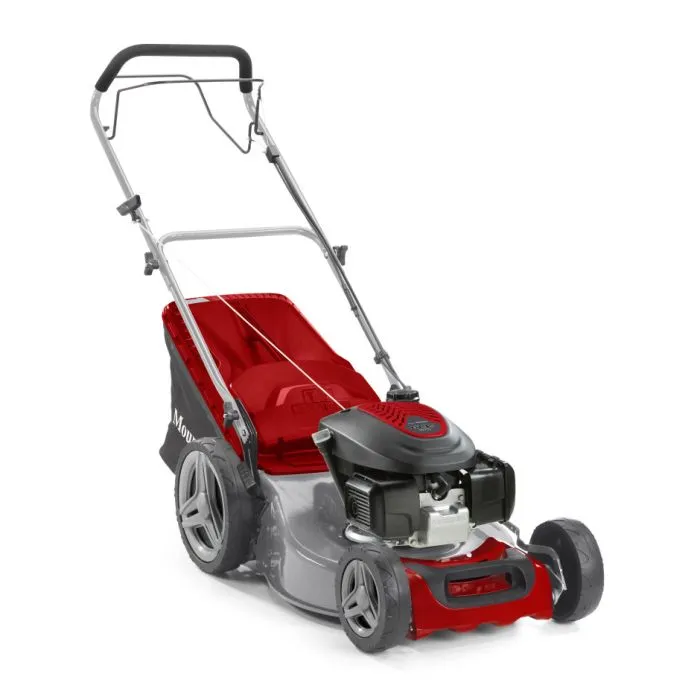
A Mountfield mower that refuses to start, loses its drive or leaves clumps behind does not necessarily need an expensive repair. The useful first step is to identify exactly what has stopped working. An engine that will not fire needs a different investigation from an engine that runs normally while the mower refuses to move.

Mountfield sells petrol, mains electric and cordless mowers, with different engines, controls and cutting systems. This guide covers walk-behind models. Ride-on tractors and robotic mowers need their own troubleshooting procedures, particularly for their interlocks, transmissions and electrical systems.
Work through the section matching your symptom, starting with the simple checks. The causes described are possibilities to investigate, not evidence that every Mountfield suffers from the same defect.
Identify Your Mower Before Ordering Parts
Record the full model name, product code and serial number from the mower’s identification label. For petrol machines, also record the engine model. For cordless machines, photograph the labels on the mower, batteries and charger.
The name on the mower tells you which machine you own; the engine label determines which engine service instructions apply. A blade, drive cable or grass collector is usually selected against the mower’s product code. A spark plug or air filter also needs to match the engine fitted to it.
These examples show why that distinction matters:
| Model or type | Relevant difference | Troubleshooting implication |
|---|---|---|
| SP53, product code 2L0536048/M21 | STIGA ST170 Autochoke petrol engine and self-propelled drive | Separate engine starting faults from drive faults; do not assume it has a manual choke. |
| SP555R V, product code 294569033/M24 | Honda GCVx170 engine, variable-speed rear-roller drive and Twinclip blade | Roller transmission and blade parts must match this model. |
| Older SP535, product code 299536838/BQ | Honda GCV135 engine in the original operating instructions | A current SP53 specification is not a substitute for its manual. |
| Princess 34, product code 294340063/M21 | Corded electric motor | Investigate the supply and controls, not petrol, a spark plug or a carburettor. |
| Electress 30 Li, product code 291302063/M21 | 20V battery system and safety key | Check the compatible battery, key and starting sequence. |
These are examples, not a complete compatibility list. Similar names, different suffixes and older versions can represent different machines. Use the matching manuals from Mountfield’s support page, including the separate engine or battery instructions where supplied.
Model-Year and Variant Differences That Matter
- Starting controls: A primer, manual choke and automatic choke are different systems. Follow the instructions for the controls actually fitted.
- Drive: A hand-propelled mower has no powered drive to repair. Self-propelled wheel and roller models also differ from each other.
- Electrical supply: A corded Princess and a cordless Princess Li require different checks despite the shared family name.
- Replacement parts: Match the product code and engine identification rather than relying on a photograph or nominal cutting width.
- Service settings: Oil quantity, plug gap, blade fastener torque and cable adjustment are model-specific. There is no single correct setting for every Mountfield mower.
Mountfield Mower Troubleshooting at a Glance
| Symptom | Start with | If the problem remains |
|---|---|---|
| Petrol engine turns but does not start | Correct starting sequence, fuel condition and spark plug cap | Check the specified filter and plug; investigate fuel delivery and ignition. |
| Starts, then stops | Whether it stops immediately, when warm or only in grass | Use the timing to guide diagnosis rather than replacing parts at random. |
| Revs repeatedly rise and fall | Fresh fuel and routine engine service checks | Have the fuel system, intake and controls assessed. |
| Loses power in long grass | Higher cutting height, slower progress and a clear deck | Persistent weakness on an easy cut needs engine or blade inspection. |
| Engine runs but mower does not travel | Confirm it is self-propelled; inspect accessible drive controls | Cable, belt and transmission diagnosis may be needed. |
| Grass stays on the lawn | Collection configuration, clear chute and collector airflow | Check cutting conditions and blade condition. |
| Severe vibration or new knocking | Stop immediately and isolate the mower | Inspect for damage before restarting. |
| Corded mower is silent | Safe supply, cable condition and correct start sequence | Electrical diagnosis if the supply is sound. |
| Cordless mower does not start | Correct battery installation, charge and safety key | Consult the model’s indicators and fault table. |
| Battery mower stops under load | Grass load, obstruction and cooling | Repeated cut-outs on light work need further investigation. |
Make the Mower Safe Before Inspection
Stop the mower and wait for the blade to stop before removing the collector, clearing grass or inspecting underneath. On a petrol mower, disconnect the spark plug cap and isolate any electric-start supply as its manual requires. Unplug a corded mower from the mains. Remove the battery or batteries and safety key from a cordless mower.
Wear suitable gloves around the blade; a stationary cutting edge can still injure you. Keep the machine stable, and use the access position specified in its manual. Do not turn a petrol mower onto whichever side is convenient. Oil can enter places where it should not be, and the correct access method varies.
Run petrol engines outdoors. Let the engine cool before opening the fuel system, and keep petrol away from ignition sources. Stop troubleshooting and arrange repair if you find a fuel leak, damaged electrical cable, cracked battery, loose blade or serious impact damage.
Never defeat a safety switch or tie down an operator-presence control to keep the mower running.
1. Petrol Mountfield Mower Will Not Start
First decide whether the engine is turning normally. A rope that pulls through its normal travel while the engine fails to fire is a different symptom from a rope that stops abruptly. For a stuck or unusually hard starter, use the next section rather than continuing to pull.
Check the Starting Procedure
Read the starting instructions for the fitted engine and mower controls. Confirm that any fuel tap is open and that the operator-presence lever is held correctly. Check that the spark plug cap has not been left disconnected after cleaning or servicing.
Do not search for a primer bulb on an engine designed to start without one. Equally, a manual-choke engine may need a cold-start setting that an automatic-choke version does not. Repeatedly using the wrong procedure makes the original symptom harder to interpret.
If the problem began after folding the handles, inspect the visible cable routing with the mower isolated. Look for a cable trapped at a hinge or an outer cable housing displaced from its support. A control that no longer travels normally needs attention before further starting attempts.
Establish What Fuel Is Actually in the Tank
Ask when the petrol was purchased, not just when it was poured into the mower. Freshly filling the tank from a container left in the shed since last season does not provide a clean baseline for diagnosis.
Mountfield advises using fresh petrol and taking storage precautions when the mower will stand unused. Its E10 guidance discusses storage deterioration rather than treating E10 itself as a universal cause of failure. For an older engine, confirm the permitted fuel in its own instructions.
If the existing fuel is suspect, replace it using the manual’s safe draining procedure. Simply adding a small quantity of fresh petrol to an unknown mixture leaves uncertainty. Stabiliser is intended to preserve suitable fuel; it does not restore petrol that has already deteriorated.
Inspect the Air Filter and Spark Plug
With the engine cool and isolated, inspect the air filter using the engine manual. A paper element and an oil-treated foam element require different handling. Do not wash, oil or blast a filter with compressed air unless the instructions for that element permit it.
If you are comfortable carrying out the specified plug service, inspect the spark plug for fouling, damage and the correct gap. Use the specified replacement type. A plug that fits the thread is not automatically the right plug for the engine.
Avoid an exposed-spark test beside the fuel system. If the initial checks do not resolve the fault, a repairer can test ignition and fuel delivery safely and determine whether internal engine testing is needed.
If Repeated Starting Attempts Have Flooded It
A fuel-wet plug can indicate flooding, but that observation does not prove why the engine failed to start originally. Stop repeated attempts and follow the engine’s flooded-start procedure. Do not pour petrol into the intake or improvise with starting fluid.
Record what happened before changing anything else. “It never fired after winter storage” is useful information; “it now smells strongly of petrol after twenty pulls” may describe an additional problem created during troubleshooting.
2. The Starter Rope Is Hard to Pull or Will Not Move
Check whether the mower’s engine-brake control is fully operated as required for starting. On applicable machines, a brake left engaged can resist the pull. Also consider whether the blade is obstructed by packed grass or is trying to turn through heavy growth.
Isolate the mower before inspecting the deck. If there is ordinary grass build-up, remove it using the approved cleaning method, then reassemble and return to the normal starting position. Never ask someone to pull the rope while you look underneath.
If the mower was recently tipped, overfilled with oil or stopped violently after striking an object, treat that history as significant. Do not force the starter or use a longer rope for extra leverage. A solid stop can require mechanical investigation.
There is also a difference between a rope that will not pull and one that pulls without turning the engine. Describe which happens when arranging repair; the starter mechanism and a locked engine are different diagnostic paths.
3. The Engine Starts and Then Cuts Out
The time between starting and stopping helps organise the investigation. Write it down rather than relying on “it keeps dying”.
It Stops Within Seconds
Check the starting and control sequence again, including whether the operator-presence lever remains in its operating position. If the engine catches and immediately fades, fuel quality or delivery may need investigation after the basic checks.
Do not repeatedly prime it to keep it alive. That can hide the symptom and may cause flooding on a primer-equipped engine. If fresh fuel and the correct procedure do not help, explain to the repairer that it starts briefly rather than reporting a complete no-start.
It Stops Only After Warming Up
Record whether it restarts immediately, after a short pause or only when fully cool. Note whether the engine slows first or stops abruptly. These observations help a technician distinguish possible fuel, ignition and temperature-related problems; they do not establish a failed coil or carburettor by themselves.
Check accessible cooling openings for debris after stopping and cooling the engine. Do not remove a hot fuel cap to test a suspected vent restriction. A repairer can check tank ventilation without asking you to operate with a loose cap.
It Stops as You Enter the Grass
Move the investigation to cutting load. Raise the cutting height, use a narrower pass and avoid trying to remove a large amount of wet growth at once. Clear any deck obstruction with the mower isolated.
If it runs properly in a light cut but struggles only in an overgrown patch, that is a different starting point from a mower that dies while standing on an already-cut area. Test one reasonable change at a time so you can tell what made the difference.
4. The Engine Hunts or Surges
Hunting is a repeated rise and fall in engine speed. Begin with fuel condition, the air filter and the specified spark plug checks. Dirt or deposits in a carburettor can affect fuel metering, but a surging engine is not enough evidence to order a replacement carburettor.
If the fault began immediately after a service, review what was disturbed. Was the correct filter installed? Was a cable or linkage moved? Were the replacement parts selected against the engine identification? Make these checks with the engine stopped.
Persistent hunting after routine maintenance needs a more focused examination of fuel supply, intake sealing and the engine controls. Give the repairer the history, including whether the symptom occurs cold, warm or under cutting load.
Do not bend governor springs, hold the throttle linkage in place or turn unidentified screws to force a steady speed. On a fixed-speed mower, increasing engine speed is not an appropriate cure for poor collection or weak cutting.
5. The Engine Runs but Feels Weak
Separate a problem that follows the grass conditions from one that occurs everywhere. If the mower works on short, dry grass but labours through long growth, reduce the amount it must cut in each pass. If it struggles across an ordinary, previously manageable lawn, look further.
Check for a restricted air filter, overdue plug service and grass accumulated beneath the deck. Inspect the blade for obvious damage only after isolation. A badly worn or damaged cutting assembly needs proper attention; continuing to mow can add vibration to the original problem.
An improvement after raising the deck is useful evidence, but it does not certify the engine as healthy. Equally, poor performance in unusually difficult grass does not prove engine wear. Compare similar conditions before drawing conclusions.
Avoid describing every loss of power as “low compression”. Internal testing belongs after the accessible checks and should be based on the engine manufacturer’s procedure.
6. The Mower Produces Smoke
For a petrol mower, note whether the smoke comes from the exhaust or from material heating on the outside of the engine. Stop if there is a fuel leak, burning debris or uncertainty about the source.
Blue or white exhaust smoke can be associated with oil burning. Overfilling, incorrect oil and recent tipping are among the possibilities described in Briggs & Stratton’s smoke troubleshooting guidance. Smoke colour alone is not a complete diagnosis, and the correct checks still depend on the engine fitted.
With the mower level and the engine stopped, follow its oil-checking procedure. Do not assume that every dipstick is read with the cap screwed in, or that a quoted total capacity equals the amount needed for a top-up.
If the smoke began immediately after cleaning underneath, tell the repairer which way the mower was tilted. If it persists, returns repeatedly or accompanies abnormal noise or significant oil loss, arrange inspection rather than continuing to run it in the hope it clears.
Smoke or a burning smell from an electric motor, battery or charger requires stopping and isolating the equipment. Petrol-engine explanations do not apply to those components.
7. Self-Propelled Drive Stops Working
If the engine and blade run normally but the mower does not pull itself forward, investigate the drive system separately. First confirm that the model is self-propelled. A rear roller can provide a striped finish without necessarily being powered.
Mountfield lists drive-cable problems, belt problems and gearbox failure among the possible causes of lost self-propel. That list provides a sequence for investigation, not a reason to replace the gearbox first.
Begin with the Accessible Controls
With the mower isolated, look for a detached cable end, damaged outer casing or cable trapped around the handle. Compare the control’s movement with the manual’s illustrations. A lever with unusually little resistance is useful evidence to record.
Keep that inspection separate from operating a variable-speed selector. The manual linked for the SP555R V specifies changing travel speed with the engine running and drive engaged, and warns against moving that selector with the engine stopped. Do not force a stationary selector while investigating the cable; follow the exact model’s operating and adjustment instructions.
If the manual provides an owner adjustment, follow that procedure exactly. Do not tighten the cable until the mower starts creeping when the drive lever is released. Proper disengagement matters as much as successful engagement.
When the Cable Looks Normal
A belt that has come off, broken or worn can require access beyond the visible controls. Use the correct model instructions or a service centre; do not reach behind a guard with the engine running to see whether a pulley is turning.
For a variable-speed roller mower, describe whether all drive has disappeared or whether only the speed adjustment seems ineffective. Those are different observations. The SP555R V, for example, has a cone-clutch roller transmission, so a repair video for a basic wheeled mower may not describe the same arrangement.
Check Engagement and Release After Repair
A successful repair should restore controlled travel and allow the drive to release correctly. If the mower moves without the drive command, stop using it and have the adjustment or mechanism checked.
8. The Mower Will Not Collect Grass Properly
Start with the collection setup. On a mower equipped for mulching, make sure the mulching plug has been removed when collecting. Check that the chute is clear, the bag is correctly seated and the collector’s air passages are not blocked.
Mountfield’s collection and maintenance FAQ identifies these checks, along with long or wet grass, as practical starting points.
Then observe the pattern. Does the collector work on short, dry grass but struggle after rain? Does the chute block again almost immediately? Does grass escape around a bag that has recently been removed or assembled? These details help distinguish conditions, a blockage and a fitting problem.
Change one factor at a time. Clean the collection route, refit the bag and try a short section in suitable conditions. If collection remains poor, blade condition and correct operating speed need assessment. Do not raise a fixed engine’s speed yourself to compensate.
If the Collector Falls Off or Comes Apart
Inspect the bag frame, mounting points, clips and seams with the mower stopped. Check the assembly against the manual, particularly if the collector has recently been replaced. If you have leftover fittings, resolve that before mowing again.
Do not use wire or a makeshift restraint that prevents the discharge guard from operating correctly. A collector that will not stay secured needs the correct repair or replacement.
9. The Cut Is Uneven or the Mower Leaves Strips
Look closely at the result before deciding the blade is at fault. A strip between passes may call for more overlap. A patch cut unusually low on a bump suggests that the chosen cutting height does not suit the ground. Poor cutting across the entire pass deserves a wider inspection.
With the mower isolated, check that the height mechanism is properly engaged. On a machine with separate wheel settings, confirm the positions match as the manual requires. Look for a displaced wheel or visibly damaged height-adjustment component.
Wet grass can bend beneath the mower and leave an uneven appearance once it stands up again. Where conditions permit, assess the cut on dry grass before buying parts. For long growth, start with a higher cut rather than forcing the mower through at its lowest setting.
If the result became poor immediately after blade replacement or sharpening, stop and have the installation checked. Blade orientation, balance and fastening all matter. Never straighten a damaged blade as a shortcut or assume that a blade of similar length is suitable.
10. Excessive Vibration, Rattling or Knocking
A sudden change in vibration calls for an immediate stop. This is especially important after contact with a stone, kerb, stump or other solid object.
Disconnect the relevant power source and look for obvious damage, loose components or a displaced cutting assembly. Do not restart repeatedly to see whether the vibration goes away. Mountfield’s mower instructions direct owners to have damaged or loose cutting components checked and repaired.
When booking the repair, describe whether the noise began after an impact, a blade change or ordinary mowing. A damaged blade is one possibility, but it is not the only component that may have been affected.
Replacing the visible damaged part is not proof that the entire assembly is sound. Have the mounting arrangement checked where the impact or vibration warrants it.
11. A Corded Mountfield Mower Will Not Start
For a corded Princess or another mains-powered model, begin with the electrical supply and correct start sequence. Disconnect the mains before inspecting the plug, cable and accessible connections. Do not touch a cut or damaged cable until the supply has been safely isolated.
Check for visible cuts, crushed insulation and damage near entry points. If the equipment is damaged or damp, do not keep trying it. The Princess manual specifies RCD protection and requires damaged supply cables to be dealt with appropriately.
If the supply is known to be sound and the mower remains silent, the switch system, wiring or motor may need professional testing. Do not bridge the switch to prove that the motor works.
Repeated RCD or circuit-breaker trips also need investigation. Resetting protection over and over does not repair the cause. If the motor makes a new humming sound but the blade does not run, release the control and isolate the mower rather than holding the switch on.
The Princess manual also identifies motor overheating as a reason for stopping during use. Its instructions include checking that the air intakes are clear and waiting about five minutes before restarting. Persistent stopping after cooling and removing the cause needs service, not an endless cycle of restarts.
12. A Cordless Mountfield Mower Will Not Start
Begin with the exact battery arrangement shown in the manual. Confirm that the required battery or batteries are charged, fully seated and compatible, and that the safety key is correctly installed. Follow the button-and-lever sequence for that model.
There can be a short starting delay. For example, the Electress manual numbered 171506797/2 EN lists holding the control lever for two to three seconds when motor start-up is slow. This is a model-specific instruction, not advice to keep an obstructed or humming motor energised.
Do not assume a pack is compatible because its voltage or brand looks familiar. Check the approved battery and charger references. Never force a battery into a mount or use improvised adapters for diagnosis.
If the mower has recently been cleaned, transported or stored, check for visible debris around the battery seating area without using metal tools on the contacts. A pack that is not properly latched may not be making the intended connection.
Record any indicator pattern before removing the battery. The meaning of a flashing light depends on the battery or charger; a generic online colour chart may describe a different system.
If the checks are correct and the mower remains unresponsive, a service centre can distinguish battery, control and motor faults. Avoid buying a battery solely because the mower will not start.
13. A Battery Mower Stops During Cutting
Compare the conditions immediately before the stop. Did it enter particularly long grass? Was the underside obstructed? Had it been operating continuously in demanding conditions? Did the battery indicator show little charge?
Stop, remove the power sources as instructed, and inspect for obstruction. Let the equipment cool according to the manual before trying again. If there is no damage and restarting is appropriate, use a higher cutting height and a lighter pass.
A successful restart after cooling is useful information, but it does not prove the mower has no fault. If it repeatedly stops on short, dry grass with a correctly charged battery, report that pattern rather than repeatedly cycling the controls.
Similarly, an abrupt stop does not automatically mean the pack has failed. Battery protection and mower overload protection can interrupt operation. The model’s troubleshooting table is needed to interpret the event correctly.
14. The Battery Will Not Charge or Runtime Is Short
Charging Problems
Check the charger’s supply, the approved battery pairing and whether the pack is seated correctly. Read the actual indicator pattern against the charger instructions.
Temperature can prevent charging. For example, Mountfield’s Electress 30 Li product guidance says its system will not recharge below 0°C or above 45°C. Treat those as that product’s published limits; check the instructions for your own battery and charger.
Allow a hot pack to cool naturally in suitable conditions. Do not put it in a freezer, heat it, open the case or attempt to “jump-start” it with another battery. Stop using a cracked, swollen, leaking or otherwise abnormal pack and seek appropriate service or disposal advice.
Short Runtime
Compare like-for-like mowing. A battery’s performance on short, dry grass is not directly comparable with a session tackling dense, damp growth at a low cutting height. Mountfield identifies grass conditions and cutting height among the factors affecting runtime.
Keep a short record of the battery used, charge indication, conditions and approximate mowing time. If the change is sudden under comparable conditions, that is more useful to a repairer than an estimate based on several very different sessions.
Do not promise yourself a fixed number of minutes from an advertised maximum. Equally, do not dismiss a major deterioration simply because batteries age. Have the pack and mower assessed if the practical performance has changed substantially.
Preventing Repeat Problems
Build maintenance around the mower and engine manuals rather than a universal service interval copied from another model. A calendar reminder is helpful, but it should reflect the applicable hours, seasonal requirements and operating conditions.
Before Mowing
- Check that the controls and guards are present and operate correctly.
- Look for loose parts, visible damage and leaks.
- Check the petrol engine’s oil level using its specified method.
- Inspect the cable or battery equipment appropriate to the machine.
- Remove stones and other loose objects from the intended mowing area.
After Mowing
Isolate the machine, remove clippings using the permitted method and inspect for new damage. Clean the collector and let it dry before storage. Avoid transferring a washing procedure from a petrol mower with a dedicated deck connection to an electric mower.
When folding the handle, watch the cables and do not trap them in the joints. Store the mower in the position allowed by its manual. Folding handlebars alone do not mean that a petrol mower can be stored vertically.
Before Extended Storage
Use the engine’s fuel-storage procedure and label stored petrol with its purchase date. Maintain the correct engine oil level; draining petrol does not mean the engine should be stored without oil.
For cordless equipment, follow the pack’s storage and periodic charging instructions. Keep it dry, protected from unsuitable temperatures and away from loose metal objects that could bridge the terminals. Do not assume that leaving every battery permanently on its charger is the recommended storage method.
Is the Mower Worth Repairing?
Ask for a diagnosis before comparing repair with replacement. A routine service item on an otherwise sound mower is a different proposition from a damaged deck combined with a major engine or transmission fault.
Request a quote that identifies the fault, parts, labour and any other work needed to make the mower safe. Consider the condition of the whole machine, availability of correct parts and whether it still suits your lawn. There is no reliable fixed percentage of purchase price that settles every repair decision.
Give the workshop a concise history:
- Full mower identification and engine or battery details.
- The exact symptom and when it began.
- Whether it happens cold, warm or only during cutting.
- Any recent impact, tipping, storage or maintenance.
- The checks already performed and parts already changed.
This information can help avoid repeating work and makes a diagnosis easier to assess. If a guarantee may apply, retain the purchase and service records and speak to the supplying dealer before dismantling major assemblies.
Frequently Asked Questions
Why Will My Mountfield Mower Not Start After Winter?
Start with fuel history on a petrol machine, then check the starting controls and routine service items. On a cordless machine, start with the battery, key and charger. The fact that a mower was stored does not identify one failed component.
Can I Use One Troubleshooting Procedure for Every Mountfield?
No. Basic observation and safe isolation are widely useful, but starting methods, service settings and component arrangements differ. Use the full product code and engine or battery identification to select instructions.
Does a Working Engine Mean the Self-Propel Should Work?
The engine running does not establish that the drive cable, belt and transmission are functioning. Diagnose lost travel separately, and confirm the drive also disengages correctly after repair.
Should I Replace the Carburettor If the Engine Surges?
Not on the symptom alone. Confirm the fuel and routine service checks first, then have the relevant fuel and control systems examined. A diagnosis is more useful than replacing several plausible parts in sequence.
What Should I Do First If the Mower Suddenly Vibrates?
Stop, isolate it and inspect for damage before restarting. If it struck an object or the cutting assembly may be damaged, arrange a proper inspection.
Getting Back to a Reliable Cut
Begin with the exact model and a clear description of the symptom. Check the simple causes safely, change one thing at a time and use the result to decide the next step. When the problem goes beyond the maintenance described in the manual, take those observations to a repairer. That approach gives you a better chance of fixing the actual fault and avoiding unnecessary replacement parts.