
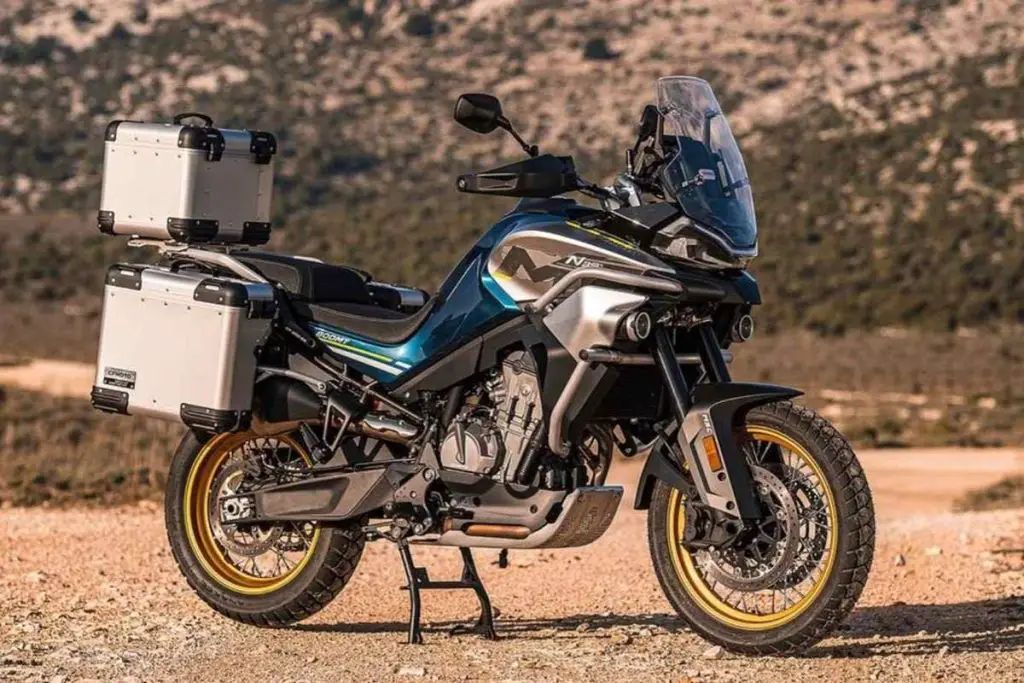
CFMOTO 800MT problems need to be separated into three groups: confirmed defects affecting particular motorcycles, maintenance or adjustment problems, and symptoms that still need diagnosis. A difficult start, abrupt throttle response or flashing warning is a starting point for investigation. It does not identify the failed part by itself.

The 800MT also needs motorcycle-specific advice. It uses a conventional six-speed gearbox and chain final drive; CVT belts, variator rollers and scooter drive pulleys are not part of this troubleshooting process. Before buying anything, identify the exact version, record what happens and check whether an outstanding recall applies to the VIN.
This guide focuses on the original 800MT Sport and Touring and the later Explore, with notes where equipment differs. It combines documented model information with general diagnostic reasoning. The symptom sections are not a claim that every fault is widespread, and they do not establish failure rates across the range.
Start With the Model, History and Warning Signs
Write down the model year, market, mileage and full model designation from the motorcycle’s paperwork. Registration year is not necessarily model year. A bike first registered in 2023 may have been built earlier, which matters when checking a campaign covering 2021–2022 machines.
The service history matters just as much. A motorcycle that began running poorly immediately after a service presents a different investigation from one that deteriorated gradually over thousands of kilometres. Record recent battery work, tyre changes, accessories, software updates, falls, washing and fuel stops. These events help a technician choose tests; they do not automatically establish blame.
Model-Year and Variant Differences
- Sport and Touring equipment varies by year and market. Check the fitted controls and handbook before assuming a quickshifter, heated equipment or a particular display should be present.
- The Australian Explore specification adds equipment including traction control, rear radar and an eight-inch multimedia display. Its electronic features need their own operating instructions.
- The 800MT-X is a separate development. Its 21-inch front and 18-inch rear wheels, for example, differ from the Explore specification’s 19-inch front and 17-inch rear combination.
- Later ES versions and other market packages need the manual matching that motorcycle. Suspension settings, software instructions and part numbers should not be transferred simply because the badge contains 800MT.
- An Australian recall notice does not automatically establish coverage for a motorcycle sold elsewhere. Ask the local distributor or dealer to check the actual VIN.
Do not diagnose a missing menu as a broken feature until its availability is confirmed. Equally, a feature that worked yesterday and disappears today deserves investigation even if another version of the motorcycle never had it. Keep those two situations separate when searching for advice.
When to Stop Riding
Stop safely and arrange inspection if braking or steering changes, a tyre loses pressure, fuel leaks, the engine overheats, or an oil-pressure warning remains on with the engine running. Persistent misfiring, repeated stalling in traffic and an uncontrolled throttle response also warrant stopping rather than trying to complete the journey.
Warning lamps during the ignition self-check are different from warnings that remain during operation. The 800MT owner’s manual describes ABS indication while stopped or at low speed, and an EFI warning before the engine starts. It also instructs owners to stop operating and contact a dealer if the EFI fault indication remains after starting. Identify the symbol and read the matching instructions instead of assuming every illuminated lamp means the same thing.
Check These Confirmed Australian Recalls First
Two Australian notices provide specific, documented issues. Their scope is limited to affected VINs; they are not evidence that all 800MT motorcycles have the defects. Check campaign completion even when buying a used motorcycle that currently appears fault-free.
| Campaign | Published scope | Defect and action |
|---|---|---|
| CF240000001R / REC-005901 | 2023 800MT Touring; 28 Australian units | Engine-support bolts may loosen and detach, potentially obstructing the rear brake pedal. An authorised service centre checks the specified torque free of charge. |
| CF240000003R / REC-005992 | 2021–2022 800MT Sport and Touring; 233 Australian units | Horn wiring may be damaged or disconnected because of its routing when steering reaches its limits. The authorised service centre inspects and adjusts the harness free of charge. |
The first notice was published on 15 February 2024 and the second on 19 June 2024. Use the regulator’s engine-support recall record and horn-wiring recall record for the VIN lists and official remedy.
A visual glance at a bolt or a working horn today does not prove that recall work was completed. Ask for a recorded campaign check. Do not apply an internet torque value or reroute wiring yourself as a substitute for the prescribed recall repair.
A Quick Route From Symptom to the Right Check
Use this table to decide what information to collect before investigating further. The right-hand column describes the next diagnostic step, not a guaranteed replacement part.
| Symptom | Useful distinction | Next check |
|---|---|---|
| Starter does not turn | Silent, clicking or dashboard resetting? | Starting conditions, battery condition and power connections |
| Engine cranks but will not fire | Normal cranking speed or slowing down? | Fuel history, warnings and a systematic ignition/fuel diagnosis |
| Jerky acceleration | Only at throttle opening, or also at steady throttle? | Chain condition, operating conditions and engine fault data |
| Quickshifter stops working | Conventional clutch shifts normal or also difficult? | Equipment settings, linkage and dealer diagnosis |
| High temperature | Rider feels heat, or an actual temperature warning? | Cold coolant level, visible leakage and cooling-system inspection |
| Battery repeatedly goes flat | After storage or during ordinary use? | Battery load test, charging test and parked current draw |
| Brake vibration or steering movement | Only under braking or at other times too? | Professional brake, wheel and steering inspection |
| Display or phone trouble | Phone connection only or whole dashboard affected? | Pairing details, software compatibility and electrical supply |
| Oil looks milky or level changes | Repeatable under the correct measuring conditions? | Stop for contamination or pressure concerns; investigate the cause |
Starting Problems: No Crank or Cranks Without Starting?
When the Starter Does Not Turn
Begin with the normal starting procedure, a secure stationary motorcycle and the engine-stop switch in its operating position. Confirm the indicated gear and clutch/side-stand conditions against the handbook. Do not bypass an interlock to make the starter operate; a switch fault needs repair, not removal of the protection.
Listen to what happens when the starter is requested. Silence, one click, repeated clicking and a turning engine are different observations. Note whether the dashboard stays bright, dims heavily or restarts. A display that resets during a starting attempt makes a power-supply check particularly relevant, but it does not prove that the battery itself is defective.
Battery manufacturer Yuasa advises checking wiring and loose or corroded terminal connections before condemning a battery. Have a suspect battery tested under load using equipment appropriate to its type. A resting voltage reading alone cannot demonstrate that it can supply the starter’s demand. A cracked, swollen or leaking battery requires proper handling and replacement assessment rather than repeated charging.
If the battery and its connections test correctly, a technician can investigate the starter control circuit, relay and motor. Request the measurements that support the diagnosis. Replacing the starter first can leave an underlying cable or connection fault untouched, while replacing the battery repeatedly can conceal a charging problem.
When the Engine Turns but Will Not Fire
First confirm there is usable fuel and record how long it has been in the tank. Note whether the problem began immediately after refuelling or after storage. Fuel history is useful evidence; draining the tank or adding several treatments without diagnosis can remove that evidence and create extra variables.
Avoid long, repeated cranking attempts. Follow the handbook’s starting limits and allow the starter to rest. Stop if there is a strong fuel smell or visible leakage. Do not use starting fluid as a shortcut on an electronically controlled motorcycle, and do not improvise an exposed spark test near the fuel system.
A workshop can distinguish missing ignition, incorrect fuel delivery, sensor inputs and a mechanical compression problem. These categories can produce similar rider symptoms. A diagnostic code narrows the investigation, but a code naming a sensor does not necessarily prove that the sensor itself has failed; its wiring and electrical supply may need checking too.
Bring a description of cold versus hot starting. A motorcycle that starts easily overnight but fails after a fuel stop should be assessed under that condition. If it works by the time it reaches the workshop, a clear account of the temperature, stop duration and warning messages is more valuable than the statement that it sometimes refuses to start.
Abrupt Throttle Response, Surging and Stalling
Separate Power Delivery From Drivetrain Movement
Describe when the jerk occurs. Is it the first movement from a closed throttle, repeated surging at an apparently steady throttle, or a sudden interruption while accelerating? Does it happen in one gear, across several gears, only while cold, or after the engine warms? These distinctions help separate an operating characteristic from a fault that needs repair.
A low-speed lurch can involve more than the engine. Chain slack, wear or a sticking link can affect how power reaches the rear wheel. That is why a drivetrain inspection belongs alongside engine checks. Tightening the chain until all movement disappears is not a cure; excessive tension introduces its own loads and wear.
Record the selected ride mode and, where fitted, any traction-control indication. An intervention message is useful context, but it should not be used to dismiss repeated unexpected power loss. Do not disable rider aids or deliberately provoke wheelspin on a public road to diagnose the problem.
If the engine stalls at junctions, treat that as a safety concern rather than accepting it as an inevitable personality trait. Have the dealer reproduce the complaint in a controlled assessment. An unexplained stall accompanied by a dashboard restart points the investigation differently from a stall with an otherwise normal display and persistent engine warning.
Software Is a Check, Not an Automatic Answer
Ask a CFMOTO dealer to check the software applicable to the VIN and whether there are relevant service instructions. A dashboard version number shared online may refer to a different market, instrument unit or control module. It is not enough to identify a compatible engine update.
Record the complaint before any update, then ask what was changed and how the result was assessed. If the symptom remains, continue diagnosis rather than assuming the update must have fixed it. Unofficial firmware and fuel controllers can complicate the investigation, particularly when the original motorcycle already has an unresolved fault.
Avoid a universal claim that every abrupt throttle needs remapping. Equally, do not tell an owner that a persistent surge must be poor riding technique. The useful approach is to establish the conditions, check the mechanical baseline and compare the motorcycle with the correct service information.
Quickshifter, Clutch and Gear Selection Trouble
Quickshifter Refuses or Interrupts a Shift
Confirm that the motorcycle has the feature and that it is enabled through its own controls. Where the handbook places conditions on its operation, follow them. A quickshifter is not permission to force the pedal when the transmission resists, nor is a successful shift on a different model a valid test of this one.
The key distinction is whether ordinary clutch-assisted shifting remains normal. If only the quickshifter fails, its settings, sensor, linkage and related electronic inputs become relevant. If both methods produce difficult changes, investigate the clutch and mechanical shift system as well. This division helps prevent an electronic feature from taking the blame for a broader problem.
With the engine off, look for obvious damage or obstruction around the pedal and linkage. A recent fall, different boots or an accessory fitted near the lever may be relevant. Do not alter linkage lengths or sensor positions experimentally; adjustment can affect engagement and needs the specified procedure.
Document the affected gear change and whether the fault began after service or software work. If the transmission jumps out of gear, makes grinding noises or loses drive, stop using it and arrange inspection. Repeatedly forcing the same shift to see whether it improves can turn a diagnostic problem into additional damage.
Clutch Drag and Clutch Slip Are Different
Clutch drag means the clutch is not separating drive adequately when operated. Clutch slip means it is not transmitting drive adequately when engaged. Reports such as creeping with the lever pulled, difficult gear selection or engine speed rising without corresponding acceleration help distinguish the two, although they still need confirmation.
Check the service record for the oil used and any recent lever replacement. An aftermarket lever can change operation if it is unsuitable or incorrectly fitted. Cable condition and free play also deserve inspection, using the specification for the actual motorcycle rather than a generic gap taken from another bike.
Do not try to cure a slipping clutch with additives or repeated hard acceleration. Ask for the external adjustment and operating mechanism to be checked before an internal parts decision. If repair is necessary, the report should explain whether the cause was adjustment, damaged components, unsuitable oil or another confirmed issue.
Engine Heat and Genuine Overheating
Heat felt around the rider’s legs is not, on its own, evidence that the cooling system has failed. A temperature warning, coolant loss, steam or a repeatable abnormal temperature trend is much more useful. Record the dashboard indication and circumstances rather than describing all uncomfortable heat as overheating.
If a warning appears, stop safely, shut the engine down and let it cool. Never open a hot pressurised cooling system. Keep hands away from the fan and avoid working around hot exhaust parts. Continuing simply because the bike still runs can make the eventual repair more extensive.
Checks After the Motorcycle Has Cooled
Look for a changed coolant level using the handbook’s measuring procedure, staining around accessible hoses, wet patches and debris blocking the radiator face. Inspect without dismantling hot components. A reservoir repeatedly needing coolant deserves a leak investigation rather than an indefinite topping-up routine.
Tell the workshop whether the event occurred while moving, crawling in traffic or immediately after cooling-system service. Those conditions influence what should be tested. A fan-control issue, restricted airflow, trapped air after service and a circulation problem are possible categories, not interchangeable diagnoses.
Avoid replacing the thermostat or water pump solely because they appear on a list of possible causes. Ask for the evidence: a confirmed leak, electrical test, pressure test or demonstrated failure to circulate or control temperature correctly. The correct repair follows the finding.
An accessory radiator guard or accumulated mud is worth mentioning if the problem began after installation or off-road use. That does not mean the accessory is automatically responsible. The objective is to identify changed conditions and restore proper cooling, while following the correct filling and bleeding procedure if the system is opened.
Battery Drain, Charging Faults and Intermittent Electrics
Repeatedly finding a flat battery calls for three separate questions: can the battery hold usable charge, does the motorcycle replenish it correctly, and is something consuming too much power while parked? A new battery answers none of those questions by itself.
Keep a simple record of time parked, starting behaviour and accessories left connected. Include auxiliary lights, chargers, tracking equipment and aftermarket wiring. A short urban trip with several electrical accessories presents a different usage pattern from sustained riding, but usage alone should not be blamed without checking the system.
A technician can test charging performance and, when necessary, measure parked current after the motorcycle’s electronics have settled. That distinction matters because a measurement taken while modules are still awake may not represent the normal parked condition. Ask for actual results and the applicable specification rather than accepting a diagnosis based only on battery age.
For home maintenance, use a charger compatible with the installed battery chemistry and follow both manufacturers’ instructions. Do not assume advice for a conventional flooded battery applies to a sealed or lithium replacement. Keep charging equipment away from fuel vapour and stop if the battery shows damage or abnormal heating.
Faults After Washing or Accessory Installation
Record whether the horn, lights, display or starting issue began after washing, rain or fitting an accessory. Look for visibly trapped or stretched external wiring with the engine off. Do not probe sealed connectors randomly or bridge a fuse with wire.
Replace a fuse only with the specified rating and investigate if it fails again. A larger fuse can allow wiring damage instead of solving the circuit fault. If the horn complaint involves steering movement, bring the Australian routing recall to the dealer’s attention and have applicability checked.
Intermittent faults are easier to solve when the workshop knows which systems fail together. A phone charger stopping alone differs from the whole instrument cluster resetting. List the affected functions and their timing so the technician can investigate shared supplies or connections where appropriate.
Braking, Steering and Suspension Complaints
Vibration Under Braking
Brake vibration needs a proper inspection of the brakes, wheels and steering assembly. Tell the technician whether it is felt at the lever, handlebar, seat or throughout the motorcycle, and whether it occurs only when braking. A symptom description helps determine the test; it cannot prove that a disc is warped.
If braking performance has changed, the lever or pedal feels abnormal, or there is visible fluid leakage, stop riding. Do not attempt aggressive bedding runs as a universal cure. A competent inspection can assess pad condition, disc condition and measurements, caliper operation, wheel installation and steering play as appropriate.
Recent tyre or brake work is useful context. Ask the shop to check the work against the installation procedure rather than immediately buying replacement discs. For affected Touring VINs, the engine-support recall is also relevant to rear pedal obstruction, which is a different complaint from ordinary pad wear or vibration.
Wobble, Vibration and Tyre Pressure
Michelin identifies tyre wear and incorrect pressure among possible contributors to handlebar wobble, and recommends professional diagnosis for vibration that may involve wheel balance or tyre seating. Use the motorcycle’s recommended cold pressures for its load and tyre fitment. The maximum marking on a tyre is not the normal operating recommendation.
Inspect for visible tyre damage and an obvious pressure loss before moving the motorcycle. Do not bleed a hot tyre down to a cold-pressure target. A pressure-monitoring display is useful information, but check an unexpected reading with an appropriate gauge and investigate actual loss rather than assuming a sensor problem.
Avoid hands-off tests or increasing speed to reproduce instability. Tell the workshop whether it began after a tyre replacement, a pothole impact or a luggage change. A steering damper should not be used to conceal an unresolved wheel, tyre or bearing problem.
Harsh or Unsettled Suspension
First record the load: rider, passenger and luggage. Then record the existing suspension settings before anything is changed. If a previous owner adjusted every available control, returning to the handbook baseline through the correct procedure is more informative than adding random clicks in several directions.
Preload and damping have different purposes, so treating them as one hardness adjustment makes diagnosis confusing. Ask a suspension specialist to assess setup for the actual load if the motorcycle bottoms, wallows or feels excessively harsh. Oil leakage, damaged components or a sudden change in behaviour needs repair assessment, not simply another setting.
Do not copy an Explore setting onto an ES electronic suspension system or an MT-X because all are adventure motorcycles. Identify the hardware and use its own instructions. After any professional adjustment, record what changed so future complaints have a reliable baseline.
Chain Noise and Uneven Drive
Inspect the chain with the engine off and the motorcycle supported as instructed. Keep fingers away from the sprockets and never run the engine to turn the wheel for cleaning. Look for corrosion, damaged seals, stiff links and abnormal sprocket wear. A damaged chain is not made serviceable merely by adding lubricant.
D.I.D recommends cleaners and lubricants suitable for sealed chains and warns against unsuitable solvents. It also identifies stiffness, rust and missing sealing rings as replacement concerns. Follow the instructions for the chain actually fitted, since a used motorcycle may no longer have its original chain.
Measure slack using the motorcycle’s specified support condition and procedure. A number without the measuring method can mislead: changing how the suspension is loaded changes the geometry. If slack varies substantially as the wheel is repositioned, have the whole chain and sprocket set assessed instead of adjusting one convenient section and ignoring the rest.
A new noise after rear-wheel removal deserves an installation check, including alignment and adjustment. Do not assume every rattle comes from the engine. Equally, persistent knocking, a new metallic sound or noise accompanied by an oil-pressure warning should not be dismissed as harmless chain chatter.
Display, Phone Pairing and Radar Problems
Phone Trouble or Dashboard Trouble?
Start by identifying which function fails. A phone that will not pair, audio that drops, navigation that will not appear and an instrument unit that reboots are different faults. Write down the phone model, operating-system version, display type and the exact message shown.
For a connection-only complaint, follow the supported pairing sequence while parked. Check the required permissions and whether an older pairing remains on either device. If the manufacturer instructs you to remove and recreate the pairing, do that consistently on both sides rather than changing unrelated motorcycle settings.
If the instrument itself freezes or restarts, record whether that occurs with the phone disconnected too. This observation can help separate a connection problem from a broader display or power issue. Do not install firmware from an owner-shared file simply because its version number appears newer.
Phone compatibility and features can change, so ask for the current instructions for the exact display and market. An Apple CarPlay reference on an Explore specification does not establish that every 800MT display supports every Android projection method. Obtain a compatible solution rather than buying adapters based on the model name alone.
Radar and Other Rider Aids
Where radar is fitted, note whether the complaint is a warning message, missing detection or repeated alerts. Check for visible dirt or an accessory obstructing the sensor area using the handbook’s instructions. Do not alter the sensor mounting or attempt to recalibrate it through guesswork.
Keep using mirrors and direct observation; an assistance system does not replace checking before a manoeuvre. A fault appearing after a fall, rear accessory installation or bodywork repair should be reported with that history. The dealer can determine whether inspection, adjustment or software work is appropriate for the fitted system.
Oil Loss, Milky Oil and Misfiring
Confirm the Measurement Before Diagnosing Consumption
Compare oil levels only under the handbook’s specified conditions. A different motorcycle angle or checking immediately after shutdown on one occasion and much later on another can create a misleading trend. Record mileage and the measured quantity added rather than estimating consumption from memory.
Visible leakage, persistent smoke or a repeatable falling level needs investigation. Locate the source professionally rather than coating the crankcase with sealant or tightening every bolt. Excessive tightening can damage threads and covers, while oil appearing at one location may have travelled from somewhere else.
An oil-pressure warning requires stopping and diagnosis even when the visible level seems adequate. Level and pressure are different measurements. Adding extra oil beyond the specified level is not a valid response to an unexplained pressure warning.
Milky Appearance and Contamination
Milky oil throughout the visible oil supply, especially with falling coolant level or rising oil level, calls for inspection before further running. A small amount of residue in one location is not enough to identify a failed head gasket. The extent, accompanying symptoms and test results matter.
Do not seal an unexplained drain or tell-tale opening to stop fluid appearing. Such an opening may provide evidence of an internal seal problem, and blocking it can hide the symptom. Photograph the location when safe and ask the workshop to identify its purpose and the source of the fluid.
Changing contaminated oil without finding the cause can leave the underlying fault active. A workshop may need cooling-system checks or other tests before deciding on seals, gaskets or internal repair. Request that diagnosis rather than treating every pale deposit as the same failure.
Misfiring Does Not Always Mean a Bad Spark Plug
NGK explains that deposits can allow electrical leakage at a spark plug and cause misfiring. It also describes several possible reasons for abnormal deposits. Consequently, a fouled plug can be evidence of another problem rather than the complete diagnosis.
Ask the technician to record what was found and, where relevant, which cylinder was affected. Fuel delivery, ignition components, electrical connections and mechanical condition may need investigation. Avoid repeated parts swapping without checking whether the original symptom has changed.
If the engine misfires persistently, loses power or shows an EFI warning, stop and obtain help. Do not try to burn away a fault with a hard ride. A motorcycle that temporarily improves after new plugs still needs further investigation if the same fouling or running problem returns.
Make the Dealer Visit More Productive
Prepare a short fault record before booking. A precise report often saves more time than a long list of parts suggested online. Include the circumstances necessary to reproduce an intermittent complaint safely and tell the workshop if it affects braking, steering or unexpected loss of power.
- Model, model year, VIN and mileage, plus where the motorcycle was originally sold.
- Cold or hot engine, weather and approximate time into the journey when the fault appears.
- Exact warning text, selected mode and the gear or function involved.
- Recent services, tyres, accessories, software changes or incidents.
- Photographs or a stationary recording where useful; never operate a phone while riding.
- Previous repair invoices and whether each repair changed the symptom.
Ask for recall status, diagnostic findings and the proposed repair in writing. If an expensive component is recommended, ask which test identified it. When the bike is returned, keep the record of parts, software and adjustments so a recurring problem can be compared with the previous work.
Warranty arrangements depend on market, age, service history and the applicable terms. Do not assume that a general internet statement settles your coverage. Raise the complaint promptly with the selling dealer and keep dated evidence of the symptoms and service history.
Is the CFMOTO 800MT Reliable?
The sources used here do not provide a representative failure rate that would justify calling every 800MT either trouble-free or unreliable. Recall records establish particular defects, while a troubleshooting guide explains possibilities. Neither tells you the likelihood of every listed symptom on your motorcycle.
For an existing owner, the useful priorities are a confirmed service baseline, completed recalls and prompt investigation of changes. For a used-bike buyer, obtain the service and campaign records and arrange an inspection of the actual motorcycle. A clean appearance or a short fault-free demonstration cannot substitute for those checks.
Keep the correct CFMOTO 800MT owner’s manual available, checking that its equipment and edition match your bike. Start diagnosis with what you can verify: the precise symptom, the conditions and the measurements. That approach is more likely to produce a lasting repair than treating every problem as a battery, software update or major engine failure.