
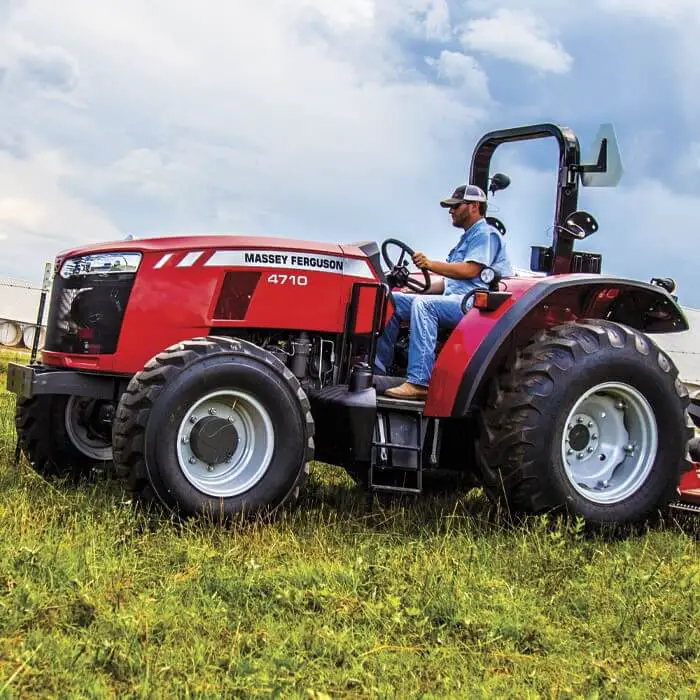
The Massey Ferguson 4710 is a generally reliable, mechanically straightforward utility tractor whose most frequently reported problems are concentrated in the Diesel Exhaust Fluid (DEF) / Selective Catalytic Reduction (SCR) emissions system, in electrical and wiring faults, and in operator-serviceable maintenance items such as filters and cooling-package cleaning; the core AGCO Power 3.3-liter engine and the transmission are widely regarded by owners as durable. This article examines each major problem category for the MF 4710, explains how the relevant components fail, and provides diagnostic and repair guidance that an owner or technician in the United States can follow, including clear guidance on when the matter should be referred to an authorized AGCO/Massey Ferguson dealer.

TL;DR
- The single most common and most frustrating problem area on the MF 4710 is the DEF/SCR emissions system, which owners report throwing intermittent fault codes (for example E17/E18 3521, D19) and dropping the tractor into reduced-power "limp" mode; the dosing (sending) unit, DEF quality, and sensor wiring are the usual culprits, and repeated warranty replacement of DEF components has been reported.
- Electrical and wiring issues are the second recurring theme: a reported wiring-harness failure at roughly 500 to 600 hours on at least one cab tractor, reverse-polarity jump-start damage that destroyed a 125-amp midi fuse, PTO shutdown codes (for example 66.1.4E) traced to sensors, and loader control cables that let in moisture.
- The engine and transmission are fundamentally sound; the most valuable preventive actions are keeping the tightly packed radiator/intercooler/condenser stack clean, servicing the air filter, using fresh high-quality DEF, and following the AGCO service intervals (engine oil and filter at approximately every 250 hours after the initial break-in service, transmission/hydraulic oil and filters at approximately every 500 hours).
Key Findings
- The MF 4710 is part of the MF 4700 Global Series, which has been manufactured by Massey Ferguson (an AGCO brand) in plants in Brazil and China since 2016. It uses the AGCO Power 33AWIC 3.3-liter (201-cubic-inch) three-cylinder turbocharged, intercooled diesel producing 100 horsepower (74.6 kW) at 2,200 rpm, with a bore of 108 mm and a stroke of 120 mm, and delivering 88 PTO horsepower (65.6 kW) at 2,200 rpm.
- The tractor deliberately omits a diesel particulate filter (DPF) and exhaust gas recirculation (EGR); it meets Tier 4 Final using SCR with DEF plus a diesel oxidation catalyst. This simplifies some maintenance (no regeneration cycles) but concentrates emissions problems in the DEF dosing hardware and its software shutdown logic. The DEF tank holds only 2.6 gallons (10 liters).
- Two transmissions are offered: a 12×12 mechanical synchro shuttle (dry clutch) and a 12×12 electro-hydraulic power shuttle (wet clutch). Some later or export configurations reference a Dyna-2 power-shuttle arrangement. Owners repeatedly note that the 12-speed (six high / six low) gearing can leave gaps between usable ground speeds for certain implements.
- Loader-equipped tractors typically carry the MF 931X (non-self-leveling) or the self-leveling FL-series loaders such as the FL3615; loader-specific complaints center on moisture in control cables and on the modest lift capacity of the base 931X.
- The Category 2 rear three-point hitch provides a standard lift capacity of 4,850 pounds (2,199 kg) at 24 inches behind the lift pins.
- Owner sentiment overall is positive on durability (multiple owners report 1,200 to 2,500-plus hours with few or no major failures) but negative on the DEF system, air-conditioning capacity, air-filter maintenance burden, and the difficulty of cleaning the packed cooling stack.
Model-Year and Variant Differences
Understanding which MF 4710 configuration is in front of you materially changes the troubleshooting approach.
Production timing and build location. The MF 4700 Global Series arrived around 2015 to 2016, and the tractor has been built in Brazil and China since 2016. Because AGCO, like most manufacturers, sells tractors by serial number rather than strictly by calendar year, a machine sold as a current-year model may have been manufactured years earlier and warehoused. One TractorByNet owner reported buying a "new" 4710 that was actually built in January 2019 and had sat with empty diesel and DEF tanks; it threw a DEF code within an hour of delivery. The practical lesson is that a tractor that has been stored for years with a dry DEF tank is at elevated risk of DEF-system faults, and the build date on the serial plate (and the Brazil-plant sticker) should be checked on any "new old stock" purchase.
ROPS versus cab. The MF 4710 is offered with a two-post folding Roll-Over Protective Structure (ROPS) or with an air-conditioned cab. Cab tractors add the air-conditioning circuit (with its own reported problems: undersized cooling capacity, disconnected hoses from the factory, evaporator freeze-ups) and additional wiring and controls that increase electrical fault surface area. Open-station/ROPS tractors are simpler and have fewer electrical complaints.
Mechanical shuttle versus power shuttle / Dyna-2. The base mechanical 12×12 synchro shuttle uses a dry clutch and a mechanical (lever) shuttle; it is the simplest and, per owner commentary, the most trouble-free choice. The optional electro-hydraulic power shuttle (marketed in some markets as Dyna-2) uses a wet clutch and electronic controls, which adds solenoids, pressure sensors, and control logic that can generate fault codes. Owners choosing the mechanical box frequently cite avoidance of powershift electronics as the reason.
Loader-equipped tractors. The MF 931X is a non-self-leveling loader rated at 3,740 pounds (1,700 kg) lift capacity to maximum height at the pivot pin, with a breakout force of 5,210 pounds (2,360 kg); the self-leveling FL3615 offers higher effective capacity plus SoftDrive load damping. Loader tractors see additional hydraulic demand and additional electrical connections (LoaderLight, implement-lock switches, joystick harness), and moisture intrusion into loader control cables has been reported.
Early versus later production. The most consequential running change is in the DEF sending/dosing unit: AGCO/Bosch issued multiple updated part numbers as they attempted to resolve the recurring DEF fault, so later-production tractors and tractors that have received the latest DEF components may be less prone to the problem than early machines that have not been updated.
Engine Starting & Performance Problems
Symptoms
- Engine cranks but does not start, or starts and then dies shortly afterward.
- Slow cranking, a single heavy click, or rapid clicking with no crank.
- Hard starting in cold weather.
- Reduced power / "limp" mode where engine revolutions are capped (for example, only reaching approximately 850 rpm).
- Black smoke, white/grey smoke, misfire, or rough running under load.
- Stalling unexpectedly during operation.
Causes
The AGCO Power 3.3-liter engine uses a high-pressure common-rail fuel system with electronic control, so both fuel-side and electronic-control faults can prevent starting or limit power.
- Fuel delivery: clogged main or pre-fuel filter, air in the fuel system, contaminated or cloudy fuel (water in fuel), or a weak lift pump.
- Cold-start hardware: on common-rail diesels the primary cold-start aid is the intake grid heater/glow system; weak batteries and poor grounds worsen cold starting.
- Electrical/interlock: a weak or discharged battery (for example, an accessory such as a Trimble GPS unit left powered overnight), corroded terminals, poor grounds, a failed safety interlock (seat, PTO, or neutral switch), or a blown fuse.
- Reduced power (limp) mode: most commonly triggered by an emissions/DEF fault (see DEF section) or by an engine/transmission sensor fault such as a throttle-position or speed sensor reading out of range. A limp-mode fault code such as D1 has been reported on a 2022 model that "limped home."
- Air supply: the 4710 air filter has been criticized by owners for requiring frequent cleaning and replacement because the design lacks a pre-cleaner dust trap; a heavily restricted air filter can cause low power, black smoke, and stalling.
- Injectors/injection pump: clogged or worn injectors can cause black smoke, misfire, and hard starting; this is less common but reported.
Troubleshooting Steps
- Record the fault code first. Before clearing anything, note the exact code shown on the dash (for example D-series instrument codes, E-series engine codes, U-series SCR codes) and whether the tractor is in reduced power. This directs the entire diagnosis.
- Stabilize the electrical system. Measure battery voltage directly across the posts (a healthy rested battery reads roughly 12.6 to 12.7 volts). Load-test the battery, and inspect and clean battery terminals and ground straps. Many "engine" and "low voltage" codes originate from weak batteries or corroded grounds.
- Confirm the complaint. Determine whether the engine is failing to crank (electrical/starter/interlock), cranking but not firing (fuel or cold-start), or starting but derating (emissions or sensor).
- For no-crank: listen at the key. Nothing at all points to battery connection, a fuse/relay, the ignition switch, or a safety interlock. A single click with no crank points to the starter solenoid not passing current. Rapid clicking indicates collapsing battery voltage. Confirm the transmission is in neutral and the PTO is disengaged (interlocks).
- For crank-no-start: check the fuel filter and prime/bleed the fuel system per the operator's manual; inspect for cloudy fuel or water; verify fuel is actually reaching the filter. Verify cold-start aids are functioning.
- For low power/derate: check for emissions codes and DEF level/quality before condemning engine hardware. Inspect the air filter for restriction. Check intake hose clamps: one owner of a sibling 4700-series tractor found a loose factory clamp on a turbo/intake hose was causing running problems.
- Escalate to dealer diagnostics if a persistent engine or sensor code remains after the basics are confirmed, because the engine ECU generally requires AGCO diagnostic software (for example the dealer's electronic diagnostic tool) to read live data and pinpoint the failed circuit.
Solutions
- Replace the main and pre-fuel filters using the AGCO fuel filter kit (part V837091129) and bleed the system; drain and refill with clean diesel if contamination is found.
- Clean or replace the air filter (primary element 4379574M1, secondary 4379575M1); establish a habit of frequent inspection given the design's sensitivity to dust.
- Repair grounds and terminals, replace the starter (part 4377659M3) or solenoid if bench testing confirms failure, and replace blown fuses with the correct rating.
- Address emissions-related derate through the DEF procedures below rather than through engine repairs.
- Refer injector, injection-pump, and persistent ECU sensor faults to the dealer; injector timing and high-pressure fuel components require specialized tools and should not be attempted casually.
Dyna-2 / Transmission Problems
Symptoms
- Hard shifting, grinding when shifting, or difficulty selecting gears.
- On power-shuttle/Dyna-2 tractors, failure to change range or refusal to move.
- Whining noise from the transmission/hydraulic case.
- A combined transmission/hydraulic "CAN" or cam-related fault code (for example d0 00.1.73 reported by a Yesterday's Tractors owner).
- A gap in usable ground speeds between the high and low ranges for certain implements.
Causes
- Mechanical shuttle: worn or maladjusted external shift linkages, incorrect clutch adjustment, low transmission fluid, and, less commonly, worn internal synchros, bearings, or shafts.
- Power shuttle / Dyna-2: electro-hydraulic shift relies on solenoids, pressure sensors, and a control module; electrical faults in these can generate shift faults or no-move conditions. Low or degraded transmission/hydraulic fluid reduces the pressure the wet clutch and shuttle need to operate.
- Fluid condition: because the transmission and hydraulics share oil, contaminated or incorrect fluid affects shifting quality. Owners of related 4700-series machines report a transmission whine that was reduced by switching to a premium semi-synthetic fluid.
- Fastener issues: an owner of a related large-frame Massey reported that bolts between two transmission sections were undersized and worked loose over time, a reminder to inspect external transmission fasteners.
- Gearing design: the 12-speed (six high / six low) layout is not a defect but a design limitation; owners note it can be hard to find an ideal gear for tasks such as square baling.
Troubleshooting Steps
- Record any transmission/hydraulic fault code and note the exact conditions under which it appears (for example, only when moving and changing engine speed, as in the reported d0 00.1.73 case).
- Check the transmission/hydraulic fluid level and condition first; top up with the correct Massey Ferguson Permatran 821XL semi-synthetic fluid.
- Replace the hydraulic filter element (4309229M1) and inspect/replace the gearbox lubrication filter (4314565M2) and suction strainer; a dealer in one reported case advised a filter change as the first step for a combined transmission/hydraulic code.
- On mechanical-shuttle tractors, inspect external shift linkage for wear/binding and verify clutch adjustment.
- On power-shuttle/Dyna-2 tractors, if the fault persists after fluid and filters, the shift solenoids, pressure sensors, and wiring should be tested; this typically requires dealer diagnostics.
- Inspect external transmission fasteners for looseness.
Solutions
- Correct fluid level and quality; use only the specified Permatran 821XL. Replacing degraded fluid frequently resolves hard shifting and whining.
- Replace worn linkages and adjust the clutch on mechanical tractors.
- Replace failed solenoids, sensors, or the control module on power-shuttle tractors, generally at the dealer.
- Internal repairs (synchros, bearings, clutch packs) require splitting the tractor and specialized tooling and should be performed by the dealer.
- Re-torque and thread-lock loose external bolts and monitor them, especially around seasonal temperature changes.
Hydraulic System Problems
Symptoms
- Three-point hitch will not lift, lifts slowly, or lifts weakly.
- Loader is slow, weak, or jerky.
- Hydraulic noise as if the system is under pressure when it should not be.
- Combined hydraulic/transmission fault codes.
Causes
The 4710 uses a shared oil system in which the transmission, three-point hitch, auxiliary/remote valves, PTO clutch, and (on 4WD tractors) related circuits draw from a common reservoir served by the main hydraulic pump (a 22+9 cc unit, part 4360266M2 in the quick-reference guide). As a result, hydraulic complaints and transmission/PTO complaints frequently share root causes.
- Filter restriction: a clogged hydraulic filter or suction strainer is a leading cause of weak or slow lift and of pressure instability. In one reported 4710 case, the dealer recommended a hydraulic filter change as the first response to a combined code, and the owner then also fitted a hydraulic strainer.
- Low or contaminated fluid reduces available pressure and flow.
- Internal leakage past lift-cover components, standpipes, control-valve O-rings, or cylinder seals diverts oil and weakens the lift.
- Relief valve or control-valve faults can cause the system to go into recirculation or to behave erratically.
- Related electrical events: the Yesterday's Tractors owner whose three-point arms stopped lifting had just suffered a reverse-polarity jump-start event and a blown 125-amp fuse, illustrating that an electrical fault can present as a hydraulic-lift symptom on this electronically managed machine.
Troubleshooting Steps
- Check hydraulic/transmission fluid level and condition.
- Replace the hydraulic filter (4309229M1) and inspect the suction strainer; this is the highest-yield first step.
- Verify draft/position control lever operation; cycle it through its range to check for change in behavior.
- If a pressure gauge port or remote is available, check main pump pressure against specification.
- Confirm no electrical fault or blown fuse is disabling the lift electronics before assuming a mechanical hydraulic failure.
- Inspect for external leaks at hoses, remotes, and cylinders.
Solutions
- Restore correct fluid and replace filters/strainer; this resolves many slow/weak-lift complaints.
- Replace worn O-rings, seals, and cylinder seals for internal leakage.
- Replace or adjust a faulty relief or control valve.
- Replace the hydraulic pump (4360266M2) only if pressure testing confirms pump wear after filters, strainer, and fluid have been ruled out.
- Refer internal lift-cover repairs to the dealer.
PTO & 3-Point Hitch Problems
Symptoms
- PTO will not engage, or engages then shuts off with a flashing/illuminated PTO indicator.
- PTO shutdown accompanied by a fault code (for example 66.1.4E reported on a nearly new 4710).
- Three-point hitch will not lift or lifts weakly (see also Hydraulic section).
- Unidentified/disconnected wiring near the PTO housing.
Causes
The 4710 PTO is independent and hydraulically actuated, so PTO engagement depends on adequate hydraulic pressure and on correct electrical signals from the PTO switch and PTO/clutch sensors. Reported causes include:
- PTO sensor or wiring faults: a PTO shutdown code such as 66.1.4E is typically caused by a faulty PTO clutch/speed sensor or damaged/corroded connector or wiring. One 4710 owner discovered an unconnected wire in a braided loom hanging near the PTO housing with an open sensor hole, raising the question of a missing or disconnected sensor from the factory or from prior service.
- Low hydraulic pressure: because the PTO clutch is hydraulically engaged, low fluid or pressure can prevent engagement or cause the clutch to slip and auto-disengage.
- Safety interlocks: the PTO will not engage if a safety switch is not satisfied.
- Three-point hitch: weak or absent lift traces to the shared hydraulic causes described above.
Troubleshooting Steps
- Read and record the PTO fault code.
- Inspect the PTO clutch/speed sensor and its connector for damage, corrosion, or disconnection; verify all PTO-area wiring is intact and correctly landed.
- Verify the PTO switch operates and that safety interlocks are satisfied.
- Confirm hydraulic fluid level and pressure, since PTO engagement is hydraulic.
- If a factory wire appears unconnected, compare against another 4710 or the parts diagram and consult the dealer to confirm the correct connection point.
Solutions
- Replace a failed PTO sensor and repair or replace damaged connectors/wiring.
- Correct hydraulic fluid level/pressure.
- Reset the code after repair; if it returns, escalate to dealer diagnostics.
- For a suspected missing/mislanded factory sensor or wire, have the dealer verify and correct under warranty where applicable.
Electrical & Dashboard Problems
Symptoms
- Flickering or non-functioning lights, dashboard warning lights staying on, intermittent power loss.
- Complete wiring-harness failure.
- Dead battery / parasitic drain.
- Blown fuses (including a large midi fuse) and no-start after a jump attempt.
- Moisture in loader control cables.
Causes
The 4710 is an electronically managed tractor with an engine ECU, multiple sensors, and (on cab and loader tractors) considerable wiring. Off-road service exposes connectors to vibration, dust, and moisture.
- Harness failure: one cab-tractor owner reported a wiring-harness failure at roughly 500 to 600 hours that put the tractor out of service for about six weeks awaiting parts.
- Reverse-polarity / jump-start damage: connecting jumper cables backward, even briefly, can fry a high-amperage fuse (a 125-amp midi fuse in one reported case) and cause cascading faults, including loss of normal start function and loss of three-point lift.
- Parasitic drain: accessories such as an aftermarket GPS unit left powered can flatten the battery.
- Charging system: a weak alternator produces low system voltage; healthy charging voltage is generally in the range of roughly 13.8 to 14.2 volts.
- Connector corrosion/moisture: loader control cables have taken on moisture and required replacement; dashboard and sensor connectors can corrode.
Troubleshooting Steps
- Record any dash codes and note whether multiple codes are present; prioritize voltage/communication codes as likely root causes over downstream codes.
- Measure battery voltage and charging voltage; load-test the battery.
- Inspect grounds, terminals, and main fuses/fusible links (including large midi fuses) for damage; use voltage-drop testing while cranking to find hidden resistance.
- Inspect harness routing for chafe points and connectors for corrosion or moisture, paying attention to loader cables and the PTO-area loom.
- After any reverse-polarity event, systematically check fuses and modules for damage.
Solutions
- Replace damaged fuses with the correct rating; never bypass a fuse permanently with clip leads.
- Repair or replace corroded connectors and moisture-affected loader cables; seal and route harnesses away from chafe points.
- Replace a failed alternator or starter; the field-start battery (part 79037013 in the United States) and starter (4377659M3) are cataloged items.
- A full harness failure is a dealer/warranty matter; document the failure and hours.
- Educate operators on correct jump-start polarity (the 4710 ground is a braided strap; the positive terminal is marked) to prevent expensive reverse-polarity damage.
DEF & Emissions System Problems
This is the most frequently and most emphatically reported problem area on the MF 4710.
Symptoms
- Emissions/DEF warning on the dash, often within the first hours or months of ownership.
- Reduced power / limp mode, in severe cases limiting engine speed to roughly 850 rpm.
- Recurring, intermittent codes such as E17 3521 ("bad DEF"), E18 3521 ("DEF fault"), and D19 (DEF system).
- Codes that clear when the tractor is shut off and restarted, then return randomly, sometimes after weeks of normal operation.
Causes
The 4710 meets Tier 4 Final using SCR with DEF (and a diesel oxidation catalyst) and deliberately has no DPF and no EGR, so it does not run regenerations. The trade-off is that emissions faults are concentrated in the DEF dosing hardware and its regulatory software.
- DEF sending/dosing unit failure: owners report repeated replacement of the DEF sending unit, each time with an updated AGCO/Bosch part number, indicating a recognized design problem. One owner reported being on the third sending unit, complete with a new DEF tank, and still throwing the code after about 10 hours.
- DEF quality and age: contaminated, old, or crystallized DEF triggers "bad DEF" codes. However, owners note that even fresh, high-quality DEF (the same used successfully in a pickup) did not resolve the fault in some cases, pointing to hardware rather than fluid.
- Dosing pump failure: one high-hour owner (over 2,500 hours) reported the DEF dosing pump failed at around 1,800 hours, notable because that owner otherwise had no issues.
- Sensors/wiring: NOx sensors, DEF pressure/temperature sensors, the dosing valve, and their wiring can fault and force a derate.
- Regulatory shutdown logic: federal emissions rules require a software inducement/derate loop for certain faults, which is why a relatively minor DEF sensor issue can cap power; owners on TractorByNet attribute the severity of the derate to this mandated logic.
- Sitting with a dry DEF tank: tractors warehoused for long periods with empty DEF tanks appear more prone to early DEF faults.
Troubleshooting Steps
- Record the exact DEF code (E17/E18 3521, D19, or a U-series SCR code).
- Check DEF level and quality; drain and refill with fresh, reputable DEF if there is any doubt about age, contamination, or crystallization.
- Inspect the DEF injector/dosing unit, dosing pump, tank sensors, and wiring/connectors for clogs, damage, or corrosion.
- Note the pattern (random, intermittent, clears on restart), which strongly suggests a sensor/dosing hardware fault rather than fluid.
- Because the SCR system requires manufacturer diagnostics and because inducement logic is involved, escalate persistent DEF faults to the dealer promptly; do not lose a hay window waiting.
Solutions
- Replace degraded DEF with fresh fluid as the cheap first step.
- Have the dealer replace the DEF sending/dosing unit, dosing pump, sensors, or tank as diagnostics indicate, insisting on the latest updated part numbers.
- Keep the tractor within warranty documentation, because AGCO has repeatedly replaced DEF components; document every occurrence, code, and hour reading.
- Do not "delete" the DEF/SCR system. Third-party vendors advertise DEF/SCR delete tuning, but defeating an emissions control system on a diesel engine is illegal for on- and off-road engines under United States Environmental Protection Agency rules, can void the warranty, and can render the tractor unsalable or non-compliant. This article does not recommend emissions deletes; the compliant path is repair.
- As a practical mitigation, keep the DEF tank filled with fresh fluid (the tank is small, only 2.6 gallons / 10 liters, and owners note it does not last a full heavy day), and avoid letting the tank sit dry.
Front Axle & Steering Problems
Symptoms
- Heavy or difficult steering, or steering that feels loose/unresponsive.
- Steering wheel that turns with little effect (many turns, little response).
- A rumble or noise while driving, potentially from the front axle.
- On 4WD (MFWD) tractors, front-wheel drive not engaging.
Causes
The 4710 uses hydrostatic power steering fed from the tractor's hydraulic oil, a front steer axle (Dana or Carraro on 4WD tractors) with inboard planetary final drives, and an electro-hydraulically or mechanically engaged MFWD.
- Steering: low hydraulic fluid, air in the steering circuit, a worn steering (orbital) valve/steer box, or a worn steering cylinder. A steering wheel that spins with little response is characteristic of a steering-motor/orbital-valve system that is low on fluid or has air in it.
- MFWD engagement: on a used 4710, an owner found the MFWD solenoid not hooked up and the engagement lever seized; MFWD faults can be electrical (switch/solenoid/wiring) or mechanical (seized linkage/piston).
- Front axle lubrication: the 4710 front axle is largely maintenance-light at the outer joints. A JustAnswer exchange notes the FWA front axle lacks outer-joint grease zerks; the outer joints are sealed and pre-lubricated, and lubrication is performed at the pivot and via axle oil, not by greasing sealed joints.
- Noise/vibration: a front-end rumble can stem from the axle, from wheel alignment/tire wear, or from driveline components; the front driveshaft coupling on related Masseys uses a splined collar retained by a cotter pin that warrants inspection.
Troubleshooting Steps
- For steering complaints, check hydraulic fluid level first; top up with the correct fluid.
- Bleed the steering circuit by jacking the front axle clear of the ground and steering fully left then fully right while keeping the reservoir topped.
- If steering is hard only at higher engine speed or under load, suspect the orbital valve/steer box or cylinder and consult the dealer.
- For MFWD non-engagement, verify the console switch, then trace and test the solenoid and wiring, then check the mechanical engagement piston/lever for freedom of movement.
- For front-axle noise, inspect the axle oil level, wheel alignment/tires, and driveshaft coupling.
Solutions
- Restore fluid level and bleed air; this resolves many steering complaints.
- Replace a worn steering cylinder, orbital valve, or steer-box components as diagnosis indicates.
- Repair MFWD wiring/solenoid or free/replace the engagement mechanism.
- Maintain front-axle beam and final-drive oil (SAE 80W-90) at the specified intervals; do not force grease into sealed outer joints, which can blow the seals.
- Inspect and correctly pin the front driveshaft coupling.
Maintenance-Related Failures
A substantial share of MF 4710 "problems" are actually the predictable result of deferred or improper maintenance. The failures below recur in owner reports.
Symptoms
- Overheating or high coolant temperature, especially during heavy PTO work such as round baling, often paired with weak air-conditioning on cab tractors.
- Low power, black smoke, or stalling from a restricted air filter.
- Hard starting and no-start from neglected fuel filters or degraded fuel.
- Weak/slow hydraulics and hard shifting from overdue hydraulic/transmission filter and fluid service.
- DEF faults aggravated by old fluid.
Causes
- Packed cooling stack: the 4710's radiator, intercooler, and air-conditioning condenser are mounted tightly together and do not slide out for cleaning. Multiple owners describe cleaning them as a "royal pain," and note the engine runs hotter than it should when baling because the stack packs with chaff and dust. This is the single most-cited maintenance pain point and a direct cause of overheating and poor air-conditioning.
- Air filter neglect: owners criticize the lack of a dust pre-cleaner, so the element loads quickly in dusty work and must be serviced often.
- Fluid/filter neglect: overdue engine oil, hydraulic/transmission oil, and fuel filters cause the downstream symptoms above.
- DEF neglect: letting DEF age or the tank run dry contributes to emissions faults.
- Fastener/mechanical drift: drawbar-frame bolts and transmission-section bolts have been reported to loosen over time on related Masseys.
Troubleshooting Steps
- For overheating, first clean the entire cooling stack thoroughly with compressed air/water, checking for chaff between the condenser, intercooler, and radiator; verify coolant level, fan belt condition, thermostat operation, and radiator cap.
- Feel the radiator for cold spots (indicating internal clogging) and check hoses for collapse.
- For power/smoke/stall complaints, inspect and service the air filter.
- Review the service log against the AGCO interval schedule and bring any overdue items current.
Solutions
- Establish a rigorous cooling-stack cleaning routine, more frequent than the nominal interval when baling or working in dust.
- Service the air filter frequently; keep spare primary and secondary elements on hand.
- Keep fluids and filters current (see the preventive schedule below).
- Periodically re-torque external drawbar and transmission fasteners.
Preventive Maintenance and Recommended Servicing
Consistent preventive maintenance is the most effective way to avoid the majority of the problems above. The following consolidates the official AGCO fluids, capacities, and part numbers (from the AGCO 4700 Series Quick Reference Guide) with service intervals. Owners should always confirm exact hour figures against the specific MF 4710 operator's manual, because the manufacturer's manual uses a break-in table plus a main-service table and interval figures can vary by market and revision.
Fluids, capacities, and key part numbers (official AGCO Quick Reference Guide, 4700 Series):
- Engine oil capacity: 3.30 gallons / 12.5 liters; Massey Ferguson MultiGuard SAE 15W-40 or AGCO MultiGuard SAE 10W-30. Engine oil filter: V837079728.
- Transmission/hydraulic fluid (power shuttle): minimum 10.6 gallons / 40 liters, maximum 11.4 gallons / 43 liters; mechanical: 8.5 to 9.2 gallons / 32 to 35 liters; Massey Ferguson Permatran 821XL semi-synthetic. Hydraulic filter element: 4309229M1; gearbox lubrication filter: 4314565M2.
- Fuel filter kit (main and pre-filter): V837091129; fuel filter water alarm: V837074054; crankcase breather (CCV) filter: V837084876.
- Air filter: 4379629M94; primary element 4379574M1; secondary element 4379575M1.
- Front axle beam: Dana 1.45 gallons / 5.5 liters, Carraro 1.3 gallons / 5 liters; front-axle final drives: Dana 0.24 gallons / 0.9 liters, Carraro 0.21 gallons / 0.8 liters; SAE 80W-90 gear/axle oil.
- Cooling system: 4.2 gallons / 16 liters; AGCO Extended Life Antifreeze and Coolant.
- Grease: AGCO Multi-Purpose Lithium II.
Recommended service intervals (per Massey Ferguson / authorized-dealer guidance; confirm against the 4710 operator's manual):
- Initial break-in service at approximately the first 50 hours (engine oil and filter; transmission oil filter), with some MF platforms specifying a second early engine-oil change near 100 hours.
- Engine oil and filter: approximately every 250 hours thereafter.
- Transmission/hydraulic oil and hydraulic filters (Permatran 821XL): approximately every 500 hours; check level around every 250 hours.
- Fuel filter (main and pre-filter): approximately every 250 hours.
- Air filter: inspect approximately every 100 hours and replace when restricted (more often in dusty conditions on this tractor).
- Radiator/cooling-stack cleaning: approximately every 100 hours, and far more frequently during baling or dusty work; coolant on the manufacturer's long/annual interval.
- Front axle oil (4WD): approximately every 500 hours.
- DEF/SCR service items (including the urea filter): grouped at approximately the 500-hour service; keep the DEF tank filled with fresh fluid at all times.
- Battery check: approximately every 500 hours.
- Grease fittings: approximately every 10 to 50 hours; grease the front-axle pivot fittings but do not force grease into sealed outer joints.
- Electrical connector inspection: at each major service, inspect grounds, terminals, and connectors (especially loader cables and the PTO-area loom) for corrosion and moisture.
- Perform a complete annual service regardless of accumulated hours.
For definitive figures, the MF 4710 operator's manual (AGCO publication, "Maintenance" chapter, Service Guide section) is the authoritative source and is available through an authorized dealer or AGCO's technical publications and repair-and-maintenance-information portal.
When to Consult an AGCO / Massey Ferguson Dealer
An owner or competent farm technician in the United States can handle most fluid, filter, battery, connector, cooling, and basic sensor work. The following should generally go to an authorized dealer:
- Any persistent DEF/SCR fault or emissions-related derate, because diagnosis requires AGCO software, the inducement logic is regulated, and the fix often involves updated dosing/sensor parts under warranty.
- Persistent engine ECU or transmission electronic codes that remain after the basics are confirmed.
- Internal transmission, clutch-pack, or lift-cover repairs that require splitting the tractor.
- High-pressure common-rail fuel components (injectors, injection pump) and injection timing.
- Complete wiring-harness failures and warranty-eligible defects.
In all dealer interactions, bring the exact fault codes, the hour reading, and a written history of the problem; document recurring issues with photographs and dates, because some fixes are covered by warranty or by service bulletins that are not publicly advertised.
Recommendations
- Buyers: Prefer a later-production or DEF-updated 4710 and verify the build date on the serial plate; avoid "new old stock" that sat for years with a dry DEF tank unless the DEF system has been updated. Choose the mechanical 12×12 shuttle if simplicity and minimal electronics are the priority; choose the power shuttle/Dyna-2 only if the operation values the shuttle convenience and has good dealer support. Confirm dealer proximity and responsiveness before purchase, because DEF service is a recurring reality on this model.
- New owners (first 100 hours): Complete the 50-hour break-in service on time, keep the DEF tank full of fresh fluid, and immediately establish an aggressive cooling-stack cleaning and air-filter inspection habit. Inspect the PTO-area loom and loader cables for correctly landed, sealed connectors.
- At the first DEF warning: Record the code, replace suspect DEF with fresh fluid, and if the fault recurs or induces derate, take it to the dealer promptly and insist on the latest updated dosing/sensor part numbers under warranty. Do not delete the emissions system.
- Ongoing: Follow the interval schedule above, use only specified fluids (MultiGuard oil, Permatran 821XL, AGCO Extended Life coolant), keep spare filter elements on hand, and periodically re-torque external drawbar and transmission fasteners.
- Thresholds that change the plan: If DEF faults persist after the dealer has installed the latest sending unit, dosing pump, and tank (as some owners have experienced), escalate to an AGCO regional/warranty case rather than repeating the same replacement. If overheating persists after a thorough stack cleaning, test the thermostat, water pump, fan belt, and radiator cap before assuming a head-gasket problem. If a transmission whine persists after a premium-fluid change, have the dealer inspect the pump and internals.
Caveats
- Much of the owner-reported detail in this article comes from tractor forums (Hay & Forage Forum/HayTalk, TractorByNet, Yesterday's Tractors, Green Tractor Talk, CattleToday, New Ag Talk) and question-and-answer sites (JustAnswer). These are illustrative of real-world experience but are anecdotal, are not statistically representative, and in some cases (JustAnswer summaries) are partly AI-generated; they should not be read as failure-rate data.
- The severity and prevalence of the DEF problem vary by build date and by whether updated components have been fitted; many owners report thousands of trouble-free hours, so the DEF issue, while real and well-documented, does not affect every tractor equally.
- Exact service-interval hour figures could not be verified against a freely available copy of the MF 4710 operator's manual; the intervals given are from Massey Ferguson/authorized-dealer guidance and general MF practice and should be confirmed against the specific operator's manual for the tractor in hand.
- Some specification sources give slightly different figures (for example operating weight and PTO horsepower) and some list a 70-to-100-horsepower range across the engine family; the 4710 specifically is the 100-horsepower rating.
- References to third-party "tuning" or "DEF delete" vendors are included only to advise against them; deleting emissions controls is illegal in the United States and is not recommended.