
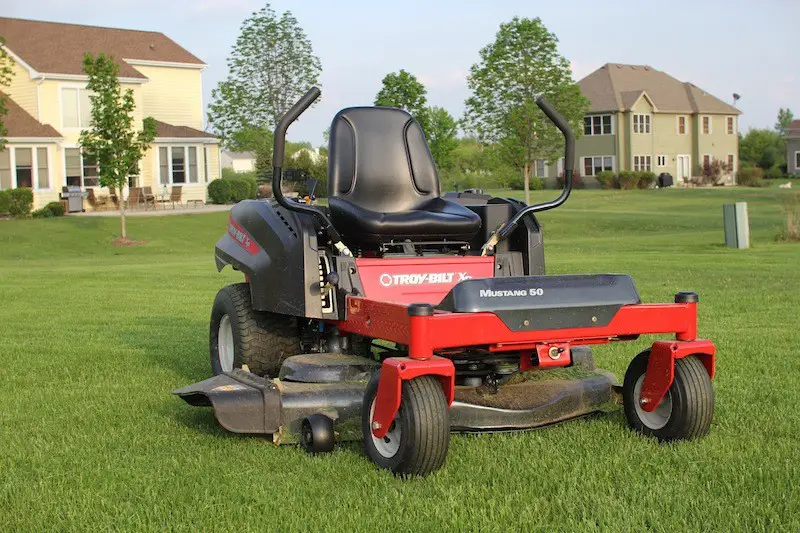
The Troy-Bilt Mustang 50 zero-turn mower offers homeowners an affordable entry point into the world of zero-turn mowing technology. With its 50-inch cutting deck and powerful engine options, this machine delivers efficient lawn care for residential properties. However, like any mechanical equipment, the Mustang 50 has specific maintenance requirements and common issues that owners should understand to maximize performance and longevity.

Understanding how to troubleshoot and maintain the Troy-Bilt Mustang 50 matters because proper care can significantly extend the life of your investment. Sold through major retailers like Lowe’s and Home Depot for $3,000-$3,500 dollars, the Mustang 50 is manufactured by MTD Products and designed for light to moderate residential use. With appropriate maintenance and operation within its design parameters, the machine will provide reliable service for years. This guide helps you identify issues early, perform correct repairs, and make informed decisions about maintenance and component replacement.
The Troy-Bilt Mustang 50 features a robust 50-inch cutting deck, either a Kohler 7000 Series engine (most common at 725cc, 25 horsepower) or Briggs and Stratton Intek V-Twin engine (24 horsepower on some models), and Hydro-Gear EZT-2200 sealed hydrostatic transmissions. Understanding how these components work and what maintenance they require is essential for trouble-free operation. The machine is built for homeowners with 1 to 2 acre properties who mow regularly during the growing season.
This comprehensive troubleshooting guide provides diagnostic steps, practical solutions based on real owner experiences, and maintenance advice to keep your mower running smoothly. Whether you currently own a Mustang 50 experiencing problems or are considering purchasing one, this guide provides the knowledge you need to maintain your mower properly, diagnose issues accurately, and make informed repair decisions.
Table of Contents
1. The Transmission Nightmare: Why One Wheel Loses Power When Hot
After 30 to 40 minutes of mowing, your right wheel gradually slows to a crawl. You find yourself stuck cutting circles in your yard, unable to move in a straight line. You stop the mower, let it cool for 20 minutes, and it works again, until it does not. This is the signature failure mode of the Hydro-Gear EZT-2200 transmissions that power the Mustang 50, and it is devastatingly common around 300 hours of use. This single problem defines the ownership experience for many Mustang 50 owners and represents the most expensive potential repair you will face.
The technical reality behind this problem involves understanding how the transmission system works. The Mustang 50 uses sealed, supposedly maintenance-free hydrostatic transmissions mounted on each rear wheel. These integrated pump-and-motor units contain hydraulic fluid that transfers engine power to wheel rotation. When the fluid degrades or leaks, when internal seals wear down, or when the unit overheats from insufficient cooling, the transmission loses pressure. The symptoms are progressive in nature. First you notice slight sluggishness when the transmission gets hot, then one side becomes noticeably weaker than the other, finally culminating in complete power loss on one wheel after brief operation.
One owner described the experience perfectly: “I start up my Mower and Mow for approximately 30 to 40 Minutes Max and my Left Wheel Gradually loses Power until it slows to a crawl. If I cut it off and let it sit for a while and cool off it goes back to normal until it gets hot again. I usually mow half of my yard, weedeat while the mower sits and cools off, then I finish up.” Another owner reported: “After about 25 minutes the trans box gets HOT. Like real hot. The right side will not move very good.” Forum experts who have seen this problem repeatedly confirmed the grim prognosis: “At 300 hours it is a faulty unit from the word go.” Multiple users sold their mowers rather than face the repair costs, with one owner losing $300 after owning the machine just three weeks.
Diagnosing Transmission Failure
Start your diagnosis by checking if both drive release rods located behind the seat are fully pushed in. This is a common mistake after manually moving the mower, and having these rods pulled out will cause the exact symptoms of transmission failure. Verify the drive belt is intact and properly tensioned. If the problem occurs only when the transmission housing is hot to the touch, and cooling restores function temporarily, you are facing transmission degradation rather than a simple adjustment issue. Listen carefully for unusual whining noises coming from the affected wheel. Check for fluid leaks around the seals, though this is difficult on sealed units that were not designed to be serviced.
The Harsh Truth About Solutions
These transmissions are marketed as sealed and non-serviceable, though some determined owners have managed fluid changes by inverting the unit and accessing the vent cap. The recommended fluid is 20W-50 motor oil or Type F transmission fluid. However, if metal particles have contaminated the fluid, which indicates internal wear of components, a fluid change merely delays the inevitable failure. The replacement part number is 618-04431A, costing between $650-$850 plus $200-$400 in labor charges. Given that used Mustang 50 mowers sell for $900-$1,500, this repair often exceeds the mower’s current market value. When one transmission fails, you should expect the other side to follow within a year due to similar wear patterns and usage.
Prevention Strategies
Clean the transmission housing and cooling fins two to three times per mowing season to maximize heat dissipation. Ensure the fan on the transmission pulley is intact and spinning freely. Avoid aggressive zero-turn maneuvers at high speed, which generate excessive heat and stress the transmissions. Never operate the mower if you suspect low fluid levels. The brutal reality that owners must accept: these EZT-2200 transmissions are designed for 500 to 800 hours maximum, and no amount of preventative care will transform them into commercial-grade units rated for 2000 plus hours. The same transmission appears in Cub Cadet ZT1 models and budget Husqvarna units with identical failure patterns documented across multiple brands.
2. Engine Problems: When Your Kohler or Briggs Will Not Cooperate
The Mustang 50 ships with three engine options that each present distinct failure modes. The Kohler 7000 Series is most common at 725cc and 25 horsepower. Some models feature the Briggs and Stratton Intek V-Twin at 24 horsepower. Budget variants may have Troy-Bilt branded engines. Understanding which engine powers your specific mower is critical because the troubleshooting approaches differ significantly between manufacturers.
The Kohler Fuel Solenoid Plague
If your Kohler-equipped Mustang starts with starting fluid but dies immediately, or cranks endlessly without firing, suspect the fuel shutoff solenoid. This represents the single most common Kohler problem. This small electronic valve located under the carburetor fuel bowl should click audibly when you turn the key on and off. When it fails, which often happens in a temperature-dependent manner, fuel cannot enter the carburetor bowl and the engine will not run.
Testing is straightforward and can be performed by any owner. Cycle the ignition key while listening carefully for the clicking sound. Check voltage at the solenoid terminals using a multimeter, which should read 12 volts when the key is in the on position. If voltage is present but no clicking occurs, the solenoid has failed and requires replacement. Replacement costs $15-$30 and represents an easy do-it-yourself fix for mechanically inclined owners. Some owners report the solenoid fails when hot but works properly when cold, creating intermittent starting issues that baffle diagnosis until the pattern becomes clear.
The second Kohler vulnerability is ignition coil heat failure. The engine runs beautifully when cold, then after 20 to 30 minutes of operation, loses power dramatically or dies completely. Cool the engine down, and it springs back to life as if nothing was wrong. Kohler engines use dual ignition coils that can fail independently, but manufacturer guidance recommends replacing both coils simultaneously to prevent repeat failures. Cost runs $100-$120 for the pair. Test by disconnecting the kill wire from each coil individually and checking for spark when the engine exhibits symptoms.
The Briggs and Stratton Valve Guide Disaster
Briggs engines, particularly the 2004 to 2005 24 horsepower ELS models, suffer from a catastrophic design flaw involving valve guides that walk out of position when the engine overheats. This causes heavy oil consumption of one quart per mowing session, smoking from the exhaust, loss of power, and eventually bent push rods that require major repairs. The root cause traces to an air filter system that allowed dirt to bypass the paper element, accelerating engine wear and overheating conditions.
Diagnosis involves checking oil consumption rates carefully, inspecting for blue smoke from the exhaust during operation, and most definitively, removing valve covers to check for push rod damage or valve guide movement. Briggs issued redesigned filters with improved sealing to address this problem, but engines already damaged require professional head replacement at $200-$400 or complete engine replacement at $800-$1,200. One owner reported spending $800 on blades in one year due to sandy soil conditions, but Briggs engine problems can cost even more than that when major repairs become necessary.
Prevention for Both Engine Types
Prevention centers on fanatical cooling system maintenance. Grass clippings pack into cooling fins with startling speed, creating insulation that prevents proper heat dissipation. Remove the engine shroud every 25 hours of operation and thoroughly clean all cooling fins on the cylinder heads and engine block. Many owners mow for an entire season without doing this simple maintenance task, creating the overheating conditions that destroy expensive components. Use 89 octane fuel to reduce vapor lock issues on Kohler engines. For Briggs engines, verify the air filter seals properly by checking the intake boot for accumulated dirt that indicates bypass is occurring.
3. Electrical Gremlins: Why Your Mower Clicks But Will Not Start
Few experiences frustrate more than turning the key to hear clicking sounds but see no action from the starter or engine. The Mustang 50 electrical system presents a maze of safety interlocks, corroded connections, and failure-prone components that challenge even experienced owners. Understanding this system and its common failure points can save hours of frustration and unnecessary parts replacement.
The Battery Voltage Trap
Many owners replace the PTO clutch, solenoid, and PTO switch while chasing blade engagement problems, only to discover the root cause was insufficient battery voltage all along. The PTO clutch requires 12 volts minimum to engage properly, with 12.6 volts, representing a fully charged battery, being ideal. A battery reading 12.2 volts might provide enough power to start the engine but will not reliably engage the PTO clutch. Test by measuring voltage directly at the clutch connector with the PTO engaged. Anything below 12 volts indicates charging system problems or battery degradation requiring attention.
Battery issues cascade through the entire electrical system, creating multiple symptoms that appear unrelated. Check battery voltage at rest, which should read 12.6 volts when fully charged, then check again with the engine running, which should read 13.5 to 14.5 volts if the charging system functions properly. The voltage regulator, which is a small aluminum box on the engine backing plate near the oil filter, commonly fails on these mowers. It receives AC voltage from the stator through two outer wires and outputs DC voltage through the center wire. Replace it for $30-$60 if charging voltage is absent despite a good battery.
The Safety Switch Labyrinth
The Mustang 50 incorporates multiple safety switches connected in series: the seat switch located under the seat frame, the parking brake switch near the brake control, the PTO switch on the console, and neutral switches at the base of each control lever. Any single switch failure prevents starting or causes unexpected shutdowns during operation. One owner reported spending money replacing the solenoid, PTO switch, and PTO clutch, only to discover the battery voltage was the actual problem all along.
Systematic testing involves bypassing each switch individually with a jumper wire for diagnostic purposes only. Never bypass safety switches permanently, as they exist to protect operators from injury. The seat switch should show continuity when weight is applied to the seat. The parking brake switch should show continuity when the brake is engaged. Control lever switches should show continuity in neutral position only. Clean all connections with electrical contact cleaner and apply dielectric grease to prevent corrosion. Individual switches cost $10-$30 each and are relatively easy to replace.
The 20-Amp Fuse Mystery
Some owners report repeatedly blowing the 20-amp fuse located near the battery. This indicates a short circuit somewhere in the wiring harness, often from wires pinched during assembly or service. One user discovered the problem only appeared after performing spindle blade work when a wire had been pinched when reassembling components. Trace the circuit systematically, looking for bare wires or damaged insulation where the protective covering has worn through. Never replace a blown fuse with a higher-amperage fuse, which eliminates the safety protection the fuse provides.
The starter solenoid deserves special attention in electrical diagnosis. Located near the battery, it should click audibly when you turn the key. If clicking occurs but the starter does not crank the engine, test voltage at both large terminals, which should read 12 volts. Verify the solenoid grounds properly to the frame through a clean metal-to-metal connection. Check that the small trigger wire receives 12 volts when the key turns to the start position. Replacement costs $20-$40 and represents a straightforward swap that most owners can complete themselves.
4. Cutting Deck Problems: Uneven Cuts and Rapid Blade Wear
Your new blades leave strips of longer grass between cutting passes. One side cuts noticeably lower than the other. The deck vibrates violently during operation. Welcome to the stamped-steel deck world of budget zero-turns, where precision takes a back seat to economy and keeping manufacturing costs low.
The Spindle Length Mystery
Multiple owners discovered their uneven cutting traced directly to mismatched spindle lengths, a manufacturing inconsistency that should not occur but does. One user reported: “When I cut grass, it leaves a strip of grass longer than the rest. Are all three spindles supposed to be the same length? It seems that the spindle on the right side of the mower is much shorter than the center and left ones.” This manufacturing inconsistency creates different blade heights even when the deck appears level using standard leveling procedures. Verify all three spindles measure equal length from the mounting surface to the blade mounting point. Replacement spindle assemblies with part numbers 918-04125B or 918-06981 cost $80-$130 each.
Deck Leveling Procedure
Park the mower on a completely flat surface such as a concrete driveway or garage floor. Inflate all tires to proper pressure, which is 14 PSI for front tires and 10 to 12 PSI for rear tires. Measure blade tip height from the ground on all six blade tips, since three blades provide two measurement points each. Side-to-side measurements should be within one-eighth inch. Front-to-rear measurements should have the front edge one-eighth to one-quarter inch lower than the rear for proper grass discharge. Adjust using the deck hanger bolts at each corner of the deck. One critical note: do not over-tighten deck mounting hardware, which can warp the stamped-steel deck and create permanent unevenness that cannot be corrected.
The Sandy Soil Blade Apocalypse
One owner’s experience illustrates an extreme case of rapid blade wear: “I have a 1 year and 2 week old troy bilt mustang xp 50 zero turn, it has 20 hours of mow time on it, this evening it will have its 10TH set of blades! I have put 800 dollars worth of blades on this mower in 1 year.” His Arkansas property had heavy sand content in the soil, causing a sandblasting effect that wore one inch off each blade tip every 2 to 3 mowing sessions. The Mustang 50 requires specific 17.3-inch blades with a 6-point star center hole, identified by part numbers 942-04053C or 942-04053B. Only original equipment manufacturer MTD blades fit this pattern perfectly. Standard blades cost $15-$25 each, requiring three blades per complete change.
Spindle Bearing Failure Symptoms
Rock each blade up and down with the drive belt removed from the spindles. Any vertical play whatsoever indicates worn spindle bearings that need replacement. Listen carefully for rough grinding sounds when manually spinning the blades. Failed bearings cause vibration during operation, poor cutting quality, and eventually spindle shaft damage if not addressed. Replace the entire spindle assembly rather than attempting to replace bearings individually. The labor and press requirements make do-it-yourself bearing replacement impractical for most owners. The vibration from failed bearings also causes accelerated deck belt wear and idler pulley failure.
Deck Maintenance Requirements
The deck requires aggressive maintenance to prevent problems. Scrape the underside after every use in wet grass conditions, or weekly at minimum in normal conditions. Grass buildup weighs several pounds, throws blade balance off, and promotes rust formation on the steel surface. Some owners spray silicone lubricant or cooking spray on the clean deck underside to prevent grass from sticking and building up. Sharpen blades every 25 hours of operation or when cutting performance degrades noticeably. An unbalanced blade creates vibration that accelerates bearing wear dramatically. Use a blade balancer after sharpening to ensure proper balance before reinstalling blades.
5. Belt Problems: The 0.2-Inch Difference That Matters
Your new belt lasts 2 to 3 hours before breaking or slipping off the pulleys. You have replaced it three times already. The repair shop charges $100 or more each time. Welcome to the world where belt size precision determines success or failure in ways that seem absurd but are absolutely real.
One owner solved mysterious transmission problems by discovering his replacement drive belt measured 57.5 inches instead of the specified 57.3 inches. He reported: “Swapped the belt for the 0.2 inch shorter belt and everything worked. I do believe I need to change the oil in the transaxle though.” An expert replied: “That is incredible that 0.2 inches made the difference between the belt working or not working.” This tiny difference, barely noticeable to the eye, creates improper tension that causes slipping, overheating, and premature failure of the belt and related components.
The Deck Belt Installation Challenge
The PTO clutch mounted on the engine crankshaft makes deck belt replacement difficult. The part number is 954-04044A, and the belt measures 134 inches by one-half inch. Some owners report needing to temporarily loosen or remove the PTO clutch to route the belt properly around all pulleys. Verify correct routing using the mower deck diagram found in your owner’s manual or online. Incorrect routing causes belts to jump off pulleys during operation, which can be dangerous. Check that all idler pulleys spin freely without wobble or rough spots. Failed idler pulley bearings, with part number 756-04129B costing $35-$45 each, cause rapid belt wear even when the belt itself is the correct size.
The Tension Spring Mystery
The belt tensioner system uses a spring-loaded idler arm to maintain proper tension throughout the belt’s operating range. A weak or missing spring causes insufficient tension, resulting in slipping and premature wear. With the engine turned off, manually operate the idler arm using a three-eighths inch ratchet extension inserted in the square hole provided. It should move smoothly with significant spring resistance. If movement is too easy or too difficult, inspect the spring and idler arm pivot for damage or wear.
One critical installation note: never overtighten deck mounting bolts, which pulls the deck at an angle and creates belt misalignment. The deck should hang level from its mounting points with slight clearance for movement. Overtightening is a common mistake when reassembling components after belt replacement, creating the very problem you are trying to solve. Users report drive belt issues after hitting obstacles with the deck. One stated: “The stationary pulley bracket welds break. Troybilt said it was abused why they did not repair.” This points to structural weakness in the deck design. The stamped steel and welded brackets cannot withstand significant impact. Inspect welds on all pulley mounting brackets after any deck strike against rocks, stumps, or other solid objects. Complete deck rebuild kits containing belts, pulleys, spindles, and blades run $200-$300 and represent a good value when multiple components need replacement simultaneously.
6. Fuel System Failures: The Ethanol Enemy
Your mower runs for 10 to 12 seconds then dies. Adding starting fluid provides brief life, then immediate stalling returns. New spark plugs do not help. Fresh gas does not help. You are facing the modern small engine plague: ethanol fuel destroying your fuel system components from the inside out.
The carburetor is ground zero for ethanol damage. Modern pump gas contains 10 percent ethanol, designated as E10, which absorbs water from air, separates from gasoline, and forms a corrosive mixture that leaves gummy varnish throughout the fuel system. Expert consensus states ethanol fuel degrades in 30 days maximum, often sooner in hot summer conditions. One service technician noted: “Today’s ethanol gasoline turns to junk and garbage quickly. Oxygen and water break down organic compounds, forming gum and varnish in carburetor and lines. 70 percent of small engine repairs are fuel-related.”
The Complete Carburetor Cleaning Procedure
Remove the air filter housing completely. Disconnect throttle linkage after photographing the configuration so you can reconnect it properly. Disconnect all fuel lines. Remove the carburetor from its mounting studs. Remove the fuel bowl by loosening the center bolt carefully. Inspect for rust, varnish, or caramelized fuel inside the bowl. Remove all jets and passages. Soak components in carburetor cleaner for 10 to 15 seconds, performing this process three separate times. Use welding tip cleaner wires to clean all passages and jets mechanically, as carburetor spray alone cannot remove hardened varnish deposits. Blow out all passages with compressed air. Replace all gaskets using a rebuild kit that costs $20-$35. Full carburetor replacement runs $80-$150 for original equipment manufacturer quality, though many aftermarket carburetors disappoint with poor quality and fit.
The Fuel Pump Failure Pattern
The engine dies when you engage the blades, or runs fine at idle but sputters under load. This indicates the fuel pump cannot maintain adequate pressure when the engine demands more fuel under working conditions. The vacuum-operated pulse fuel pump receives pressure pulses from the engine crankcase through a small hose. Test by disconnecting the fuel output line and cranking the engine. Fuel should pump steadily and forcefully. Replace the pump for $20-$40 if output is weak or absent.
Vapor Lock from Clogged Vents
Your mower runs 20 minutes then dies. The problem recovers when you remove the gas cap, then dies again after recapping. The fuel tank vent system is failing to allow air to replace fuel as it flows to the engine. Newer models from 2012 onward use EPA-compliant non-vented caps with either a vent line to the air intake or a charcoal canister vapor recovery system. The charcoal canister becomes contaminated if liquid fuel enters it, turning into a charcoal brick that blocks venting completely. Test by running with the gas cap loose temporarily only, as this creates a fire hazard. If this solves the problem, replace the gas cap for $10-$20 or the charcoal canister for $20-$40.
The Only Real Fuel Solution
Use ethanol-free fuel exclusively if available in your area, or buy only from major brand stations such as Shell, BP, Sunoco, or Phillips 66 where fuel turnover is high and product is fresh. Never purchase from discount stations where fuel may be 30 or more days old before you even buy it. Add fuel stabilizer immediately when fueling the mower, not later when you remember. Use fuel within 30 days maximum. For storage between seasons, either run the carburetor completely dry or fill the tank completely with stabilized fuel. Never store with a partially filled tank, which creates the worst possible conditions for fuel degradation. Pre-mixed small engine fuel from manufacturers like TruFuel costs $20-$25 per gallon but eliminates ethanol problems completely and can be worth the investment for reliable operation.
7. Brake, Steering, and Control Issues: When Your Mower Will Not Respond
The parking brake, which is integrated into the lap bar controls on the Mustang 50, should engage automatically when you spread the control levers apart. If your mower rolls on a slope with levers spread, adjust the brake linkage per the service manual instructions. Worn brake pads require replacement but represent one of the less common problems owners face with this mower.
Steering problems typically trace to transmission issues covered in the transmission section, or to control linkage adjustment needs. If one control lever feels noticeably stiffer than the other, lubricate the pivot points thoroughly and check for binding in the linkage. If the mower will not drive straight despite equal control lever position, adjust the control rod lengths by turning the threaded ferrules that connect the linkages. Both levers should produce equal ground speed when pushed fully forward. The mower pulls toward whichever side is weaker in drive power.
Unequal tire pressure causes steering drift more than any other single factor. Check all four tires and inflate to specifications marked on the tire sidewall. Front caster wheels should pivot freely without resistance. Pack grease into the caster bearings every 10 hours of operation using a grease gun on models equipped with grease fittings.
8. Minor Issues: Tires, Frame, and Other Concerns
The Mustang 50 frame carries a limited lifetime warranty, which represents one of its few bright spots in the overall package. Significant frame cracks are rare, but deck warping occurs commonly and creates ongoing problems. Multiple repair experts noted: “These units are manufactured by a discount store brand, and they are often considered one of the least reliable mowers available. One common issue is that the mower deck tends to warp over time, which happens relatively quickly. Very few mechanics can straighten these decks, so typically, the mower deck pan needs to be replaced.” Deck shell replacement costs $400-$600.
The stamped steel deck construction, while adequate for its price point, cannot match fabricated deck durability found on higher-end models. Competitors like Cub Cadet Ultima ZT1 use 11-gauge fabricated steel for their 50-inch decks, providing better impact resistance and flatness retention over years of use. The Troy-Bilt thinner stamped deck warps from normal use, impacts, and stress over time in ways that fabricated decks do not.
Tire wear depends heavily on your zero-turn technique. Aggressive pivoting at high speed shreds rear tires rapidly. Slow your pivot speed to extend tire life significantly. Replacement rear tires cost sixty to $100 each. Front caster wheels run $30-$60 each. Check and maintain proper tire pressure to ensure even wear and proper tracking across your lawn.
9. Maintenance That Actually Prevents Problems
The single most important maintenance task is cleaning cooling systems throughout the mowing season. Remove the engine shroud every 25 hours minimum, or every 10 hours in dusty conditions, and use compressed air or a shop vacuum to remove all grass clippings and debris from engine cooling fins and transmission housings. This simple task prevents the overheating that destroys expensive components like ignition coils, valve guides, and transmission seals.
The second critical task is fresh fuel discipline. Never let fuel sit in the carburetor longer than 30 days under any circumstances. Add stabilizer immediately when fueling, not later when you remember. For off-season storage, either run the carburetor completely dry or fill the tank completely with stabilized fuel. Empty fuel from the tank, run the engine until it dies from fuel starvation, then remove the fuel bowl from the carburetor and clean any residue you find.
Change engine oil every 50 hours without exception. Use SAE 30 in warm weather or 10W-30 for variable temperatures. The Kohler 7000 Series holds 2.0 quarts. Synthetic oil provides better protection against heat and wear but costs more. Replace the oil filter, which costs $8-$15, with every oil change.
Replace the air filter every 100 hours or annually, whichever comes first. Clean the foam pre-cleaner every 25 hours by washing in mild detergent, drying completely, then applying light engine oil before reinstalling. A clogged air filter creates a lean fuel mixture that causes overheating and power loss that can damage the engine.
Sharpen blades every 25 hours or when cutting quality degrades noticeably. Use a blade balancer after sharpening, as an unbalanced blade causes vibration that destroys spindle bearings prematurely. Replace blades when worn short or when sharpening removes so much material that they will not balance properly. Keep a spare blade set on hand for quick changes.
Inspect and adjust the deck belt every 50 hours of operation. Look for cracks, glazing, or fraying on the belt surface. Check all idler pulleys for smooth rotation without wobble. Replace the belt at the first sign of damage, as a broken belt leaves you stranded mid-mow with an incomplete lawn.
Store the mower properly for winter. Change the oil before storage, not in spring when you want to start mowing. Clean the mower completely, removing all grass clippings and debris. Either drain all fuel completely or fill the tank completely with stabilized fuel. Disconnect the battery, charge it fully, and store in a cool location. Charge the battery monthly during storage months. Inflate tires to proper pressure to prevent flat spots from developing during storage.
10. The Hard Truth About Value and Alternatives
Understanding the Troy-Bilt Mustang 50 position in the market changes how you should approach ownership decisions. At $3,000-$3,500 dollars, it represents the budget entry point for 50-inch residential zero-turns. It uses the same Hydro-Gear EZT-2200 transmissions as competitors like Cub Cadet Ultima ZT1, priced at $3,500-$3,750, and budget Husqvarna models priced at $3,800-$4,200. These transmissions are rated for 500 to 800 hours maximum. This is adequate for homeowners mowing 1 to 2 acres weekly, which translates to 30 to 60 hours annually, who will get 8 to 13 years of service. However, these transmissions are inadequate for properties of 3 or more acres or frequent use exceeding 100 hours annually.
The key insight: Troy-Bilt Mustang 50 problems are not unique failures requiring recalls but rather design limitations shared across the entire budget residential zero-turn category. Commercial-grade zero-turns cost $6,500-$9,000 or more but use ZT-2800 or ZT-3100 transmissions rated for 2000 to 5000 hours, fabricated reinforced decks, heavy-duty frames, and components designed for 300 to 900 hours of annual use.
The Mustang 50 makes sense if your property is 1 to 2 acres maximum, you mow once weekly during a 30-week season totaling 30 to 60 annual hours, your terrain is flat or gentle slopes only, and you understand you are buying a 7 to 10 year appliance rather than a long-term investment. The mower will serve you adequately within these parameters if you perform fanatical maintenance and address problems promptly.
Consider alternatives if your property exceeds 3 acres, if you mow 2 or more times weekly, if your budget can stretch to $4,000-$5,500, or if you value dealer support and parts availability highly. Spending an extra $500-$1,500 often yields exponentially better durability and longer component life. The Toro TimeCutter series, priced at $4,000-$4,500, offers superior suspension and fabricated decks. Entry-level commercial mowers like the Hustler Raptor SD, priced at $4,500-$5,000, provide dramatically longer component life.
The service network presents serious concerns for Troy-Bilt owners. Multiple owners reported service centers refusing Troy-Bilt warranty work due to non-payment disputes with MTD Products. One owner stated: “When I arrived at my nearest service center which is 30 miles from my home, I was promptly informed that the shop was no longer a Troy-Bilt service center because they were tired of not being paid.” This contrasts sharply with brands like John Deere or commercial manufacturers with robust dealer networks and reliable warranty support.
11. When to Repair Versus Replace
The critical decision point arrives around 300 hours when transmission failure becomes likely. With replacement cost running $1,000-$1,400 including labor, and used Mustang 50 mowers selling for $900-$1,500, repair economics become highly questionable. If your mower reaches 400 to 500 hours without transmission failure, consider yourself fortunate, but expect the failure to occur soon based on the documented pattern.
Calculate your annual usage by multiplying mowing time per session by the number of sessions per year. At 1 hour per week for 30 weeks, you are accumulating 30 hours annually. Your 300-hour threshold arrives in year 10. At 2 hours twice weekly for 35 weeks, you are accumulating 140 hours annually, reaching 300 hours in year 2 or 3, likely still under the warranty period.
Consider repair costs in aggregate rather than individually. If you have already spent five hundred dollars on various repairs and the transmission fails, you are facing $1,000-$1,400 more in costs. For $1,500-$1,900 total, you could have purchased a better quality mower initially. One owner’s experience summarized it perfectly: “I did sell it as is for nine hundred dollars. Man said he knew another man who can fix it. I am tickled to death it is gone. I did lose $300 on the deal but I did LEARN A LESSON.”
Conclusion
The Troy-Bilt Mustang 50 delivers exactly what it promises: the minimum viable product in the zero-turn mower category. It is not a bad mower when evaluated against its price point and intended purpose. Rather, it is a budget mower with budget limitations that are predictable and manageable if you understand them fully. Success with this machine requires matching the tool to the task, performing obsessive maintenance, and understanding you are operating an appliance with a defined lifespan rather than a long-term investment piece of equipment.
The hydrostatic transmission issue dominates the ownership experience for many Mustang 50 owners. Multiple forum experts who have extensive experience with these mowers confirmed the pattern: “At 300 hours it is a faulty unit from the word go.” This is not a defect requiring a manufacturer recall. Rather, it represents a design limitation of EZT-class transmissions used across all budget residential zero-turns. You cannot maintenance your way to commercial-grade durability with these components. The transmission will eventually fail, and the repair cost will challenge the mower’s economic viability at that point.
Your success with the Troy-Bilt Mustang 50 depends entirely on honest assessment of your needs and usage patterns. If you are mowing 1 acre weekly, maintaining the mower religiously according to the schedule outlined in this guide, operating on flat terrain without extreme demands, and accepting a 7 to 10 year lifespan, the Mustang 50 serves adequately for its price point. If you are mowing 3 to 4 acres, operating on hills and slopes, or expecting 15 or more years of service, you have chosen the wrong tool for your needs and will face expensive disappointment as components fail.
The maintenance tasks outlined in this guide are not optional suggestions. They are mandatory requirements for achieving even the baseline durability these components were designed to provide. Cleaning cooling systems every 25 hours prevents the overheating that destroys ignition coils, valve guides, and transmission seals. Using fresh fuel with stabilizer prevents the carburetor problems that account for 70 percent of small engine repairs. Changing oil every 50 hours prevents accelerated engine wear. Sharpening and balancing blades prevents spindle bearing failure. Each of these tasks takes minutes but prevents repairs costing hundreds of dollars.
When problems do occur, this guide provides the diagnostic steps and solutions based on real owner experiences. Start with the simplest explanations before replacing expensive components. A mower that will not start may only need a twenty-dollar fuel solenoid rather than a complete carburetor. A mower with weak drive may need a correctly sized belt rather than transmission replacement. A mower cutting unevenly may need deck leveling rather than new spindles. Systematic diagnosis saves money and time.
The real question is not whether the Troy-Bilt Mustang 50 is reliable in absolute terms. The real question is whether you are using it within its design parameters and prepared for the inevitable component replacements that define budget zero-turn ownership. If you purchased this mower understanding it as a 500 to 800 hour appliance for light residential use, and you maintain it accordingly, it will serve your needs adequately. If you expected commercial-grade durability from a budget residential mower, you will be disappointed, but that disappointment stems from unrealistic expectations rather than product failure.
For future purchase decisions, consider spending the additional $500-$1,500 for entry-level commercial equipment if your usage patterns or property size exceed the Mustang 50 design parameters. The exponential increase in component durability and longevity makes that additional investment worthwhile for many homeowners. However, if the Mustang 50 matches your needs and you perform the required maintenance, it represents adequate value at its price point in the zero-turn mower market.