
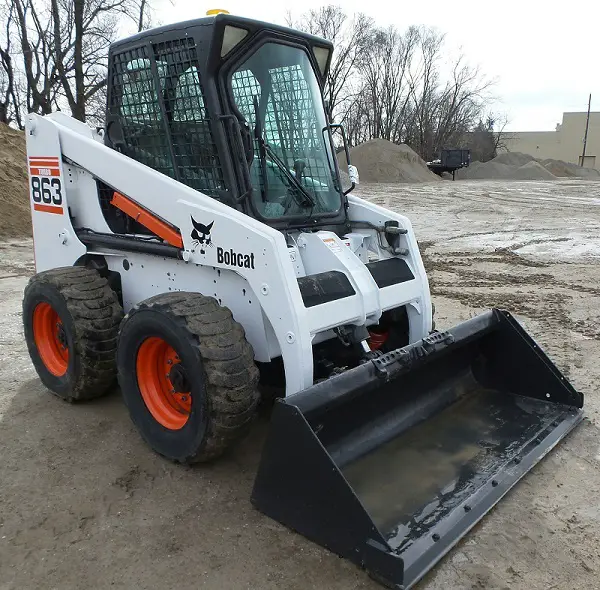
The Bobcat 863 skid steer loader is a mid-sized powerhouse that has earned its reputation in the construction and agricultural industries. Equipped with a robust Deutz BF4M1011F four-cylinder diesel engine (approximately 73 horsepower in turbo models), this machine is prized for its versatility, power, and durability. The 863 series, which includes the standard 863, the 863G (G-series), and the 863 Turbo, has been a popular choice for contractors, landscapers, and farmers who need reliable equipment for earthmoving, material handling, and various attachment operations.

Despite its impressive capabilities, the Bobcat 863 is not without its challenges. Like any heavy equipment that endures demanding work conditions, the 863 series has several recurring issues that owners commonly encounter. These problems range from hydraulic system failures and engine starting difficulties to electrical malfunctions, steering quirks, and cooling system concerns. Understanding these common problems is essential for anyone who owns or operates a Bobcat 863, as early diagnosis and proper maintenance can prevent minor issues from escalating into costly repairs or extended downtime.
The Bobcat 863 features a hydrostatic drive system that powers both movement and loader operations through hydraulic pressure. This sophisticated system, while efficient and powerful, requires careful maintenance and attention to detail. The machine uses Rexroth hydrostatic drive motors in many units, coupled with a complex network of pumps, valves, cylinders, and hoses that must all work in harmony. When problems arise in this system, they can significantly impact the machine’s functionality, sometimes rendering it immobile or unable to perform basic loader functions.
The purpose of this comprehensive troubleshooting guide is to help Bobcat 863 owners and operators identify, diagnose, and resolve the most common problems affecting their machines. This guide provides practical solutions based on actual field repairs and expert recommendations. Whether you are dealing with hydraulic leaks, hard starting conditions, overheating issues, electrical faults, or steering problems, this guide will walk you through the symptoms, causes, and step-by-step solutions for each category of concern.
This guide covers six major problem areas: hydraulic system failures, engine stalling and starting issues, overheating and cooling system problems, electrical system faults, control and steering problems, and general reliability concerns. Each section provides detailed troubleshooting steps that progress from simple checks to more complex repairs, allowing you to systematically diagnose and address issues. While some repairs can be performed by mechanically-inclined owners, others may require professional assistance or specialized tools. Always consult your official Bobcat service manual for detailed repair procedures, and practice proper safety protocols when inspecting or servicing your machine.
Table of Contents
1. Hydraulic System Failures
Hydraulic system issues rank among the most frequently reported problems with the Bobcat 863. Owners have encountered everything from persistent leaks and diminished lift capacity to malfunctioning auxiliary hydraulics that refuse to power attachments. Given that the 863 relies on hydrostatic drive motors and hydraulic cylinders for both movement and loader arm operations, any problem in this system can severely compromise the machine’s functionality. The hydraulic system on the Bobcat 863 is the lifeblood of its operation, controlling not just the lift and tilt functions, but also the drive power to each wheel and the auxiliary circuits that power various attachments.
Symptoms and Common Hydraulic Issues
Hydraulic leaks represent one of the most visible and common problems owners face. Many 863 operators have reported oil leaks at various connection points throughout the machine, including hoses, control valve seals, cylinder seals, and wheel axle seals. Some users have specifically noted leaking spool valve seals in the control valve block or wheel axle hub seals that allow oil to drip onto the rim. Lift cylinders and tilt cylinders can develop seal leaks that become evident through fluid visible on the cylinder rod or a noticeable loss of holding pressure when the bucket or attachment is positioned at height.
Weak or slow hydraulics present another frustrating issue. The loader arms or bucket may lift or tilt sluggishly, or they may lack the power needed for heavy loads. One forum member described their sluggish 863 where both drive sides were slow to respond, especially at lower engine RPM. When the machine struggles to move or the hydraulics appear to bog down under load, this typically indicates either low hydraulic charge pressure or flow restriction issues somewhere in the system.
Auxiliary hydraulic malfunctions create specific challenges for attachment operation. Some users have encountered situations where their auxiliary circuit, which powers attachments such as grapples or augers, behaves erratically. A common scenario involves an attachment that moves in one direction but refuses to function in the opposite direction. For instance, a grapple might open readily but fail to close, or vice versa. In these cases, both green auxiliary lights might illuminate on the control panel, yet the function fails when the operator triggers it. This symptom usually points directly to a solenoid valve issue within the auxiliary hydraulic circuit.
In severe cases, complete hydraulic failure can occur, resulting in no drive function and no loader response whatsoever. One telltale indication of serious hydraulic problems is when the machine free-rolls when shut off, which should not happen due to the hydrostatic resistance that normally holds the machine in place. One owner described a frightening situation where their 863 rolled off a trailer when the engine was off, indicating a serious internal leak or bypass within the hydrostatic motors. A hydraulic alarm on the Bobcat BOSS display with automatic shutdown can also occur if charge pressure is lost completely.
Troubleshooting and Solutions
The first step in addressing any hydraulic problem should always be checking the hydraulic fluid level and filter condition. Low oil level or clogged hydraulic filters can cause cavitation and result in weak hydraulic performance throughout the system. If your Bobcat 863 exhibits slow lift or sluggish drive response, verify that the fluid level is correct and change the hydraulic filter if it is due for replacement. A forum expert noted that even with some air in the system after service, the wheels should respond quickly if pressure levels are normal. A clogged case drain filter can create harmful back-pressure, and one user discovered black contaminated material in their case drain filter, indicating internal wear debris circulating through the system. Replacing dirty filters and contaminated fluid often restores proper function if no major component has failed.
Inspecting for leaks and repairing seal failures should be your next priority. Identify where oil is escaping from the system. For leaking cylinder seals, a seal rebuild kit provides the solution, and these kits are readily available from Bobcat dealers and aftermarket suppliers. Restoring cylinder seals stops the drips and restores holding strength to the cylinders. If an axle hub seal is leaking, you will notice oil on the wheel or inside the chaincase, and replacing that seal becomes necessary. Leaks at the control valve can often be fixed by replacing O-rings or spool seals. One owner shared their experience of replacing spool seals to cure a control valve leak on an 863H. Any damaged hoses should be replaced promptly, as a burst hose under pressure can create dangerous situations and result in complete loss of function.
When dealing with auxiliary hydraulics problems, particularly when an attachment only works in one direction, suspect the electric solenoid valves that control hydraulic flow direction. The Bobcat 863 uses two solenoid coils on the auxiliary hydraulic valve, one controlling each direction of flow. Test the coils using a multimeter to check their resistance. According to service manual specifications, they should read approximately 5 to 8 ohms, whereas a failing coil may read significantly lower. In one documented case, a user measured only approximately 3.6 ohms on both coils, leading them to suspect the coils were defective. Replacing the solenoid coils is a straightforward repair if they prove faulty. Additionally, consider that the valve stems, specifically the spool inside the solenoid assembly, can stick if the machine has sat unused for extended periods. Removing and cleaning the spool valves may restore proper operation without parts replacement.
A helpful diagnostic technique suggested by a Bobcat technician involves swapping the two auxiliary solenoid stems with each other. If the problem reverses itself (for example, the attachment now closes but will not open), this confirms a stuck spool on the problematic side. Cleaning or replacing that stem would then solve the issue. Do not overlook the electrical triggers in this diagnosis. Ensure the handle thumb switch that provides momentary auxiliary control is actually sending power to the solenoids. In one 863G case, the owner found no sound or action in one direction and suspected either the switch or wiring, since high-flow mode would trigger the grapple in one direction but the thumb toggle accomplished nothing. Repairing a broken wire in the joystick or replacing a faulty switch can restore proper auxiliary function.
Testing hydraulic charge pressure becomes critical when the 863 feels weak on drive and loader functions despite having correct fluid levels and no major leaks. The issue might be poor charge pressure from the charge pump that feeds the hydrostatic system. Connect a 500 psi pressure gauge to the charge pressure test port, which is often located where the charge pressure sender attaches. At full throttle, you should observe the specified charge pressure, which is typically in the 150 to 200 psi range depending on your model. Low charge pressure could result from a failing charge pump or a malfunctioning pressure relief valve. Experienced forum users have advised that sluggish response and wheels that continue rolling after releasing controls are abnormal conditions. Every time you move the control lever, even at idle engine speed, the wheels should almost instantly start turning, and when you release the lever, they should stop instantly without coasting. If this is not happening, check charge pressure, filter condition, and oil level immediately. A weak charge pump can affect one side more severely than the other, especially once the hydraulic oil becomes hot and thin. If charge pressure measures below specification, replacing or rebuilding the charge pump, which on many Bobcats is integrated within the main pump stack, becomes necessary.
Hydrostatic drive motor issues represent a common Bobcat 863 complaint involving loss of drive power or the machine rolling when it should remain stationary. The 863 uses two hydrostatic drive motors, often Rexroth motors, that should hold the machine stationary with the engine off. If your 863 free-wheels when the engine is off, as one owner experienced when their machine rolled off a rollback trailer during delivery, this points to internal leakage in the drive motors or an engaged bypass valve. First, check the bypass (free-wheeling) valves on the hydraulic pump. These are small hex-head screws or knobs on each side of the pump used for manually pushing the machine during maintenance or transport. If one was left open or loosened inadvertently, the motors will free-wheel. Tightening those bypass valves snugly, without over-torquing, can restore the hydrostatic holding ability. An expert noted that if those valves are loose, this would allow the motors to free-wheel and cause exactly that symptom.
However, if the bypass valves are properly closed and the machine still rolls or lacks drive power, the drive motor seals may be worn out. Worn hydraulic motor internal seals or rotors will cause low drive torque and the inability to hold pressure, hence the creeping or rolling behavior. In such cases, both drive motors likely need rebuilding or replacement. It is worth noting that the 863 drive motors are generally robust and last thousands of hours when properly maintained. One forum expert commented that contamination and age are what usually destroy them. Ensure your hydraulic oil remains clean, as contaminants can accelerate motor wear dramatically. If a motor is weak, you might observe one side of the machine noticeably slower or weaker after the oil warms up to operating temperature. Short-term troubleshooting can include swapping left and right motors to determine if the problem follows the motor, though this represents a significant undertaking. Ultimately, a hydrostatic repair shop can test and rebuild the motors with new seals and wear components as needed.
Control valve detent sticking has been reported on some Bobcat 863G units with hand and foot controls, manifesting as stiff pedals or sticky hydraulics when attempting to feather the loader arms. If you notice, for example, that the lift pedal is extremely hard to press down for lowering the loader arms, making smooth lowering nearly impossible, the culprit is often a rusty detent ball and spring mechanism in the spool valve. One owner of a 2000-model 863G experienced exactly this issue, where the left boom pedal was hard to push down and would not modulate smoothly. Another member replied that they had seen this problem on an 873 from the same era, and the detent balls in the valve were rusty and binding. This typically occurs in machines with low usage or those stored in damp conditions, where lack of use allows corrosion to develop in the detent mechanism.
The solution involves removing the detent plug or cap from the valve, usually located on the side of the spool valve, and cleaning or replacing the detent balls and spring. After completing this procedure, the pedal action should become smooth again. An important tip: when removing the detent cap, be prepared to catch the small steel balls, as they are under spring pressure and can pop out and become lost. Clean out any rust, apply a small amount of fresh grease, and reassemble the components. In the forum case mentioned, the machine had only approximately 1000 hours when it first experienced the issue due to sitting idle, and a technician fixed it, noting that frequent use actually prevents that rust build-up. If you are mechanically inclined, you can attempt this repair yourself; otherwise, a dealer service department can handle the valve servicing. Also inspect the pedal linkages and pivot points for any binding, as lubricating pivot points or replacing seized pins is a simpler fix if the stiffness originates outside the valve itself.
By systematically checking the hydraulic system components including fluid level, filters, valves, motors, and linkages, you can diagnose most Bobcat 863 hydraulic failures. Many issues are repairable with moderate mechanical skill and effort, and parts such as seal kits and filters are readily available through dealers and aftermarket suppliers. Keeping the hydraulic oil clean and performing regular maintenance tasks like filter changes and prompt leak repairs will prevent many failures and ensure your Bobcat 863 operates with full hydraulic strength for years to come.
2. Engine Stalling or Hard Starting
Engine-related problems on the Bobcat 863 series often manifest as difficult starting, especially in cold weather, intermittent stalling during operation, loss of power under load, or excessive smoke from the exhaust. The Bobcat 863 is typically equipped with a Deutz BF4M1011F four-cylinder diesel engine, an air and oil-cooled powerplant known for strong performance and fuel efficiency. However, this engine has specific maintenance requirements that differ from liquid-cooled engines, and neglecting these needs can lead to reliability issues.
Symptoms of Engine Trouble
Hard starting, particularly in cold conditions, represents one of the most common complaints. Owners sometimes find their 863 extremely difficult to start, requiring either prolonged cranking sessions or even resorting to starting fluid. One user reported that their 2001 Bobcat 863 would not start without ether even on mild temperature days, producing no smoke while cranking and achieving no ignition. This usually points directly to the glow plug system not functioning properly. The Deutz engine in the 863 relies heavily on glow plugs for cold starts, and if these are not heating adequately, a cold engine will crank indefinitely without achieving combustion, as diesel fuel will not ignite properly at low temperatures. In that particular user’s case, they discovered the glow plugs were new but were not receiving power due to a failed glow plug relay. When glow plugs fail completely, you might also notice white smoke during cranking (indicating unburnt diesel) or find that the engine only catches with the assistance of starting fluid.
Stalling or power loss after the engine warms up presents another frequent and frustrating complaint. After approximately 15 to 30 minutes of normal operation, the engine begins to lose power, misfire, or stall when placed under load. For example, one Bobcat 863 owner described that about 20 minutes into use, the machine would bog down and nearly die whenever he attempted to move or pressed the control pedals. If he allowed the machine to sit idle for a few seconds, it would recover temporarily, only to bog down again shortly after resuming work. In his situation, shutting the engine off and immediately restarting would provide one or two minutes of normal operation before the problem returned. This type of symptom pattern often indicates a fuel starvation issue that worsens as the engine and fuel system components heat up to operating temperature. A related scenario involves the engine stumbling and stalling under load while idling normally, which might point to fuel delivery not keeping pace with demand. Sometimes an engine that stalls only on inclines or when the fuel tank reaches certain levels is actually sucking air due to a cracked pickup tube inside the fuel tank. Indeed, the previous owner of that particular machine had a known issue with the fuel pickup and had jury-rigged a temporary fix by running a hose down the filler neck into the tank to bypass the damaged pickup.
Troubleshooting and Solutions
Verifying glow plug operation should be your first step if your Bobcat 863 is hard to start or will not start at all in cold conditions. Turn the key to the glow position and observe if the glow plug indicator light comes on, if your model is equipped with one on the BOSS display. If you receive an error code such as GLO 09 on the display, this indicates a glow plug circuit fault. Test each glow plug for continuity or resistance using a multimeter; a good glow plug typically measures a few ohms. Also test whether voltage is reaching the glow plugs during the preheat cycle by checking at the connection point with the key in the glow position. In the earlier example mentioned, the glow plugs themselves were new but no power was reaching them because the relay had failed. Replacing the glow plug relay or controller solved the no-start issue completely. Do not resort to using ether regularly, as this practice can damage the engine, especially if glow plugs do happen to work, since ether can cause premature ignition and excessive cylinder pressures. Instead, fix the glow system properly by installing new plugs if they are burned out, replacing the relay, and ensuring all wiring connections are clean and tight. Once the glow plug system is functioning correctly, the engine should fire up much more easily even in cold weather.
Fuel delivery inspection becomes critical for diagnosing stalling and power-loss problems. Suspect a fuel flow restriction or air leak somewhere in the fuel supply system. Start by checking the fuel filters. A clogged fuel filter or gelled fuel in winter conditions can starve the engine as fuel demand increases under load. Replace the fuel filter if you have any doubt about its condition. Also check any in-tank screens or water separator if your machine is equipped with one. A forum poster who experienced warm-weather stalling eventually discovered debris accumulated in the tank and a partially plugged pickup causing fuel starvation. Replacing the filter and thoroughly cleaning the tank solved similar issues on other machines.
The fuel pickup tube and tank vent represent known weak points on the Bobcat 863, especially on older units. The pickup tube inside the fuel tank can develop cracks or pinholes over time, which allow air to enter the fuel system and reduce fuel flow, particularly when the fuel level drops below a certain point. Signs of a damaged pickup tube include the engine running fine when the tank is full but stalling when fuel level drops below a certain point, or the engine might run for a set duration (such as one minute) and then starve due to air ingestion. Indeed, one anecdote humorously noted that an 863 would run exactly one minute on a quarter-gallon tank before dying, underscoring the pickup tube issue. The temporary fix employed by a previous owner, running a hose from the filler neck into the tank, demonstrates how common this problem has become. The proper solution involves replacing the fuel pickup tube assembly inside the tank. Bobcat offers updated pickup assemblies, and aftermarket versions are also available from various suppliers. While addressing the pickup tube, also ensure the tank vent is clear and functioning. A plugged fuel cap vent can create a vacuum inside the tank, leading to fuel starvation. If you notice the primer bulb is collapsed or the engine performance improves when you loosen the fuel cap, the cap vent may be blocked.
The lift pump, also called the fuel transfer pump, is another component to examine. The 863 has a mechanical lift pump that draws fuel from the tank and feeds it to the injection pump. If this pump is weak or failing, the engine may starve under load conditions. A failing lift pump might also leak fuel into the crankcase, thinning the engine oil, or it may suck air through deteriorated diaphragm seals. One forum expert noted that the Deutz engine will actually run without a working lift pump since the injection pump can pull some fuel on its own, but the engine will have no power and run poorly. He advised checking the lift pump especially if there is black smoke and bogging, since a bad pump could cause irregular fueling patterns. To test the pump function, you can disconnect the fuel line after the pump and crank the engine to see if it spurts fuel with each stroke. Also feel the primer bulb while the engine is running poorly; if the bulb is sucked flat and collapsed, fuel is not flowing through adequately, indicating either a clogged pickup or a bad pump. An easy field test suggested by another member involves this procedure: when the machine starts bogging down, have a helper squeeze the primer bulb repeatedly. If the engine picks back up and runs better, that indicates the lift pump is not keeping up with demand and likely should be replaced. Also check the small screen filter in the lift pump, which may be located under a banjo fitting or behind a plug depending on the model, as this screen can become clogged with debris over time.
If fuel delivery to the injection pump is adequate but the engine still runs rough or produces excessive smoke, the fuel injectors may be at fault. A clogged or dribbling injector can cause misfires or smoke from one or more cylinders. One troubleshooting method involves performing a crack test on each injector line while the engine is running. Loosen or crack open one injector fuel line at a time at the injector. If that cylinder is contributing properly to engine power, the engine will stumble noticeably worse when that line is cracked open. If you open a line and there is no change in how the engine runs, that cylinder is the problem. The issue could be a bad injector not delivering fuel properly, or it could indicate an internal engine issue on that cylinder such as poor compression. In one forum case, an owner found one injector that looked different and sooty compared to the others, hoping it was just a bad injector and not a compression problem. The advice given was to have a diesel injection shop pop-test and evaluate the injectors. The solution involves removing the injectors and having them professionally tested and cleaned. Rebuilding or replacing injectors at the first sign of trouble, typically every few thousand hours, can prevent larger issues from developing. Fortunately, injectors for the 863 Deutz engine are not terribly expensive, and many owners simply swap them out if they suspect a problem with a particular cylinder. If a new injector does not solve that cylinder’s issue, then a compression test is warranted to check for engine wear or valve problems.
The fuel solenoid requires attention as well. The Bobcat 863 uses an electric fuel shut-off solenoid that stops fuel flow when you turn off the ignition key. If this solenoid becomes sticky or begins failing, it might intermittently starve the engine of fuel during operation. Symptoms of a bad solenoid could include random stalling as if someone turned off the key, or difficulty starting until the solenoid decides to open properly. In the warm-stall case mentioned earlier, the owner preemptively replaced the fuel shutoff solenoid, but it did not solve the issue, indicating the problem lay elsewhere. However, you should verify that the solenoid consistently opens when it should. You will usually hear an audible click when you turn the key on and off if the solenoid is functioning. A weak solenoid might work properly when cold but start to close when it gets hot, though this scenario is relatively rare. If you suspect the solenoid, you can temporarily remove or bypass it following service manual instructions to see if the problem vanishes, but this should only be done as a diagnostic step, not a permanent solution.
Timing belt maintenance represents a critical preventative measure that can save you from sudden catastrophic engine failure. The Deutz engine in the Bobcat 863 uses a timing belt to drive its camshaft and injection pump. This belt must be changed at approximately every 2000 hours of operation as part of the regular maintenance schedule. If the belt is not changed within this interval, it can snap without warning and lead to catastrophic engine damage, as the pistons will strike the valves. One experienced user emphasized this maintenance requirement, stating that the engine is excellent and will run a tremendous number of hours, but the only critical maintenance item is changing the timing belt around every 2000 hours. Some operators use a special Kevlar belt and stretch the interval to 4000 to 5000 hours, but this should only be done with the appropriate belt type and careful monitoring. If your 863 starts to run poorly and the timing belt has accumulated high hours, it could be stretched or jumping teeth, though generally failure is sudden and catastrophic. As a solution, keep accurate records of timing belt changes. If you purchased a used 863 and do not know when or if the belt was changed, it is wise to replace it preemptively before putting the machine into service. This is not a quick on-site repair, but it is worth mentioning as a known maintenance item. Bobcat issued service bulletins in the past stressing timing belt intervals for Deutz engines. Replacing the belt and tensioner every 2000 hours or every 4 to 5 years, whichever comes first, will greatly enhance engine reliability and prevent the heartbreak of a destroyed engine.
In summary, the Bobcat 863 Deutz engine is fundamentally strong and fuel-efficient, but it demands proper fuel system maintenance and periodic part replacement. Many stalling or hard-start complaints ultimately trace back to fuel delivery problems or neglected glow plug systems. By keeping the fuel clean (using quality diesel and draining any water separator regularly), changing filters on schedule, and addressing minor issues promptly, you can ensure reliable engine performance. Never forget the timing belt schedule, as it represents the key to long-term engine survival. With these maintenance measures in place, an 863 engine will typically run for thousands of hours with minimal issues, as many long-term owners can attest.
3. Overheating and Cooling System Issues
Overheating can be a critical issue for the Bobcat 863, given its unique cooling system design. Unlike conventional liquid-cooled engines, the 863 Deutz diesel is air and oil-cooled, meaning it uses engine oil circulated through an oil cooler with a cooling fan to regulate temperature. Additionally, hydraulic fluid can overheat under heavy use or high ambient temperatures. Many 863 owners have encountered instances where the machine runs hot or even shuts down automatically due to excessive temperature readings. Understanding how to prevent and address cooling system problems is essential for maintaining reliable operation.
Causes of Overheating
Clogged oil cooler or radiator fins represent the most common cause of overheating. The Bobcat 863 has an oil cooler, often stacked together with a hydraulic cooler, that relies entirely on air flow for heat dissipation. After years of use, particularly in dusty environments or agricultural applications involving hay and chaff, the fins of these coolers can become completely packed with dirt, dust, and debris. One owner dealing with an 863 running hot discovered the inside face of the oil cooler was completely clogged with accumulated debris. Reduced airflow through the cooler fins causes the engine oil to run progressively hotter and can lead to the machine overheating after sustained work periods.
A faulty cooling fan or drive belt can severely compromise cooling efficiency. The cooling fan is absolutely crucial for pulling air through the oil cooler assembly. If the fan blades are damaged or have chunks missing, cooling efficiency drops dramatically. In one documented case, an owner found their fan blades chewed up with chunks missing. Surprisingly, the fan was still pushing some air, but not nearly enough for adequate cooling under load. Additionally, the fan is driven by a belt from the engine. A slipping fan belt will cause the fan to spin at reduced speed, diminishing cooling capacity. This might not be obvious at idle but becomes apparent under load when the engine begins to heat up excessively. A quick visual check can reveal if the belt is tight and not glazed or cracked.
Muffler or exhaust heat issues, while less common, have been reported as contributing factors. A leaking or damaged exhaust system can dump extra heat directly into the engine compartment. In one overheating diagnosis, the owner noted the muffler was leaking inside the engine bay considerably, adding significant heat soak to the entire area. The exhaust system should be properly sealed and exit toward the rear of the machine as designed. If you see soot stains or feel hot gases blowing around inside the engine bay, repair or replace the muffler and exhaust components. Otherwise, that additional heat can raise both engine and hydraulic oil temperatures beyond acceptable levels.
The thermostat or oil flow restrictions can also cause overheating. The Deutz oil-cooled engine does incorporate a thermostat valve controlling oil flow through the cooler. If this thermostat sticks in the closed position, oil might not circulate through the cooler adequately, causing rapid temperature rise. One user planned to inspect the thermostat after experiencing persistent high temperatures. While thermostat failures on these engines are not extremely common, it remains worth checking if all other potential causes have been eliminated. Additionally, thick sludged oil can severely impede flow through the cooling system. One user found their engine oil was very black and thick, draining out extremely slowly, indicating possible sludge build-up restricting passages. In fact, it drained so slowly that it took 45 minutes to extract approximately 2 gallons, which is far from normal drainage time.
Troubleshooting and Solutions
Thoroughly cleaning the cooling fins should be your first step in addressing any overheating issue. Open up the rear engine compartment and blow out the oil cooler and hydraulic cooler fins using compressed air, or wash them with water when the engine is off and cool. Make absolutely certain to remove dirt, chaff, and debris from both sides of the cooler matrix. In the 863, the hydraulic cooler is sometimes positioned in front of the engine oil cooler, so you may need to remove or separate them to clean the surfaces between the two units effectively. In one reported case, after thorough cleaning, an owner saw significant improvement in cooling performance. Some owners also temporarily reverse the cooling fan direction if possible to blow debris out from the inside, though on belt-driven fans you would need to clean manually. A quick airflow test one person performed involved placing a rag on the radiator or oil cooler to see if the fan suction would hold it in place, and it did, confirming adequate airflow. Nonetheless, get those coolers completely clean, as this represents an inexpensive fix that often solves overheating problems entirely.
Inspecting and fixing the fan and belt should be your next priority. Stop the engine and carefully examine the cooling fan. If blades are broken or missing, install a new fan immediately. The fan is relatively inexpensive compared to potential engine damage and is crucial for cooling. Next, check the drive belt tension carefully. If you can deflect it more than approximately one-half inch with moderate finger pressure, it may be loose and slipping. Also look for glazing on the belt surface or visible cracking. If you have any doubt, replace the belt and tension it properly according to specifications. After replacing these components, run the engine and observe whether airflow and cooling performance improve noticeably.
Flushing sludge and changing oil becomes necessary if your engine oil has been neglected. The oil can turn to sludge and dramatically reduce cooling efficiency, since oil serves as the coolant in this engine design. The owner who experienced very slow draining black oil used an interesting strategy to flush the engine. He added diesel fuel to the oil in approximately a 50-50 mixture, ran the engine at idle for 15 to 20 minutes to warm and circulate the mixture, and then drained it out completely. This helped dissolve and remove accumulated contaminants, as evidenced by the second drain flowing much quicker with more debris coming out. If you attempt this flushing procedure, exercise extreme caution. Monitor oil pressure constantly and absolutely do not put the engine under any load with diluted oil. After flushing, install fresh correct specification oil (these Deutz engines often specify 15W-40 or 10W-30 diesel engine oil, but check your manual) and a new oil filter. Fresh oil will transfer heat far more effectively than degraded, contaminated oil. Also verify the oil capacity is correct, as the 863 requires a specific amount of oil. Too little oil volume results in overheating since there is insufficient volume to absorb and transfer heat adequately.
By following these systematic troubleshooting steps, most overheating issues with the Bobcat 863 can be resolved. In one extensively documented forum case, the combination of cleaning the coolers, replacing the damaged fan, tightening the belt, and flushing the oil successfully mitigated severe overheating problems. The machine that had previously been reaching 220 to 240 degrees Fahrenheit and triggering automatic shutdown warnings was able to run at acceptable temperatures thereafter. If your machine still overheats after implementing all these measures, you may have an internal engine issue such as a failing oil cooler element or excessive engine wear causing abnormal friction. At that point, consulting a Bobcat dealer or qualified engine specialist is advisable. Generally, keeping the cooling system clean and using fresh oil will prevent most heat-related troubles in the Bobcat 863.
4. Electrical System Faults
Electrical problems can be particularly frustrating in the Bobcat 863, as they often mimic other issues or cause intermittent malfunctions that are difficult to diagnose. The 863, especially the G series models, features the Bobcat Interlock Control System (BICS) and in many units the BOSS (Bobcat On-Board Sensor System) for monitoring various functions. Users have reported issues ranging from repeatedly blown fuses and wiring harness shorts to controller failures and cryptic error codes. Understanding common electrical faults and their solutions can save considerable diagnostic time and prevent unnecessary parts replacement.
Common Electrical Issues
Blowing fuses, particularly in the alternator and accessory circuit, represents a frequent electrical problem on the 863. A recurring issue involves the alternator or accessory fuse blowing repeatedly, which then prevents the battery from charging and eventually leads to the machine shutting down or the transmission drive locking out due to low voltage. One owner described how their 863 would immediately blow the alternator/accessory fuse upon turning the key, and then approximately 20 to 30 minutes later the machine would engage the parking brake due to low voltage, eventually dying completely when the battery drained. If you experience a fuse that keeps blowing on startup, especially the fuse related to the alternator or BICS circuits, suspect a short circuit in that electrical path. In that particular case, the cause turned out to be wiring related to the backup alarm and reverse light. The backup alarm and certain switches share the alternator circuit on many Bobcats. If the alarm itself or its wiring is shorted, it will blow the fuse instantly every time. Indeed, a forum expert pointed out that if the plate that activates the backup alarm switch touches another electrical contact, or if the wiring insulation has chafed through, it will blow the fuse every time without fail.
Chafed wiring harness issues causing intermittent shorts are common on machines that have accumulated significant hours. The Bobcat 863 wiring harness, particularly around the hinge points of the cab and near the engine, is prone to rubbing and chafing over time. A known trouble spot is at the left rear of the cab where the harness routes down from the roof area. On units with enclosed cabs or heaters, wires pass through openings and can get pinched or abraded. One member noted that on track loaders this is extremely common, but it can happen on wheeled 863s as well. Sometimes you could actually see the electrical arcing in the dark where the harness insulation has worn completely through. Another vulnerable spot is under the operator seat or along the frame where the harness to the solenoids and sensors runs. Years of constant vibration can wear through insulation gradually. Chafed wires can cause a wide range of issues including blown fuses, erratic gauge readings, or functions engaging when they should not.
BICS controller failures have been documented, particularly on earlier production models. The Bobcat Interlock Control System (BICS) controller serves as the brain that allows the machine to move only when the seat bar is down and other safety conditions are met. On early 863s, this controller, sometimes called the traction lock controller, was not well sealed against moisture. If water or moisture penetrated the controller housing, it could short out the electronics. One owner recounted that their 863 would not start or do anything when they turned the key. A Bobcat technician diagnosed a bad controller box, located by the operator’s left foot behind a black panel, replaced it, and the machine started and ran. The technician mentioned that if any moisture gets inside those controllers, they short out and are rendered useless. He noted that newer replacement boxes come properly sealed from the factory. This highlights a known design flaw in earlier models. If your 863 is an older model and is frequently exposed to rain or pressure washing, its control module could fail. Symptoms can range from complete no-start conditions to no lift or drive functions after the engine starts if the BICS cannot properly engage the systems.
Troubleshooting and Solutions
Tracing wiring and repairing shorts must be approached systematically. If you have a fuse that blows repeatedly, such as the alternator fuse, you need to locate the short circuit in that electrical path. Inspect the wiring harness thoroughly and methodically. Raise the cab if possible and look for any obvious rubbed-through wires, especially along the left side where wiring runs to the tail lights, backup alarm, and engine area. Use a bright flashlight and even run your hand carefully along harnesses (with battery disconnected for safety) to feel for worn insulation or exposed wire. Common fixes reported by forum users include finding wires to the backup alarm that were smashed or pinched and taping them up or replacing that section of harness, discovering the reverse light switch wiring rubbed on the frame and re-routing and insulating it, and in one instance simply unplugging the backup alarm or replacing it if it had shorted internally, which stopped the fuse from blowing. If a harness section is chafed through multiple wires, the best repair involves splicing in new wire or installing a new harness section. Use rubber grommets where the harness passes through metal openings, and wrap high-risk areas with protective loom or spiral wrap to prevent future wear.
Alternator and battery maintenance should not be overlooked. Measure your battery voltage with the engine off (should be approximately 12.6 volts) and then with the engine running (should see approximately 13.8 to 14.5 volts at the battery). If the charging voltage is not within this range, the alternator may not be charging properly. A bad alternator can blow fuses or steadily drain the battery. Replace the alternator or have it rebuilt if it is not functioning correctly, as this is a relatively straightforward bolt-on repair. Also thoroughly clean the battery terminals and check the ground strap from the battery negative terminal to the frame. A corroded ground connection can cause all sorts of bizarre electrical behavior and can mimic a bad alternator or weak battery. Many starting and electrical power issues are resolved by simply cleaning and tightening these connections. If the machine clicks but will not start, ensure the battery is strong by having it load tested, as diesel engines require substantial current to crank. Do not overlook the starter motor connections as well, as a poor connection there can cause similar symptoms.
Replacing the BICS controller becomes necessary when machines have no hydraulic or drive function but the engine runs normally, and you have ruled out mechanical causes. The telltale sign is usually no BICS indicator lights coming on at all, or they behave erratically. For example, if you lower the seat bar and the traction lock remains engaged (machine will not move) and you have verified the seat bar switch is functioning, the controller itself could be at fault. The updated potted (sealed) controllers are the proper fix for this issue. These are available through Bobcat dealers or aftermarket suppliers. Replacement is generally plug-and-play but may require calibrations following the service manual procedures. If you replace the controller, make sure to weather-seal the installation area and avoid high-pressure spraying of that box during cleaning. As an interim emergency measure, you can bypass certain interlocks to move the machine, such as manually releasing the brake, but this is not recommended except in true emergencies, as it defeats important safety features designed to protect operators.
In summary, while the Bobcat 863 electrical system has a few known weak spots including wiring wear points, controller sealing issues, and alternator circuit vulnerabilities, once these are properly addressed the machine can be very reliable electrically. Many owners operate these skid steers in harsh conditions including mud, snow, and dusty environments, so ensuring connectors are sealed and wires are protected will pay dividends in reliability. If you fix a wiring issue, take the time to secure the harness better than it was from the factory by adding an extra clamp or protective wrap. This will likely prevent recurrence of the problem. If you replace an electronic module, try to mount it in a way or location that minimizes exposure to the elements. With robust electrical health, your Bobcat 863 will start easier, run more consistently, and keep those annoying warning beeps and automatic shutdowns to a minimum.
5. Control and Steering Problems
Control and steering issues on the Bobcat 863 typically refer to problems with the machine’s drivability, such as one side not driving correctly, the loader creeping when controls are centered, or difficulty steering in a straight line. The 863 uses a dual hydrostatic drive system controlled by hand levers or sticks, which in turn move swash plates on the hydraulic pumps. These systems can go out of adjustment or develop wear over time, leading to creeping motion or uneven drive power between the two sides. Additionally, mechanical linkage issues in the controls or problems within the chain drive can cause steering troubles.
Common Steering and Control Issues
Machine creeping or not holding neutral position represents one of the most common complaints. When you release the controls with the sticks in neutral position, the skid steer should remain stationary, but instead it slowly moves on its own. An operator described their Bobcat 863 veering off to one side when pushing the sticks full forward, then abruptly correcting to the other side, and also noted it would not hold neutral, even trying to move with the lap bar raised. This indicates the pumps are not neutralized properly. Typically, the cause is either misadjusted linkage or loose or worn pintle arms on the pump control shafts. A Bobcat service manager responded that the most likely cause is one or both pintle arms being loose on the pump control shafts, which is a common problem. The pintle (swash plate) arms on some 863s, especially early C or F series units, were made of aluminum and could loosen or wear out over time. When they slip on their shafts, the neutral position drifts and each side may find its hydrostatic zero point at a different position, causing creep and uneven response.
Steering drift requiring constant correction occurs when one side drive is slightly stronger or out of synchronization, causing the machine to gradually drift to one side even when controls are supposed to be equal. This could result from adjustment issues, or it could indicate internal wear causing one side to not achieve the same output as the other, such as a weak drive motor on one side. Usually, drift can be corrected by performing a centering adjustment or a balance adjustment on the pumps. Common Bobcat problems include drive centering plate adjustment and possibly a loose pintle arm. This highlights both the adjustment procedure needed and the hardware components that can cause issues if loose or worn.
Troubleshooting and Solutions
Adjusting the neutral or centering position is the fix for creeping or uneven neutral problems. This procedure usually involves loosening the pintle arm pinch bolts, using a gauge or trial-and-error method to set the swash plate to exact neutral when the controls are in neutral position, then tightening everything back up and possibly adjusting linkage length. This can be somewhat intricate and is best performed with the wheels off the ground using proper jack stands for safety so you can observe when the wheels stop creeping. If you are mechanically comfortable, follow the service manual procedure carefully. In general, there will be a neutral adjustment screw or centering device on each pump. Sometimes this is called a centering plate that can be moved slightly. Adjust until the wheels do not creep with sticks centered and engine running. This process is often easier with two people working together, one to run the machine and one to observe and make adjustments safely. For additional safety, you can disable fuel delivery and turn the engine over with the starter while making adjustments until wheels barely move. After adjustment, test the machine in both forward and reverse. It should track in a straight line when both sticks are pushed equally forward. If not, you might need a slight tweak in the linkage for one side to equalize travel and response.
Tightening or replacing loose pintle arms becomes necessary when adjustments will not hold. If the pintle (pump control) arms are loose on their shafts, no amount of adjustment will hold the setting properly. You will need to tighten them. There is usually a pinch bolt locking the arm to the splined shaft. In many cases though, by the time you notice creeping problems, the spline could be worn or the mounting hole may be wallowed out, especially with those older aluminum arms. Replacing the pintle arms with new ones, or preferably an upgraded design if available, is the sure cure. When reinstalling, make absolutely certain the new arm is aligned to the neutral position of the pump, then torque the pinch bolt to the specified value and use thread locker if recommended by the service manual. Since this is acknowledged as a common problem, Bobcat likely has improved parts available. Check with a dealer to see if there is a superseded part number, possibly a steel arm replacement that is more durable. This repair will eliminate a lot of play in the controls and restore proper neutral holding.
Hydrostatic component rebuilding may be necessary if after performing adjustments your 863 still does not drive correctly. If one side remains weak or it still creeps slightly despite proper adjustment, you might have internal wear in the pump or motors. At that point, consider having the components professionally rebuilt. A hydraulic shop specializing in mobile equipment can test the hydrostatic pump for volumetric efficiency and inspect the rotating group components. They can also rebuild drive motors with new seal kits and any needed rotating parts. As mentioned earlier, contamination is a major cause of premature wear. If a motor has failed, flush the entire hydraulic system thoroughly and replace all filters to ensure no metal particles remain to ruin the new components. This represents a costly repair route, so verify through pressure testing that it is truly necessary. Low charge pressure reading below specification even after filter changes strongly indicates the pump group is worn, since the charge pump is integrated into the main pump assembly. Skid steer hydrostatic components typically wear together, so often both motors and the pump might need servicing simultaneously on a very high-hour machine.
By systematically addressing steering problems through a combination of mechanical adjustment and, when necessary, component replacement, you can restore your Bobcat 863 to like-new control feel. Once properly adjusted, a Bobcat 863 should track straight and not creep at idle. As one member commented after addressing their steering issues, these are excellent machines that just needed some attention to the controls. Tackling steering problems involves this mix of mechanical adjustment and selective part replacement. The result is a skid steer that is safer to operate (no unintended movement) and much easier to control precisely over long work days.
6. Reliability, Maintenance, and Other Concerns
Beyond specific system failures, owners of the Bobcat 863 have shared various long-term reliability observations and usability experiences. These include expected wear-and-tear of certain components, general durability characteristics, ergonomics, and maintenance peculiarities. Understanding these broader issues and known characteristics of the 863 series helps set realistic expectations and guides proper maintenance practices.
Wear-and-Tear Components and Durability
The Bobcat 863, especially with heavy commercial use, will experience wear on various components like any piece of equipment. Seal leaks, while generally minor, do recur over the machine’s life. Various sources have mentioned that 863s have experienced some issues with seals leaking, but most were minor repairs. This refers to components like hydraulic cylinder seals, drive motor seals, and axle seals developing leaks over time. These are not catastrophic failures and should be expected as the machine ages and accumulates hours. Users generally consider them routine maintenance fixes. For instance, a lift cylinder seal kit replacement becomes necessary when you notice it leaking, and this is an inexpensive repair requiring only a couple hours of work. Changing an axle seal when you see seepage by a wheel is similarly straightforward. The main message here is to keep a watchful eye out for leaks and fix them before they cause low fluid levels or contamination of the hydraulic system. A good practice involves performing a weekly visual inspection of all hydraulic cylinders and underneath the machine for drips and seepage. Minor leaks caught early prevent major problems later, such as component damage if fluid levels run dangerously low.
Engine timing belt replacement remains the most critical maintenance item for long-term reliability. As emphasized throughout this guide, the timing belt must be replaced every 2000 hours without exception. Anecdotal evidence from experienced users is consistently strong on this point. One expert called the Deutz 1011 engine excellent and extremely long-lasting, provided its timing belt is changed every 2000 hours. Ignoring this critical interval can turn a reliable engine into a dead one without any warning. This is not a design flaw per se, as many engines utilize timing belts, but it is an item that some owners unfamiliar with Deutz engines might overlook if they incorrectly assume it is like a timing chain that lasts indefinitely. Always treat the timing belt interval with utmost seriousness. This maintenance point has been repeated extensively on forums because those who neglected it often ended up with completely destroyed engines. There are numerous accounts of 873s or 863s that suddenly died, later discovered to have snapped timing belts with resulting bent valves requiring complete engine rebuilds or replacement.
Loader arm and pivot pin wear should be monitored, especially if using the 863 for heavy digging operations or with high-vibration attachments like hydraulic hammers. Using the machine with such demanding attachments can stress the loader arms and pivot pins significantly. One forum user cautioned against purchasing a skid steer that had operated a hydraulic breaker extensively because the constant hammering wreaks havoc on bushings in the arms. If you use attachments like breakers or stump grinders regularly, be mindful of the additional wear they create. They can enlarge pivot holes and wear pins rapidly due to high-frequency vibration and shock loading. The solution is diligent regular greasing (grease all pins daily when using such attachments) and periodic inspection of pin fit. If a pin or bushing becomes too loose, replace it before it starts enlarging the steel holes in the loader arms. Bobcat manufactures rebuild kits for pins and bushings. Also check the loader arm pivot bolts for proper tightness occasionally, as vibration can loosen critical fasteners over time.
Ergonomics and Usability Challenges
Operating an older skid steer like the Bobcat 863 can present some comfort and usability challenges, especially when compared to newer models or competitor machines. The standard Bobcat 863 has manual hand levers for steering and foot pedals for loader functions. Some operators find this setup takes considerable getting used to, especially if they are new to skid steer operation or are accustomed to joystick controls. After many hours of continuous work, foot pedals can become tiring, particularly when holding a pedal position to keep an attachment positioned at a certain angle. Some operators have addressed this by installing a pedal lock or using a bungee cord for certain repetitive tasks, or simply by taking regular breaks to stretch. The later Bobcat S-series models with full joystick controls are considerably easier on operators over long shifts, but one can certainly adapt to the 863 hand and foot control scheme. Keeping the linkages well lubricated ensures the effort required remains reasonable. If your pedals or levers are extremely stiff to move, something is wrong. Fix those detent mechanisms or pivot points so that the controls move freely with appropriate effort. When in good working condition, the hand and foot combination offers fine control, though it does require more physical effort than modern joystick systems.
Ride quality on the 863 is characteristic of wheeled skid steers without suspension systems. Being a wheeled skid steer with no suspension aside from the tires and possibly a sprung seat if installed, the 863 can deliver a rough ride on uneven ground. One user compared a wheel-type 873 versus a tracked T300 and noted the tracked machine had a much better ride, not so bouncy over rough terrain. On the positive side, tires are considerably cheaper to maintain than tracks and offer better travel speed on hard surfaces. To improve ride quality, some 863 owners opt for special shock-absorbing tires or even over-the-tire tracks, which add some cushioning on soft ground. You can also retrofit an upgraded seat, including suspension seats designed for heavy equipment, to greatly enhance comfort over bumps and rough terrain. Bobcat aftermarket seats or third-party suspension seats are worth the investment if an operator spends long days in the machine, as they can dramatically reduce fatigue and discomfort.
Maximizing the Bobcat 863 Life and Performance
To maximize the lifespan and performance of your Bobcat 863, adhere to a strict preventative maintenance schedule. Change engine oil, hydraulic oil, and all filters at the manufacturer-recommended intervals without exception. Clean the cooling system frequently, especially if operating in dusty or debris-laden environments. Grease all fittings daily for heavy commercial use, or at minimum every 10 hours of operation. These machines respond exceptionally well to proper care and attention. Many common problems never materialize if maintenance is performed on schedule. For instance, regularly greasing the axle bearings and drive chain bearings can prevent premature failures that result in costly repairs. Draining water from the fuel separator regularly can prevent fuel system problems before they start.
Monitor and address minor issues promptly before they become major problems. A slight drip discovered today can become a major leak tomorrow if a hose bursts under pressure. A faint burning smell could indicate a slipping belt that will break within a week if not addressed. If you hear unusual noises such as clunks, hisses, or grinding sounds, investigate immediately. The 863 will often communicate that something is wrong through these symptoms before a complete failure occurs. Catching problems early not only prevents downtime but can save substantial money. Fixing a twenty-dollar seal now is far preferable to running the machine with low fluid and destroying a two-thousand-dollar component later.
Use quality parts and fluids when performing maintenance and repairs. When replacing parts, use original equipment manufacturer (OEM) components or high-quality aftermarket parts from reputable suppliers. Cheap filters or incorrect fluid specifications can harm these systems over time. For example, using Bobcat-specified or equivalent hydraulic fluid and engine oil with the correct additives for an air-cooled engine (high-temperature stability) will ensure component longevity. While in emergency situations some operators use 15W-40 diesel engine oil in the hydraulic system (Bobcat even allowed this practice in older models), it remains best practice to use the proper hydrostatic fluid if specified in your service manual.
Ensure proper operator training for anyone who will be running your 863. Many mechanical issues stem directly from operator misuse, such as constantly slamming the controls from forward to reverse, or failing to allow the machine to warm up before demanding heavy work. A gentle, smooth operating style yields significantly longer machine life. Additionally, using the appropriate attachment for each specific job reduces strain on the machine. For example, do not attempt to use the 863 to yank massive immovable objects, which could strain the hydraulic motors, pump, or even the frame structure itself.
Owners often develop a genuine appreciation for the Bobcat 863 because of its excellent balance of power, compact size, and reliability when properly maintained. Experienced operators have praised these machines for their capability and durability. The Deutz engines in particular have been noted for running significantly more hours and using considerably less fuel than some alternative engine options. That fuel efficiency represents an often-overlooked advantage of the 863 platform. The machine sips fuel relative to the amount of work it accomplishes, which adds up to substantial savings over thousands of operating hours.
In terms of overall owner satisfaction, most complaints and concerns can be directly addressed through the troubleshooting steps outlined in this guide. Any complaints about ergonomics or maintenance frequency should be weighed against the understanding that this is heavy-duty construction equipment requiring more upkeep than, for example, consumer lawn equipment, but it also performs genuinely heavy work that lighter machines simply cannot accomplish. If you maintain the recurring service needs consistently (greasing, belt changes, timing belt replacement, filter changes), the Bobcat 863 will reward you with reliable service and strong performance year after year.
Conclusion
The Bobcat 863 skid steer loader, when properly maintained and operated, remains a capable and reliable machine that continues to serve contractors, farmers, and landscapers across various industries. Throughout this comprehensive troubleshooting guide, we have examined the most common problems affecting the 863 series, including hydraulic system failures, engine starting and performance issues, cooling system challenges, electrical faults, steering problems, and general reliability concerns. Each of these problem categories has well-documented solutions that range from simple maintenance tasks to more involved component repairs.
The key to long-term success with the Bobcat 863 lies in understanding its unique characteristics and maintenance requirements. The Deutz air and oil-cooled engine, while extremely durable, requires strict adherence to the timing belt replacement schedule and regular oil changes with appropriate lubricants. The hydrostatic drive system, though robust and powerful, demands clean hydraulic fluid, regular filter changes, and prompt attention to any leaks or unusual behavior. The electrical system, particularly on earlier models, benefits from protecting wiring harnesses from chafing and ensuring the BICS controller remains sealed from moisture.
Regular preventative maintenance represents the single most important factor in avoiding the problems discussed in this guide. Establishing a disciplined maintenance schedule that includes daily greasing of pivot points, regular fluid and filter changes, periodic inspection of belts and hoses, and thorough cleaning of cooling system components will prevent the majority of issues before they occur. When problems do arise, early detection and prompt repair prevent minor issues from cascading into major failures that result in extended downtime and expensive repairs.
Owners should also recognize that many of the problems covered in this guide have straightforward solutions that can be performed by mechanically-inclined individuals with basic tools and some patience. Seal kits, filters, belts, and many other wear components are readily available through Bobcat dealers and aftermarket suppliers. The strong online community of Bobcat owners and technicians provides valuable real-world experience and troubleshooting advice that complements official service manual procedures. When problems exceed your mechanical capabilities or require specialized tools and testing equipment, do not hesitate to consult professional Bobcat technicians who have extensive experience with these machines.
The Bobcat 863 earned its reputation through years of reliable service in demanding applications. With thousands of these machines still operating daily in various industries, the extensive knowledge base and parts availability ensure that even high-hour machines can be maintained and repaired economically. By following the troubleshooting steps and maintenance practices outlined in this guide, you can keep your Bobcat 863 operating at peak performance for many years to come. Remember that investing time and resources in proper maintenance is always more economical than dealing with catastrophic failures, and a well-maintained 863 will continue to be a productive and valuable asset to your operation.